I came across a bucket list published by Bucket List Travels, and while it has some wonderful places on it — some of which I’ve seen and many I’d love to see — I was a little disappointed to see there wasn’t one single destination in the huge Eastern Europe and Central Asia region
So what could I do but put together my own bucket list for the region?
This is my 100% personal and subjective list. Some places I’ve visited, most I still have to try and see.
1. Visit the cities of the Silk Road in Uzbekistan

The cities of Bukhara, Samarkand and Shiva have been important centres of trade, culture, and religion for centuries, serving as a hub for merchants and travellers along the ancient Silk Road trade route. I visited Bukhara back in 2004 and immediately fell in love with its peaceful heart around the Labi Hauz. My first morning — and most of the others — was spent lounging on the cholpaks around the pool, drinking green tea and eating fresh lipyoshka bread with jam and sour cream. I’ve also visited Samarkand with its stunning Registan complex twice, first in 2004 and again in 2022.
2. Sleep in a ger in the Mongolian steppe
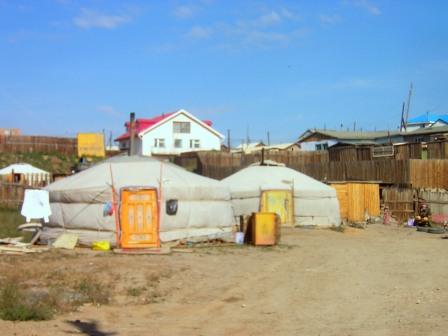
Gers are traditional Mongolian tents that have been used by nomadic herders for centuries. These portable homes are made from felt and wood and are designed to be easily disassembled and transported by camels or horses. Today, gers are still used by many Mongolians who live a traditional nomadic lifestyle on the vast steppes of Mongolia. They use them in cities too — I’ve seen them in the outskirts of Ulanbataar where hundreds of thousands of former nomads have now settled. But I’d love to have the chance to sleep out on the steppe in one and immerse myself in the nomadic lifestyle.
3. Peer into the Gates of Hell in Turkmenistan
The Gates of Hell, also known as the Darvaza gas crater, is a natural gas field in Turkmenistan that has been burning continuously since 1971. The crater, in the Karakum Desert, was created by a Soviet drilling rig that collapsed into an underground cavern, releasing a massive amount of natural gas. To prevent the spread of toxic gas, the decision was made to set the crater on fire, expecting it to burn out in a few weeks. However, the fire has now been burning for over 50 years. Visitors can feel the heat from the fire and even camp nearby to see the eerie sight of the flames at night.
4. Shiver in one of Russia’s Arctic cities in winter
Hundreds of thousands of people live in industrial cities north of the Arctic circle in Russia. Most started out as part of the vast gulag network of prison camps. While populations dwindled after the collapse of communism, some are now undergoing a revival with the development of the mining, oil and gas industries. Cities like Norilsk and Vorkuta suffer from temperatures that drop as low as -50°C in the winter and some of the worst pollution in the world. But they are also unique destinations that offer visitors a glimpse into life in one of the world’s harshest environments.
5. Travel the Trans-Siberian Railway
The iconic train journey spans over 9,000 kilometres across Russia from Moscow to Vladivostok. The railway was first built in the late 19th century as a way to connect Russia’s major cities and provide a transportation link between Europe and Asia. The journey takes around seven days to complete, and I’ve heard from people who have taken it, offers breathtaking views of mountains, forests, lakes and rivers, as well as chances to stop off in cities like Kazan, Yekaterinburg and Irkutsk near Lake Baikal.
6. Search for the lost Aral Sea

The Aral Sea was once one of the largest inland bodies of water in the world, spanning over 26,000 square miles across Central Asia. However, in the 1960s, Soviet planners ordered water from the rivers that fed it to be diverted to irrigate Central Asia’s cotton fields. That quickly caused a dramatic reduction in the size of the sea and a devastating ecological and humanitarian catastrophe for the local population. The sea’s once-rich fishing industry collapsed and the surrounding region even today experiences high levels of air pollution and soil degradation. Today, what remains of the Aral Sea is a fraction of its original size, with much of the former seabed now a barren desert landscape, despite efforts — with small success — to restore it. I visited in 2010, and had to take a jeep about 40km out across what was once the sea bed to find the new shore.
7. Climb a volcano in Kamchatka
Kamchatka is a remote peninsula located in the far east of Russia, known for its rugged terrain, stunning natural beauty, and active volcanoes. The peninsula is home to over 160 volcanoes, of which 29 are still active, making it a popular destination for adventure-seekers and nature lovers. I’ve not been, but I’ve heard travellers will find a unique and pristine wilderness, with vast expanses of untouched forests, icy rivers and hot springs. The region is also home to a diverse range of wildlife, including brown bears, reindeer, and numerous species of birds.
8. Get scared at Dracula’s castle
Dracula’s Castle, also known as Bran Castle, is a historic castle located in the Transylvania region of Romania. The castle is widely associated with the fictional character of Count Dracula, who was inspired by the real-life ruler of Wallachia, Vlad the Impaler. He is, however, believed to have spent only a short time at the castle during his reign. The castle was built in the 14th century as a fortress to protect the region against Ottoman invasions. Over the centuries, the castle has undergone several renovations and additions, with its current form reflecting a mixture of Gothic and Renaissance architectural styles.
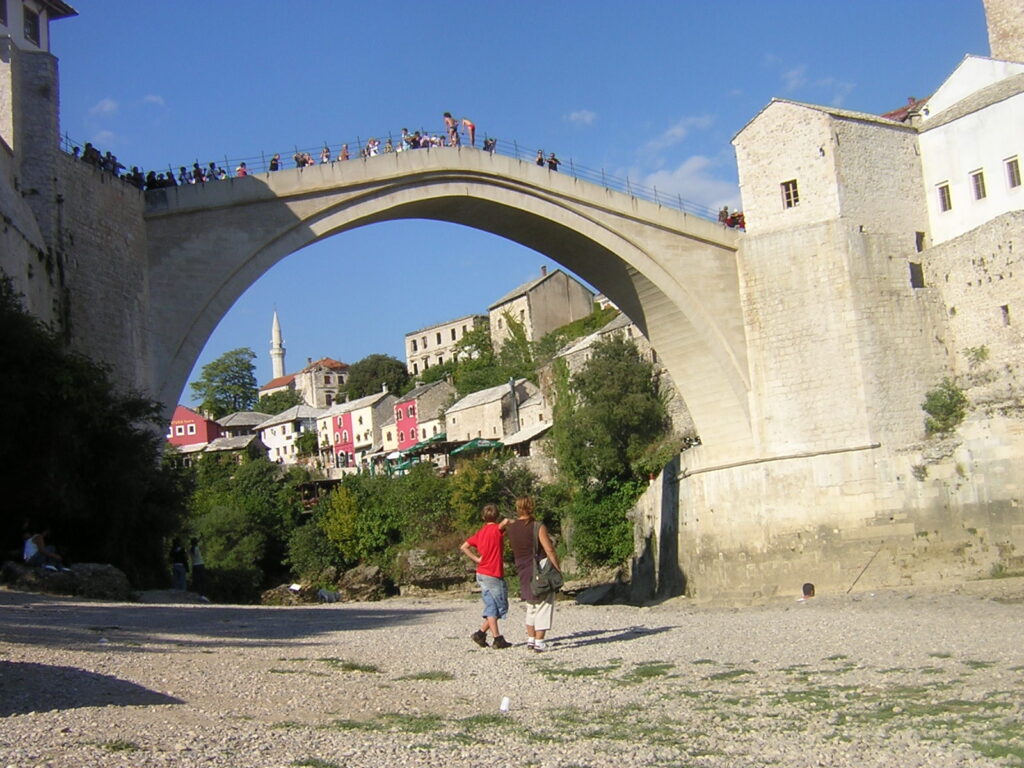
9. Jump off Mostar bridge
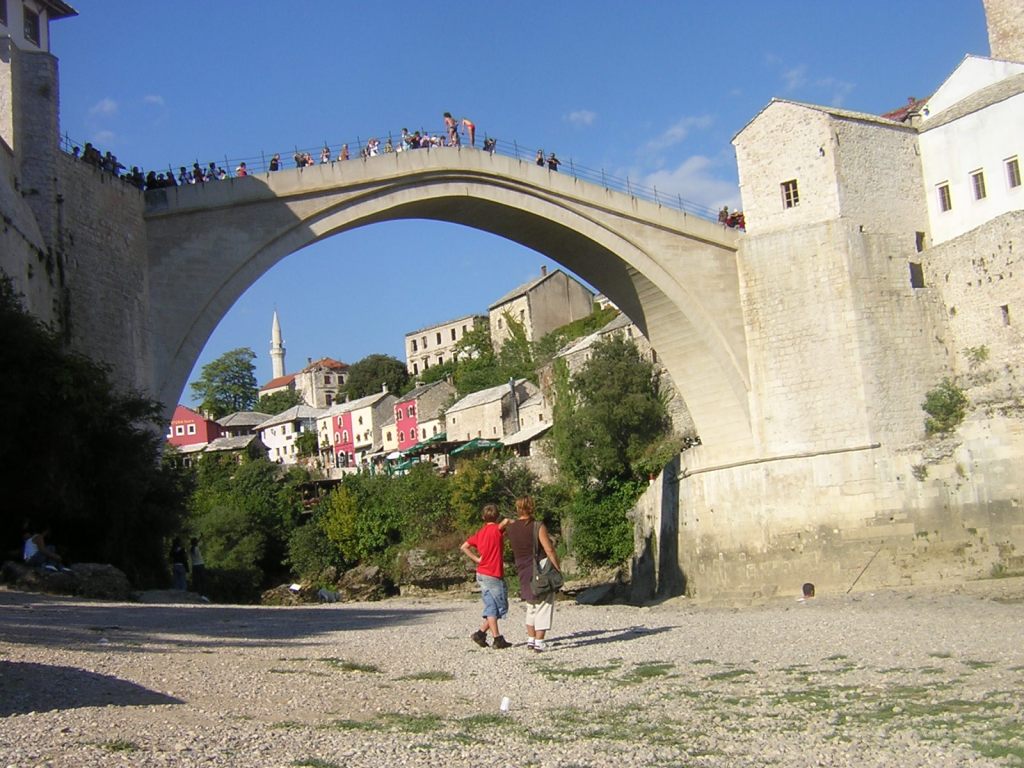
The Mostar Bridge, also known as Stari Most, is a historic bridge located in the city of Mostar in Bosnia and Herzegovina. The bridge was originally built in the 16th century during the Ottoman Empire and is considered one of the most iconic landmarks in the country. The bridge was originally built to connect the two sides of the city, which were separated by the river. Throughout its history, the Mostar Bridge has undergone several reconstructions due to damage caused by natural disasters and conflicts. The most recent reconstruction of the bridge was completed in 2004 with the help of international funding and support. I want to give this a partial tick because I’ve been to Mostar and crossed the bridge on foot. Jumping off it is an ambition that may go unrealised, given it took me a whole week to pluck up the courage to jump off a 2-metre high diving board in Saranda, Albania last summer. Not to mention that I’m middle-aged now and that ageing process isn’t going to reverse itself!
10. Marvel at Astana, the Dubai of the steppe
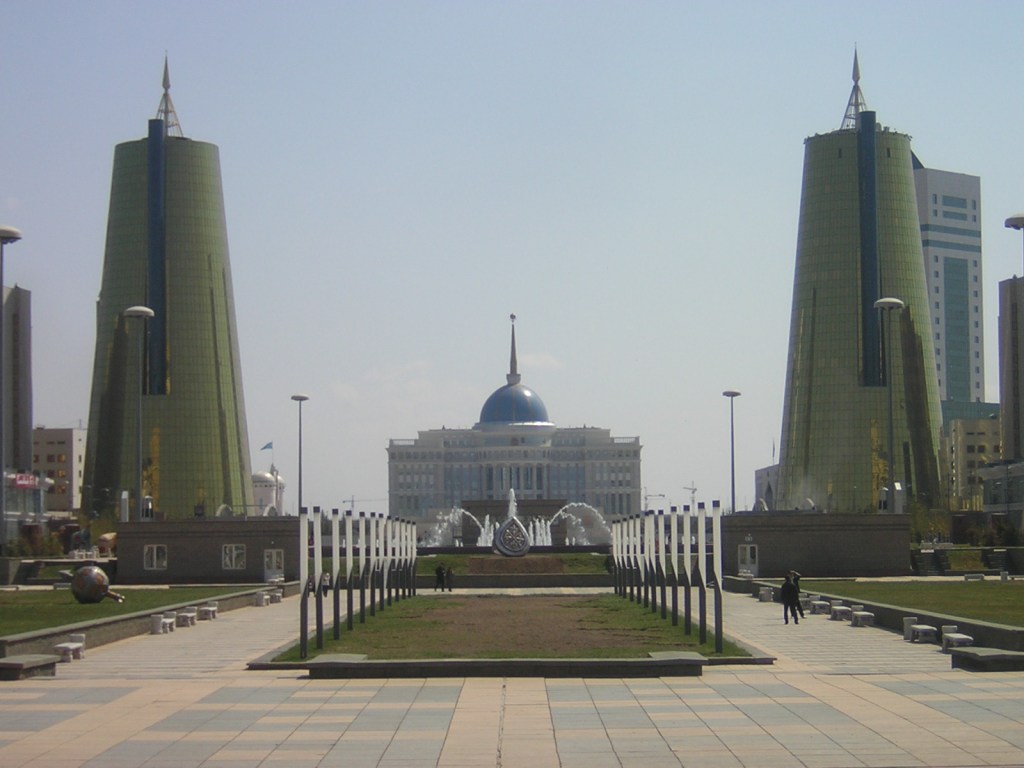
Astana, also known as Nur-Sultan, has been dubbed as the “Dubai of the Steppe” due to its rapid transformation from a small town to a modern and futuristic city. Astana has been the capital city since 1997. Today, the city’s skyline is dominated by modern skyscrapers and futuristic architecture. Among them is the Bayterek Tower, which is considered the symbol of the city, the Khan Shatyr that is inspired by a gigantic yurt, the Pyramid aka the Palace of Peace and Reconciliation, and the egg-shaped National Library. I can happily tick this one off as I not only visited Astana many times, I even lived there for 18 months.
11. Relax in Hungary’s Rudas Thermal Baths
The Rudas Thermal Baths are one of the most popular and oldest thermal baths in Hungary, located in the heart of Budapest. The baths were originally built in the 16th century during the Ottoman era and have since undergone many renovations and updates. The thermal baths are famous for their healing properties, thanks to the mineral-rich thermal water that flows into the pools. Visitors can soak in a range of pools, from hot and steamy to cooler options, with temperatures ranging from 28 to 42 degrees Celsius. One of the highlights is the stunning architecture, which includes a striking octagonal pool, surrounded by marble columns and domed ceilings. The thermal baths also have an outdoor rooftop pool, with breathtaking views of the city skyline.
12. Lick a wall in Poland’s Wieliczka Salt Mine
The Wieliczka Salt Mine is a historic landmark located in Poland, just outside the city of Krakow. The mine has been in operation for over 700 years and is one of the oldest salt mines in Europe. It is also listed as a UNESCO World Heritage Site. Visitors to the Wieliczka Salt Mine can explore the network of tunnels and chambers that stretch for over 300 kilometers underground. The mine is known for its stunning underground architecture, which includes salt sculptures, chandeliers, and even an underground cathedral, the Chapel of St. Kinga, which is carved entirely out of salt.
13. Walk the dead dunes between Lithuania and Belarus
The Dead Dunes, also known as the Grey Dunes, are a unique and haunting natural landmark located in Lithuania. The dunes are situated near the town of Neringa, on the Curonian Spit, which is a narrow peninsula that separates the Curonian Lagoon from the Baltic Sea. The Dead Dunes are so named because they are composed mainly of grey sand, and no vegetation grows on them. The dunes are also known for their eerie atmosphere, with shifting sands and constantly changing shapes. But despite their barren appearance, the Dead Dunes are home to a diverse range of wildlife.
14. Join a crowd of tourists on Old Town Square in Prague
Old Town Square is the heart of historic Prague, located in the city’s Old Town district. The square dates back to the 12th century and is one of the most popular tourist destinations in the city — I visited in 2012 and have rarely seen so many people in one place outside of a mass protest. It’s justifiably popular because it is surrounded by some architecture, including the Gothic-style Church of Our Lady before Tyn and the Baroque St. Nicholas Church. There’s also the famous Astronomical Clock, which was installed on the tower of the Old Town Hall in the 15th century and still tells the time today.
15. Fall in love with the old town of Odesa
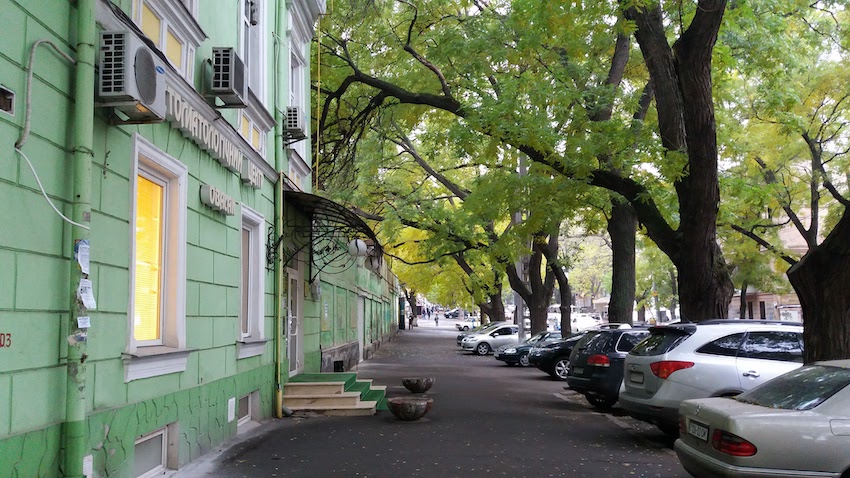
Odesa Old Town is a charming and historic destination located on the Black Sea coast of Ukraine. The city is known for its beautiful architecture, vibrant culture and rich history. The old town is a mix of architectural styles, including Baroque, Classicism and Art Nouveau. Among the landmarks is the Potemkin Stairs, a grand staircase that leads from the city centre down to the seafront. When we visited in 2017, I found the old town hauntingly romantic, and everyone we met was lovely to me and my daughter, who was a toddler at the time. The city and its people have been bombed many times since the start of the war. In January, UNESCO designated the historic centre an endangered World Heritage site.
16. Walk the city walls of Dubrovnik at sunrise
Dubrovnik Old City is enclosed by medieval walls that date back to the 13th century, with Fort Lovrijenac standing guard at the entrance. It’s home to many historic landmarks, including the Gothic Rector’s Palace, the Baroque St. Blaise Church, and the Renaissance Sponza Palace. Visitors can also take a walk along the walls of the city and enjoy stunning views of the sea and surrounding area. I’ve visited several of the other Croatian coastal cities, among them Split, Sibenik and Rijeka, and I hope to see Dubrovnik before long.
17. Climb into a Soviet space rocket at the Baikonur Cosmodrome

The Baikonur Cosmodrome is a spaceport located in the desert steppe of southeast Kazakhstan. It is the world’s first and largest operational space launch facility, built in the 1950s by the Soviet Union to support its ambitious space programme. The Cosmodrome was the site of numerous historic space launches, including the launch of the first artificial satellite, Sputnik 1, in 1957, and the first human spaceflight by Yuri Gagarin in 1961. It is a huge complex, covering an area of about 6,717 square kilometres. It is currently leased by the Russian government from the Kazakhstani government, and is the primary launch site for Russia’s space programme. I visited in 2013 and while visitors are kept well away from any current space operations, we got to see a fascinating display of Soviet space artefacts and even get behind the controls of an old rocket.
18. Snap pictures on Red Square
Red Square is the central square in Moscow, and one of Russia’s most iconic landmarks in the country. The square is surrounded by several historic buildings, including the colorful St. Basil’s Cathedral, the State Historical Museum, and the Kremlin walls. It was actually seeing a picture of Red Square on the front of a geography book at school when I was about seven that inspired my interest in Eastern Europe, though I didn’t get to visit until many years later, in 2010.
19. Ride a horse along the shore of Lake Issyk Kul

Lake Issyk-Kul is a spectacular alpine lake located in the northern part of Kyrgyzstan, Central Asia. It is the second-largest mountain lake in the world after Lake Titicaca and is surrounded by stunning mountain ranges. The name Issyk-Kul means “warm lake” in the Kyrgyz language, as the lake never freezes despite its high altitude of 1,607 metres above sea level. While it’s now popular with tourists and spa-goers, the lake has been a hub of cultural exchange for centuries, as it lies on the ancient Silk Road trade route. I’ve visited Lake Issyk-Kul several times and seen the horses grazing on its shores — though I’ve not ridden one — but I never went further than Cholpon-Ata on the north shore. The town of Karakol at the eastern end of the lake intrigues me. It’s known for its unique blend of Russian and Kyrgyz culture, colorful bazaar and Dungan mosque. There’s two good reasons to go back.
20. Sample Moldovan vintages down in Crikova wine cellar
Cricova Wine Cellar is a world-renowned winery located in the town of Cricova, Moldova. It is one of the largest wine cellars in the world, with over 120 kilometres of underground tunnels that house millions of bottles of wine. The winery was founded in 1952. 14 years later, the cosmonaut Yuri Gagarin is said to have gone down into the cellars and only emerged two days later. I visited in 1998, after an eventful journey by minibus from Chisinau involving a rather nasty road accident. We certainly needed a glass or two of wine after that. Today, Moldova’s wines are getting more international recognition, and Cricova has gained a reputation for producing some of the best sparkling and still wines in the country.
So that is my bucket list… I’d love to hear from readers if you have visited any of these places. And if you think there are any other destinations that should be added.
Note to add: I debated about whether to include places from Ukraine and/or Russia on the list, and decided in the end that I would. I, and I’m sure many other people, will want to support Ukraine’s economy and tourist sector once the war is over. I wouldn’t visit Russia now, but this is a lifelong list, and I hope things will change for the better there in future.
 Steppe in Style
Leave a comment