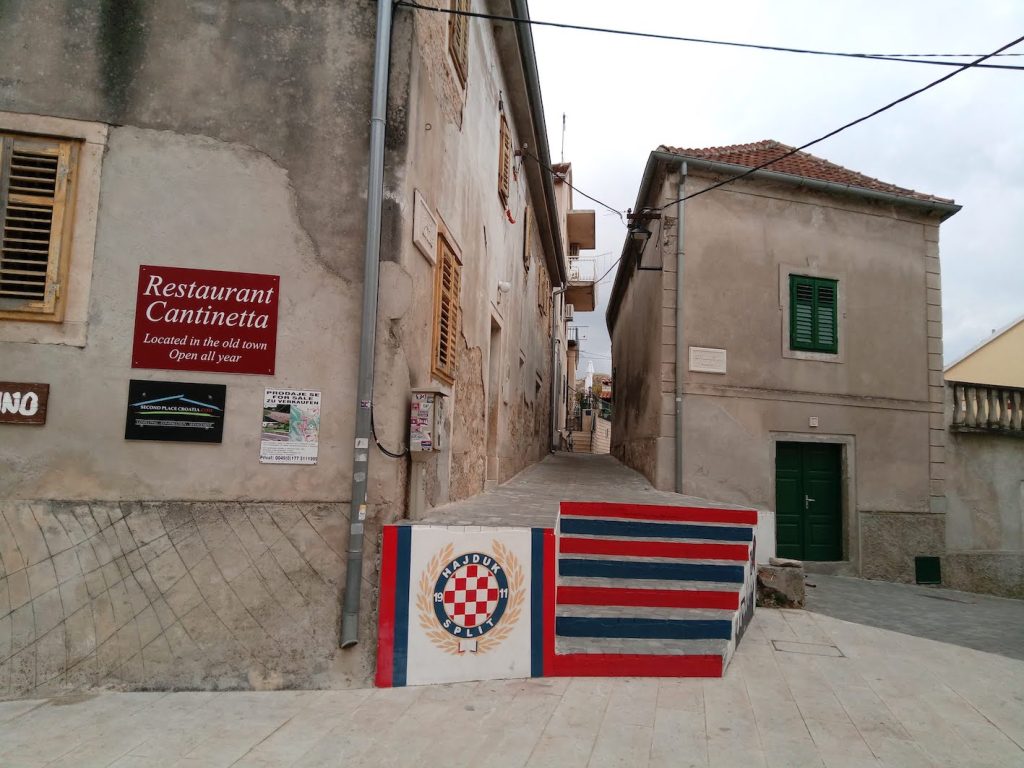
Arriving in late October, we had the small city of Sibenik almost all to ourselves which felt magical after the crowded streets of Split, Zadar and Zagreb.
We spent the day there wandering though the deserted stone streets of the old town, and visiting some of its four historic fortresses.
Sibenik stands out from the other, older cities on Croatia’s Adriatic coast like Pula, Split or Zadar in that it was founded by Croats — rather than Greeks, Illyrians or Romans.
Although archaeologists found it was settled before the arrival of the Croats, the first mention of the town of Sibenik was in the 1066 Charter of the Croatian King Petar Kresimir IV.
Yet the old church of St. Michael actually dates back t the 8th or 9th century. It gave the 11th century St. Michael’s Fortress — the oldest of the four fortresses built to defend the city — its name. St. Michael’s Fortress is directly above the old town, and during the summer many cultural events take place on the open air stage within.
Changing hands
Despite being funded by Croats, Sibenik repeatedly changed hands among Venice, Byzantium and Hungary.
In 1412 it was again taken over by the Venetian Republic, after which the city and its defences wee built up. Its fortresses were used to defend the city against the Ottoman Empire.
During the more than 300 years of Venetian rule that follows, many of the buildings that still stand today were built.
Exploring the narrow streets of the old town, we came to Trg Republice, the town’s main square.
The square is dominated by Sibenk’s Cathedral of St. James, and a statue to Juraj Damatinac, who built it, stands on the square.
The cathedral was selected as a UNESCO World Heritage Site in 2006. Built between 1431 to 1535, it is adorned with multiple statues — including some believed to be of the architects that designed it. built in a mix of Gothic and Renaissance style.
Also on the square is the Large Loggia, which hosts the city administration.
The Gothic Sveti Barbara Church — now a museum — is just behind the cathedral. It hosts sculptures and paintings dating from the 14th to the 18th centuries.
Also nearby (though not easy to find) is the Church of St. Lawrence and Franciscan monastery. The medieval monastery is surrounded by the Mediterranean Garden, with wooden benches set among the trees and shrubs. It’s looked after by local schoolchildren.
Sibenik old town is free from cars — they wouldn’t fit along many of the tiny old streets anyway — and has over 2,800 steps, earning it the name the City of Stairs.
Fortified city
Aside from St. Michael’s Fortress, Sibenik has three other fortresses.
St. Nicholas Fortress is in the sea at the edge fo the city. It’s connected to the land by a footpath but can only be entered if you arrive by boat (we didn’t manage to do this on our brief visit). The 16th century fortress stands at the entrance to St. Anthony’s Canal in oder to defend Sibenik against attacks from the sea.
Barone Fortress and St. Johns’s Fortress are both on hills near the city. Barone Fortress gives probably the best view of the city. The fortress — which was originally named after its defender Baron Christoph von Degenfeld — was an important part of the defence of Sibenik against Ottoman armies during the Cretan War.
While I soaked up the history of Sibenik, my daughter wanted to play. It was too cold to hang out on the beach but we found an excellent playpark with dozens of climbing frames, swings, slides and even a zipwire. With Croatian kids in school, it was empty except for one other family of tourists.
The downside of visiting Sibenik out of season was that the public toilets in town were closed, and the tourist office had no helpful suggestions as to where to, er, go.
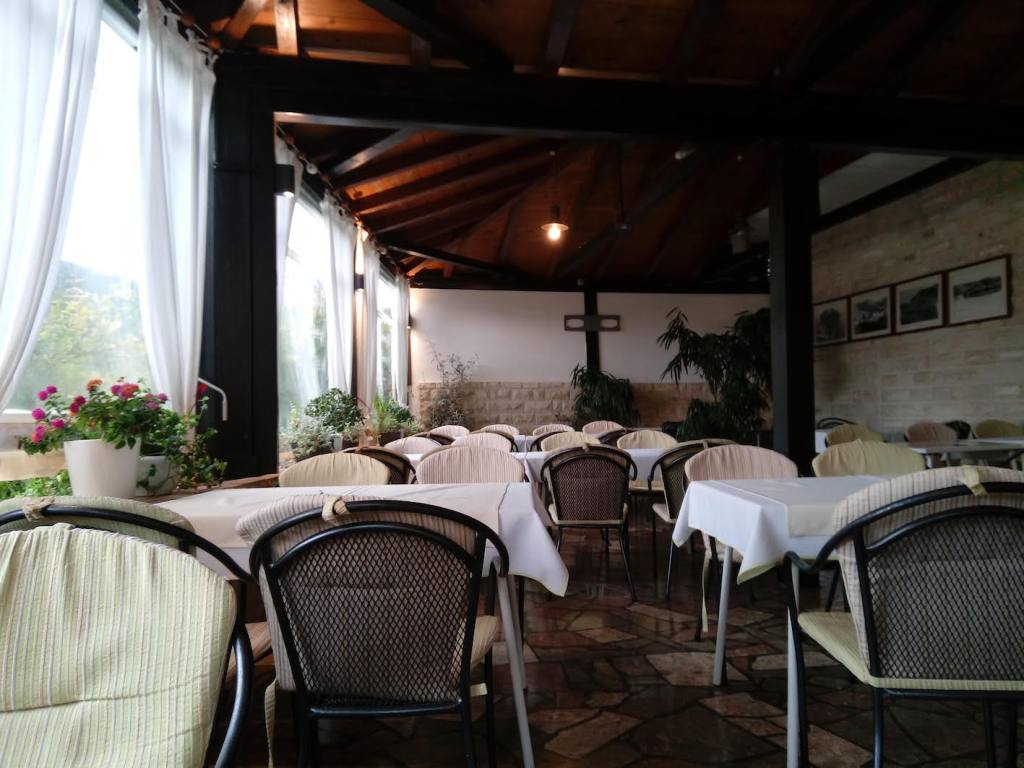
It also took us a while to find a restaurant that was open for lunch, as many of them were closed for renovation after the end of the summer season, but persevered, and found ourselves the only customers sipping homemade lemonade and eating pasta on an outdoor terrace. The weather was just about warm enough…
 Steppe in Style
Leave a comment