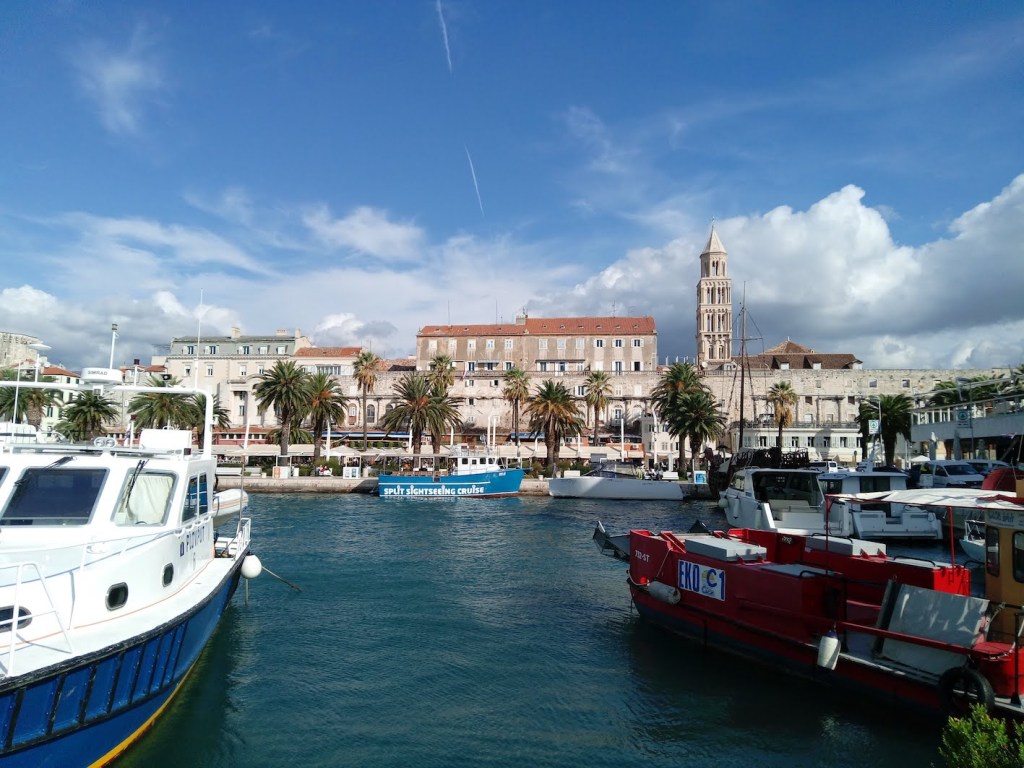
I fell in love with Split when I first visited 14 years ago. That visit was a very brief one. I arrived on the overnight bus from Pula, shortly after dawn, when the old city was bathed in late September golden sunlight.
The bus took us to the edge of the harbour, where I looked past the palm trees by the water’s edge to the gold tinged walls of Diocletian’s Palace. After hours scrunched up on a bus seat, I was urgently in need of coffee, which I found hot, black and sweet in a small plastic cup at the bus station.
With a couple of hours before I needed to take my next bus — to Mostar, Bosnia — I wandered along the seafront promenade and into the old stone streets of the city centre. It was the first time I’d seen Roman remains that were simply part of a city — Split citizens passing though Diocletian’s Palace on their way to work, a shop (closed; it was very early) next to an ancient arch.
Return to Split
14 years later, I arrived in Split after a six-hour journey by train from Zagreb wth my small daughter. Arriving, late, in the pitch darkness, we took a taxi for the short trip to the apartment we had rented. Despite the darkness and the difficult journey packed in a small airless carriage for six hours, we were warmed by the kindness of the taxi driver who had to reverse repeatedly down narrow alleys and got out many times to check house numbers in his quest to find the apartment, and then by the welcome of the owner of the small, simply finished but spotlessly clean studio.
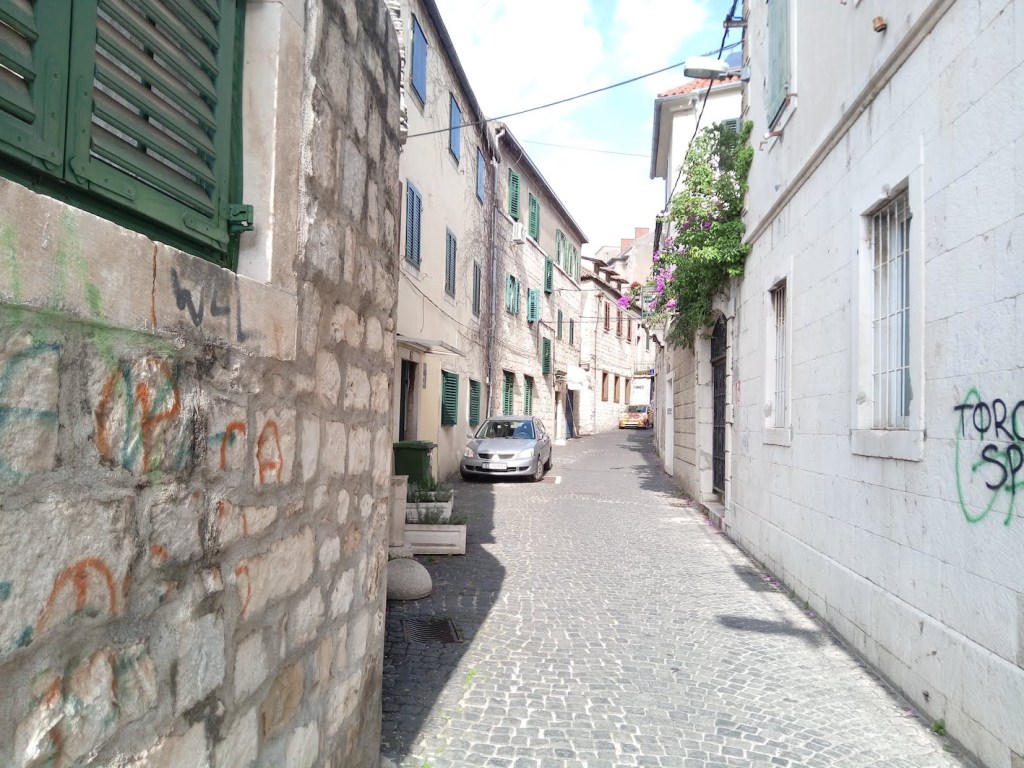
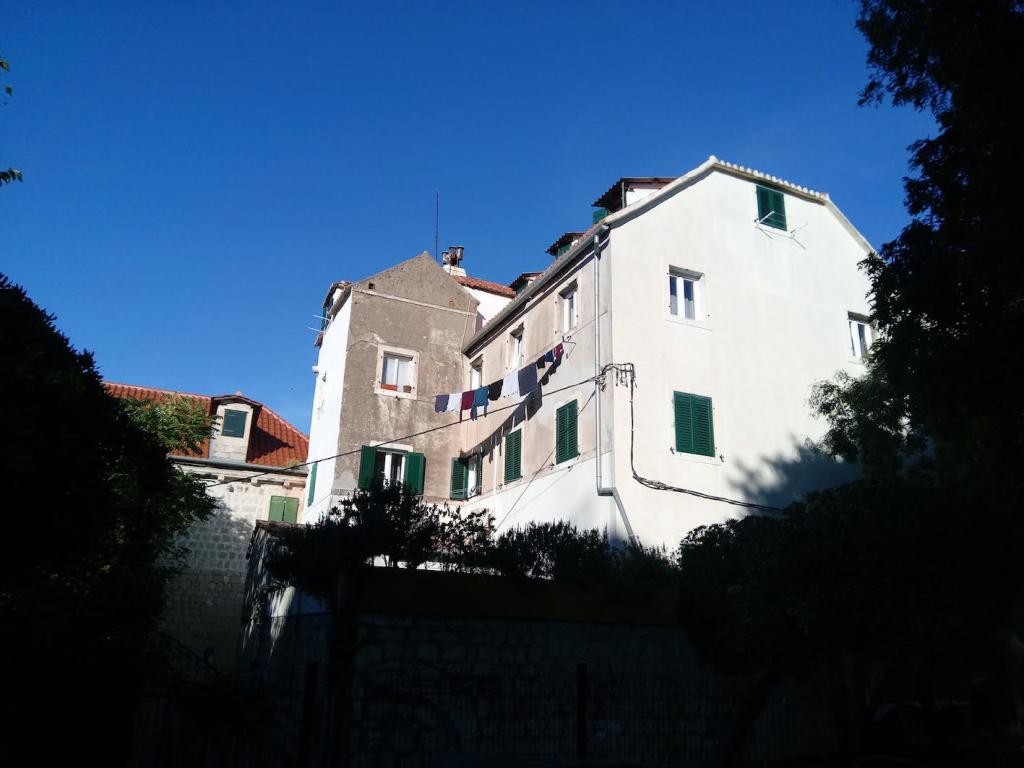
We were staying in a solid modernist block, with lots of black marble and concrete (inside and out) set among pretty old buildings with painted shutters on their windows and flowering vines growing over them.
It was just a short walk to the old town that lies on the waterfront at the heart of Split, Croatia’s second-largest city after Zagreb.
Inside Diocletian’s Palace
Large parts of the old town are within Diocletian’s Palace, a huge complex built for the Roman Emperor Diocletian, that was more like a huge fortress than a palace.
We entered the old town via stone steps that led us down into the basement of the palace — now housing souvenir stalls and jewellery shops.
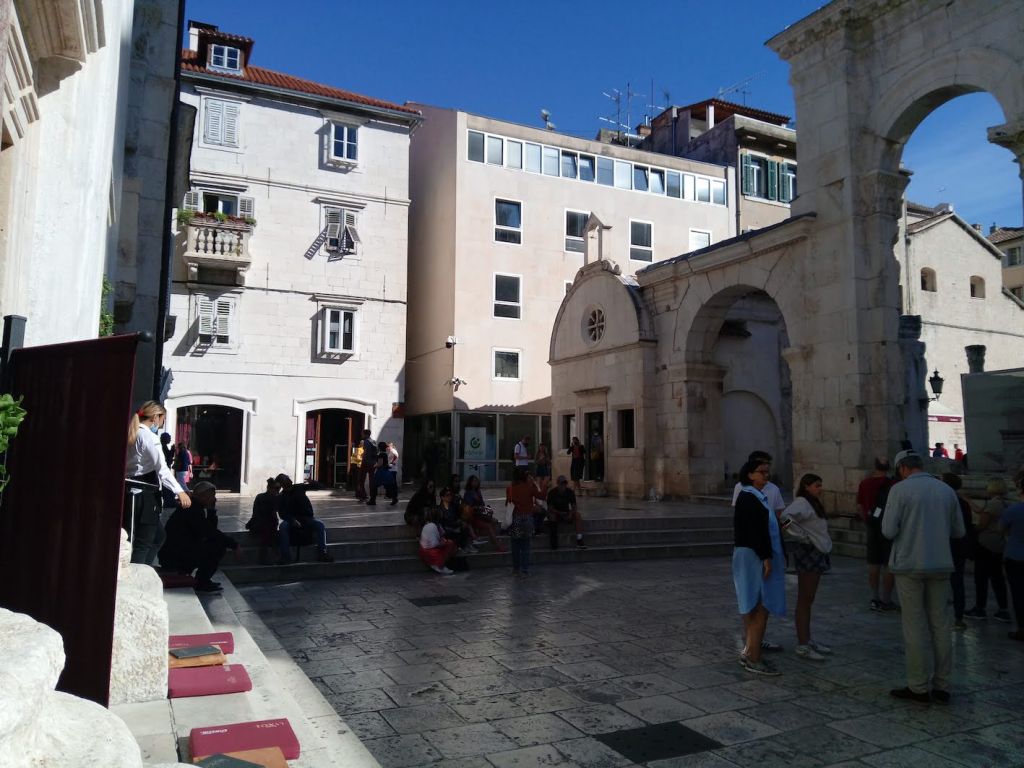
We emerged into the peristyle, one the main inner courtyard of Diocletian’s Palace, a large paved courtyard flanked by the Temple of Jupiter.
Lvxor Café and Restaurant is right on the Peristyle, named for the after the Egyptian city of Luxor where the sphinxes — whose statues were brought to Split by Emperor Diocletian — originate from.
As it was a sunny morning we sat outside on two of the cushions placed on the steps to soak up the sun and watch the fellow tourists milling through the square.
When I first came to Split, Croatia was still seen as off the beaten track; now budget flights have opened it up to tourists from all over Europe and with covid it’s become a very popular holiday destination.
We didn’t go inside the cafe but I discovered later there’s a marking to show the position of an antique temple dedicated to Venus as well a Roman Gothic column from when the City Lodge of the commune of Split was here. You pay for location though; our coffee and lemonade came to around £10 (though to be fair they were both very tasty).
Living in history
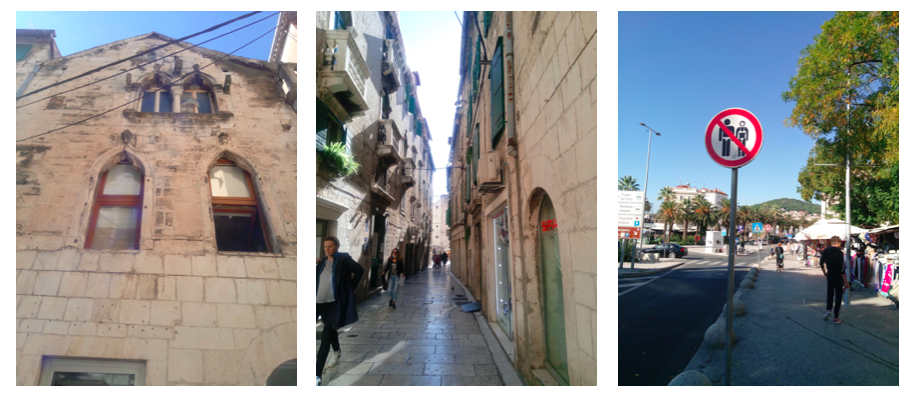
One of the things I most love about Split is the way people go about their daily lives among the Roman and mediaeval buildings in the old town. They’re not turned into museums or fenced off to the public — you can have a cup of coffee (as we did) in the Peristyle then walk a couple of minutes through ancient winding streets to buy a pair of leggings (again, as we did) to head off a laundry crisis.
The main city food market is right next to Diocletian’s Palace so it was easy to pick up fresh fruit and vegetables to complement our groceries from the Spar supermarket in the old town. We alternated between eating in the apartment, and eating out in the old town or in our district.
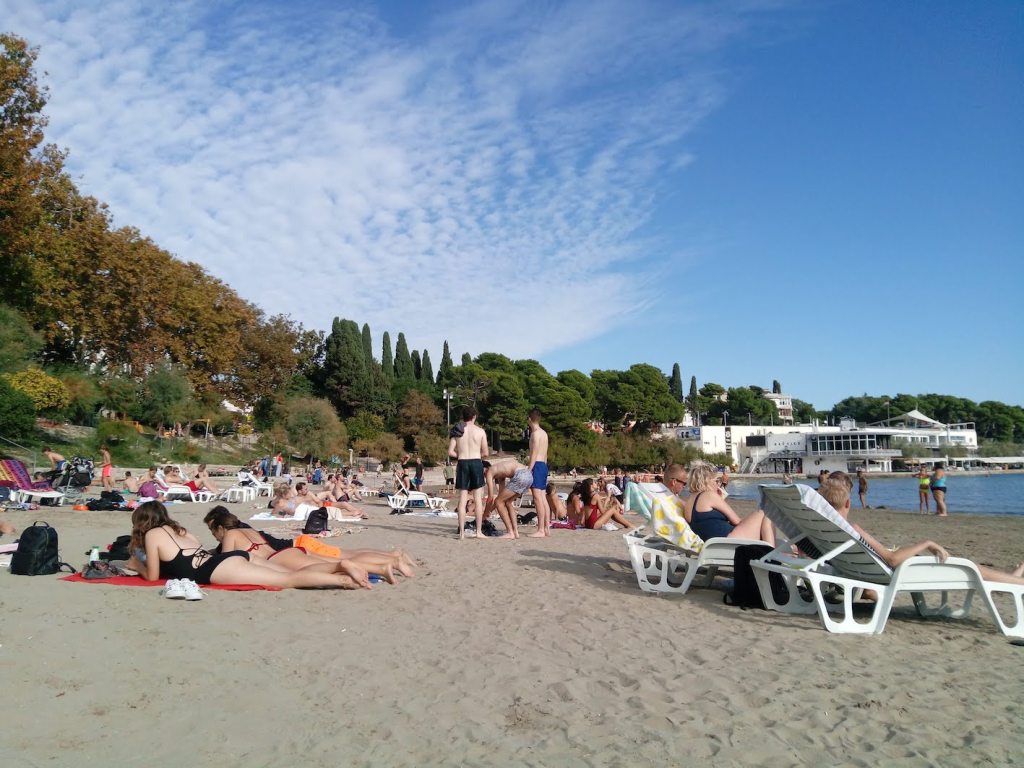
We spent every sunny afternoon on Bacvice beach. My daughter said it was the ‘best beach ever’ — which was a bit of a surprise for me as I’d been contacting the grey sand speckled with cigarette buts with the huge pristine expanses of white sand on the beaches near us in Scotland. But it was certainly a fun beach: she made friends with other kids there, chased the silvery fish darting in the shallow water.
When it got too cold to stay in the water any more, we had drinks from the beach bar and visited the playpark on the cliff above, where we watched the local men play the traditional Picigin ball game.
See and be scene
Every evening we joined thousands of Split residents on their nightly promenade. This is a feature of daily life across Croatia but it’s particularly special in Split as the walk takes in the waterfront Riva — looking out to sea at the lights glittering on the ferries and yachts in the darkness — then into the ancient streets of the old town, all of which are thronging with people.
The Riva, fringed with palm trees, is a 250 metro long broad walkway between the old town and the harbour. It has been there in one form or another since Diocletian’s Palace was built, but was overhauled in 2005, just two years before I first visited the city.
I lost count of the number of ice cream vendors — cafes, hole in the walls and pretty little carts — all with a huge selection of delicious ice creams. I was very pleased to find my absolute favourite flavour, dark chocolate, while my daughter sampled lots of different ones, eventually settling on Kinder egg flavour as her new favourite.
Yugoslav-era Split
It was only on the final couple of days that we came away from the old town and saw the other side of Split. We went secondhand shopping — discovering an awesome kilo store not far from our apartment — then the day before we left I went to get a COVID-19 test (it came back negative).
Both of those required long walks away from the old town and into various other districts of Split. While walking along a noisy road dragging along a bored small child is never my favourite activity, I did welcome the chance to see different parts of the city.
Away from the old town large parts of Split were built in the Yugoslav era. The most iconic of these is the huge concrete Split 3 complex built in the 1970s and 1980s to accommodate the city’s fast-growing population. It’s more of an entire new district than a housing estate, being built to house as many as 50,000 people.
 Steppe in Style
Leave a comment