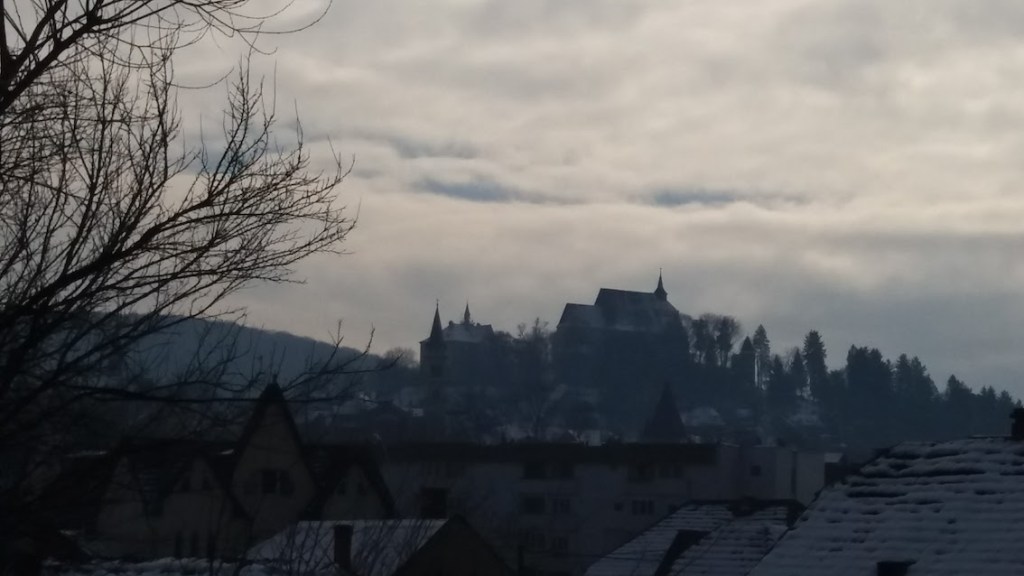
It was the depths of winter when we visited Sighisoara, one of the seven cities — Siebenbürgen — founded by the Transylvanian Saxons. Snow was falling lightly on the steep roofs and cobbled streets of the old citadel, and with few people venturing out it was easy to imagine ourselves back in medieval times.
The historic centre, designated a UNESCO world heritage site, was easy to explore, consisting of just a handful of streets around central Piata Cetatii, all lined with houses painted in glowing colours.
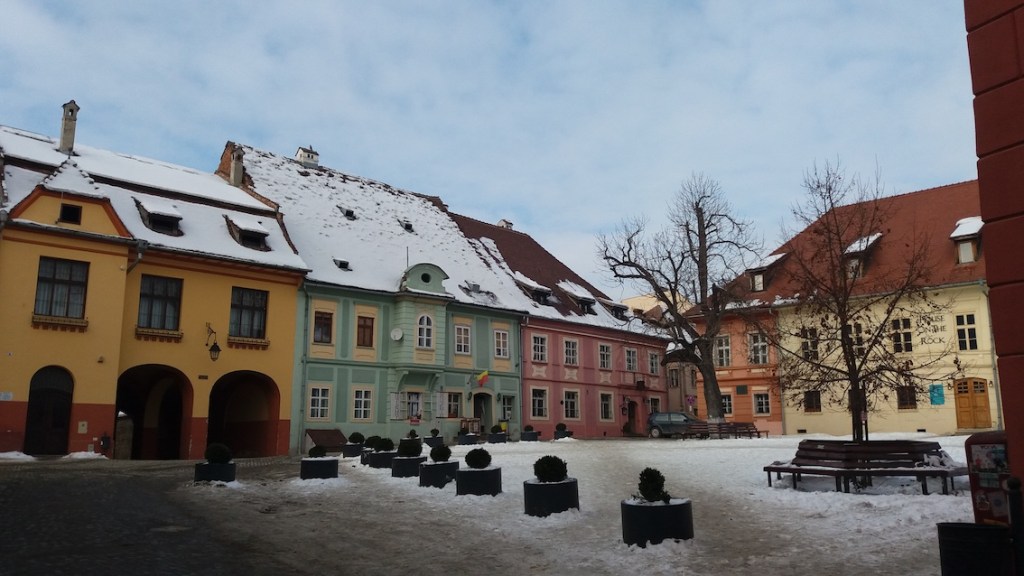
Formerly known as Schassburg, Sighisoara was built on the site of the Roman Castrum Stenarum settlement by the German craftsmen and merchants who moved there in the 12th century, though most of the historic centre dates from the 16th century. The small city was fortified strongly to repel Turkish raiders as the Ottoman empire advanced on Central Europe.
Sighisoara’s nine towers
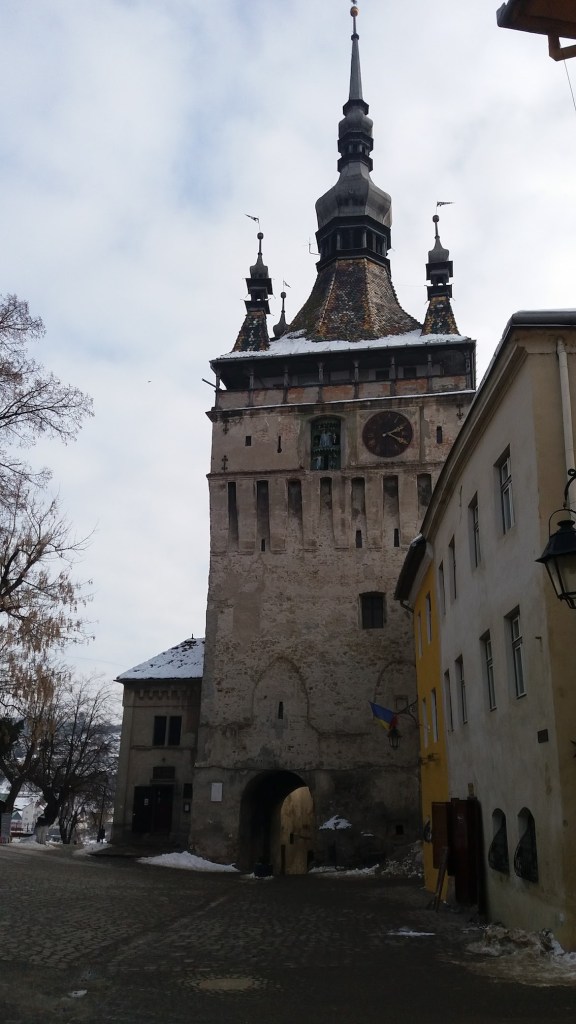
Nine medieval towers built by craftsmen’s guilds are still standing. The Clock Tower, or Council Tower, which dates from the 14th century, is the city’s top attraction. At the top of the tower is the two-plate clock, set with carved figurines representing Peace, Justice, Law and the pagan gods for whom the days of the week are named. The views of Sighișoara’s cobbled streets and the surrounding countryside from the top of the tower are spectacular.
Other towers include the Blacksmiths’ Tower (Turnul Fierarilor), Butchers’ Tower (Turnul Macelarilor), Cobblers’ Tower (Turnul Cizmarilor) and Tailors’ Tower (Turnul Croitorilor).
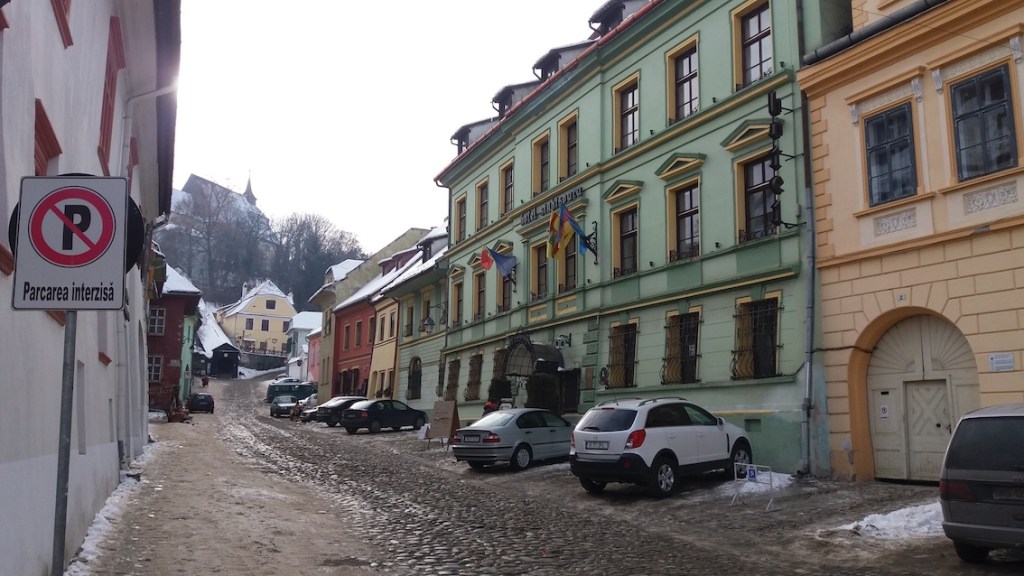
Near the Clock Tower on Piata Cetatii – once the site of markets, public executions and witch trials – is the Church of the Dominican Monastery, while the Scholars’ Stairs lead from the square up to the gothic Church on the Hill.
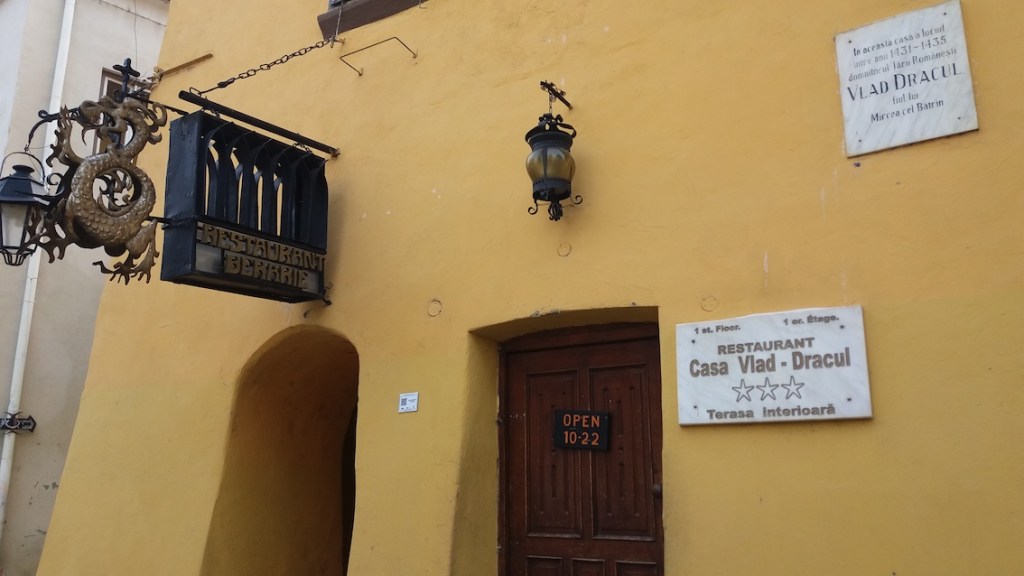
Sighisoara’s other claim to fame is as the birthplace of Vlad Tepes, also known as Vlad the Impaler or Dracula, who was born in the town after his father Vlad Dracul was sent there in exile. The ground floor of his surprisingly pretty ochre painted house at Str. Cositorarilor 5 is now a restaurant, while the museum of weapons is on the first floor.
What to see in Sighisoara
Clock Tower (Turnul cu Ceas)
Piata Cetatii
Opening hours: May 15 – September 15: Tues-Fri 09.00-18.30, Sat-Sun 10.00-17:30
September 16 – May 14: Tues-Fri 09.00-15:30, Sat-Sun 10.00-15:30
History Museum (Muzeul de Istorie)
Piata Muzeului 1, inside the Clock Tower; opening hours same as for Clock Tower.
tel: 0265 771.108
The Church on the Hill (Biserica din Deal) Piata Cetatii
Opening hours: Mon-Sun 10.00-18.00
Where to eat
Caffe Martini Habermann, Piata Hermann Oberth 42, Good food and service, popular with both locals and tourists.
Restaurant Casa Vlad Dracul, Str. Cositorarilor 5, Dine on traditional Romanian food in the medieval setting of Dracula’s former home.
 Steppe in Style
Leave a comment