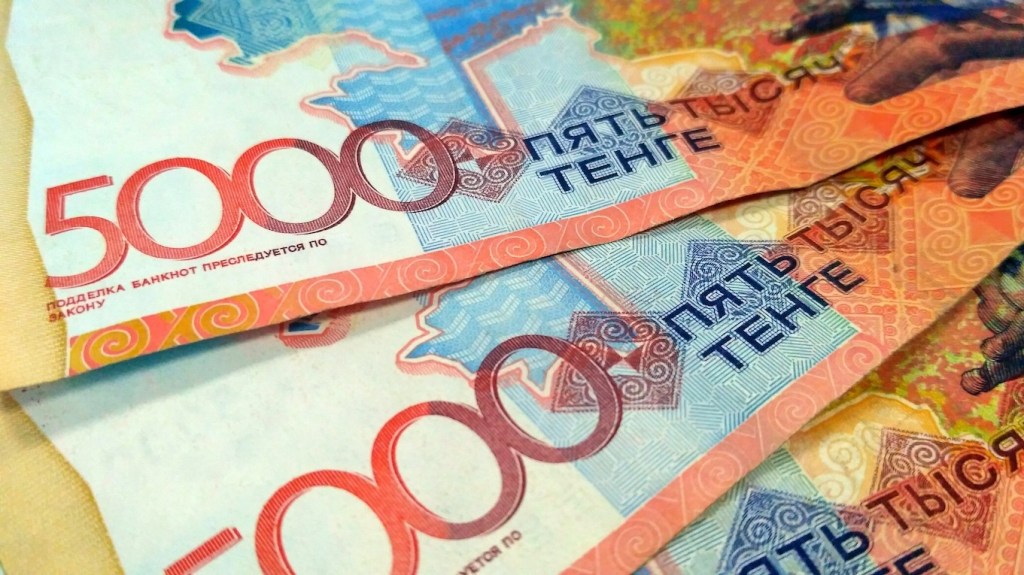
I was sitting at my desk trying to work while feeding a hangover when a note came through from one of my analyst contacts saying there had been a massive devaluation of the Kazakh currency.
Over the last few months there had been growing speculation that the government would allow the tenge to devalue. Now, I had an urgent news story to cover.
I quickly checked the central bank website and was about to call their press office, but at that minute an email popped through with a press release from the bank saying that it had allowed the tenge to depreciate to around 185 tenge to the dollar, a fall of around 19%.
The tenge was previously kept in a range of 145-155 to the dollar, but there had already been a gradual deterioration in the exchange rate since mid-2013. The bank cited several factors including the reduction in quantitative easing in the US and the fall of the Russian ruble for its decision.
My editor was on Skype asking for an article asap, so I called an analyst contact who told me that the Kazakh authorities had been spending heavily to support the currency, while the ruble and other emerging markets currencies were allowed to depreciate.
What comes around
As I wrote the article, I had a feeling of deja vu. Almost exactly five years ago the tenge had been allowed to fall by a similar amount. I remembered the day clearly, as shops in Almaty had been closed while shopkeepers hastily adjusted all the prices.
As so many consumer goods are imported, leaving prices at their pre-devaluation level would mean big losses for retailers. Kazakhstan is a very dollarised economy with prices of larger items being quoted in dollars — for example although I paid my rent in tenge, the price was set in dollars. If the tenge had started to fall gradually, people would have been quick to take their money out of the local banks and convert it to hard currency.
I quickly put together and filed an article (which later got picked up by the Financial Times Beyond Brics blog) then put on my puhovik and ventured out to see what was happening in the shops in Astana.
Everything seemed normal at the small local shop, though in Anvar the wine and spirits aisle was closed off. By the time I arrived at the white goods shop, Sulpak, it was closed.
Back at the flat — it was too cold to spend a lot of time outdoors and a recent fall of snow meant it was difficult to walk as well — I saw that all three of Kazakhstan’s main white goods retailers, Sulpak, Technodom and Mechta, had notices on their websites announcing they had shut down temporarily.
Spending spree
Local TV showed frantic shoppers in Almaty stocking up immediately after the devaluation was announced, before shops closed down for the day.
My Facebook feed was filling up with angry comments from Kazakhstani and local expat friends. Since it was close to the beginning of the month, several of my expat friends had recently been paid into their Kazakh accounts and the value of their latest salaries had dropped by 18% before they had time to transfer them abroad.
The next morning, the Central Communications Service announced a press briefing with Kairat Kelimbetov, the new governor of the central bank. He had already given a briefing at the bank in Almaty on the day of the devaluation, then had flown up to Astana.
At the press conference, Kelimbetov defended the decision to devalue the tenge, insisting it was the right decision due to continued pressure on emerging market currencies.
He claimed the devaluation had been carried out “flawlessly”.
The Kazakh population didn’t share his appreciation after their purchasing power was slashed by almost a fifth overnight.
Unrest in Almaty
In the days after the devaluation, the angry Facebook messages kept coming, as did reports of unrest down in Almaty. Displays of public anger were unusual in Kazakhstan, where mostly people just put up with stuff. The post Zhanaozen demonstrations in Almaty in 2012 had been small, and the government tried to keep rumours of discontent from the regions from reaching the capital.
Astana, where most people are dependent on the government for their livelihood either directly or indirectly, wasn’t much affected by the devaluation. Security was tighter in Astana too; the authorities didn’t like protests outside the government offices where the president or important guests might see them.
Almaty is the traditional home of intellectuals and universities, where a bit of dissent is tolerated. And they don’t mind a small amount of negative coverage in the newspapers, which are mostly read in the main cities (though not too much — as shown by the constant closures of Respublika), but they don’t want bad press on TV where it might fuel volatile situations in the industrial towns.
The opposition magazine ADAM bol was becoming more popular (though it still only reached a tiny handful of the population). It was launchd by prominent opposition journalist Guljan Yergaliyeva, who in 2011 had memorably stripped naked on YouTube to promote her new website Guljan, which promised to deliver the “naked truth” about Kazakhstan.
Street protests
Protests started outside the central bank in Almaty after the demonstration on February 12. Several hundred people tried to march to the akimat on February 5, but were headed off by police, and 20 or 30 were arrested.
Shockingly for Kazakhstan, some started shouting “Shal, ket!” (“Old man out!” in Kazakh) — a reference to 73-year-old President Nazarbayev.
While the numbers seemed small, demonstrations of even a few dozen people are so rare in Kazakhstan, this is quite a big deal.
Pants protests
Bizarrely, the demonstrations over the devaluation coincided with protests in both Kazakhstan and Russia over a ban on synthetic lace knickers due to come into effect in July 2014. Again, this happened in Almaty, but Vlast.kz showed pictures of a woman at the Almaty demonstration holding up what she said was her last pair of lace knickers.
The ban was connected to the Customs Union, an economic bloc launched by Kazakhstan, Russia and Belarus, that was a bit like a precurser to an EU for the region. Customs Union officials had decided back in 2011 that only knickers with a 6% threshold for moisture absorption would be sold in the union, which ruled out most of the lace underwear imported from China to Kazakhstan.
30 — all female — protesters put lace knickers on their heads and chanted “Freedom to panties” in Almaty’s main square, before being arrested. Three were arrested and fined for disorderly conduct after trying to put lace knickers on the independence monument.
As a long-term purchaser of Marks and Spencer’s cotton knickers, I found it hard to sympathise with the need to wear synthetic lace, but each to their own.
Bank runs begin
Then came the bank runs. On February 19, hundreds of people queued at branches of Alliance Bank, Bank CenterCredit and Kaspi Bank in an attempt to withdraw money from hard currency accounts. Panic spread as some branches refused to return deposits and stocks of cash ran short. While the rush has since slowed, Kaspi reports that over $200m was withdrawn from its accounts.
Local TV showed huge queues of people snaking around the buildings as they waited to be able to withdraw their savings.
Several people were arrested in Almaty on suspicion of causing the bank run by sending out thousands of SMSs and WhatsApp messages claiming the banks were about to collapse. Nazarbayev weighed in eventually, saying the government would prevent local banks from collapsing.
A Kazakh spring?
As the events kept coming, I even started to wonder if this could be the start of a “Kazakh spring”, after all, you never knew what might spark people’s anger and gather momentum to a mass protest. In neighbouring Kyrgyzstan there had been a lot of grievances before the second revolution in 2010 but what had started it were protests in the regions over electricity price increases.
Could something similar trigger the overthrow of the Kazakh government? It seemed not, as the anger slowly petered out over the next few weeks.
 Steppe in Style
Leave a comment