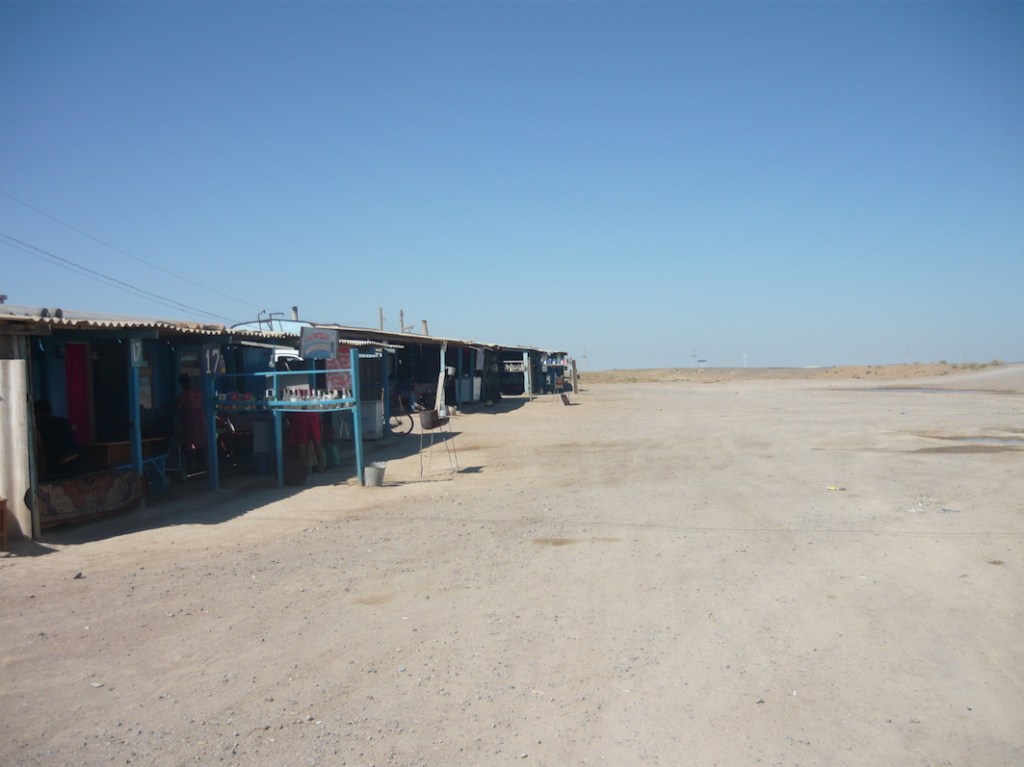
For a person born and brought up on a small and densely populated island, the vast amount of empty space in Kazakhstan is hard to compute.
Globally, Kazakhstan has the third lowest density after Australia and Canada with just 16 people per square mile, compared to 413 in England.
Most of these are concentrated in and around Kazakhstan’s three largest cities, Almaty, Astana and Shymkent, all of which have populations of more than a million.
Islands on the steppe
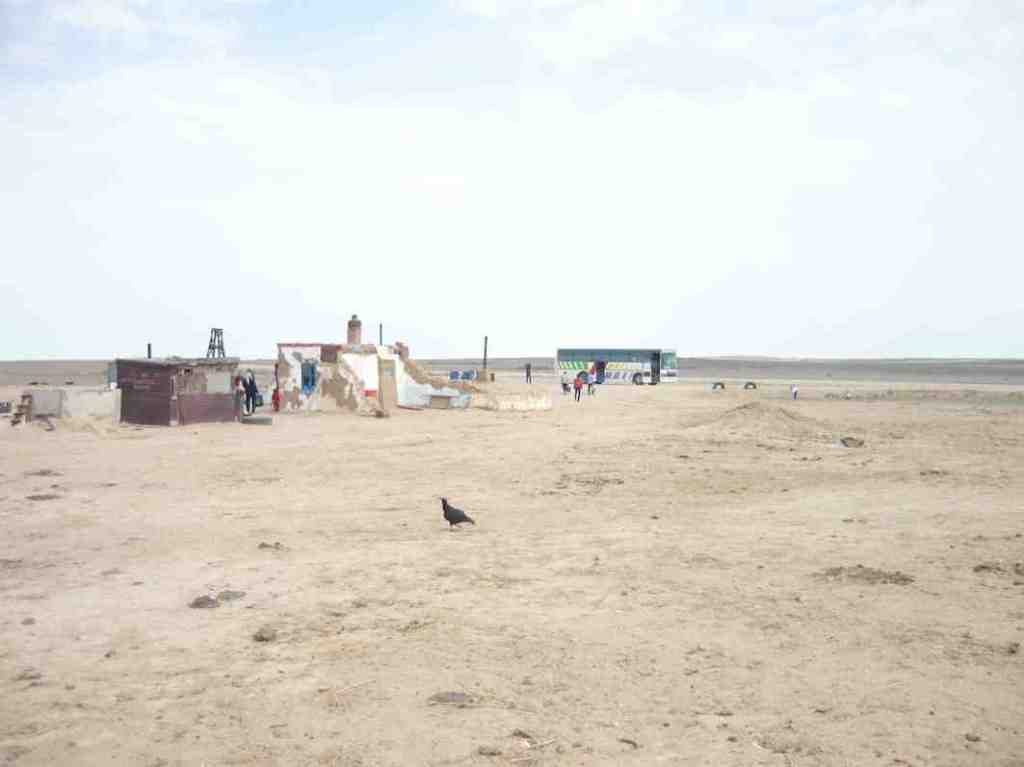
Other regional centres, with a few hundred thousand are dotted across the country, and between them small towns with a few thousand (or hundred) people scattered on the empty steppe.
Perhaps the most startling thing is that its possible to travel for five hours or more along a major highway — the 323 kilometres from Astana to Ekibastuz, for example, or the 306 from Kyzlyorda to Turkestan — and pass ten or twelve cars, and just one small settlement.
I’ve visited quite a lot of random cities in Kazakhstan, mostly by plane because getting to many places in a weekend overland is simply not possible.
It took over three hours to cross the country by plane from Almaty in the bottom right corner to Uralak in the top left. Uralsk is closer to Vienna than Almaty, and Almaty is closer to Kathmandu than Aktau on Kazakhstan’s Caspian coast.
Overland across Kazakhstan
Travelling by road or rail gives a better idea of the size. The fast train from Almaty to Astana is a 12 hour overnight journey. A slower train from Almaty to the Aral Sea, around halfway across the country, took 36 hours.
I once did a round trip from Almaty up to Karaganda, then circled round via Zhezkazgan and Kyzylorda. I racked up 54 hours of train and bus travel that weekend but still only covered a small area of the country.
Regions left behind
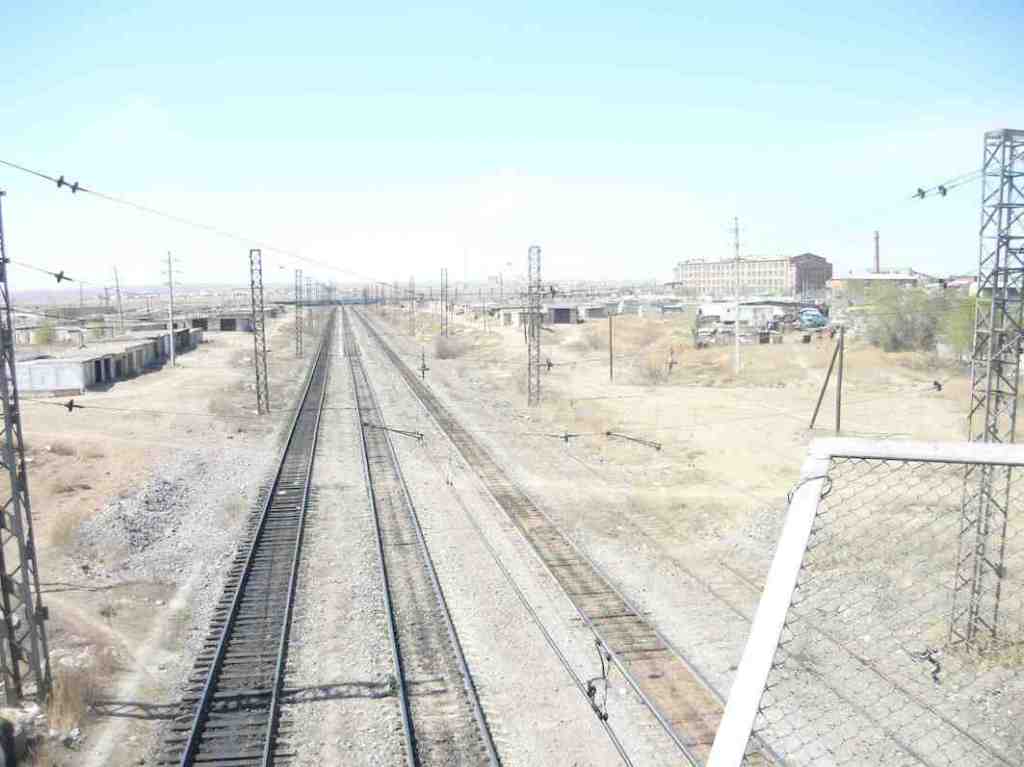
Kazakhstan’s regions are the source of the country’s mineral wealth, but still lag far behind Almaty and Astana in living standards, which has become a major source of resentment.
Since the Zhanaozen tragedy the government has been on the lookout for any problems, and has been throwing money at the regions to build up the local economies and keep people contented.
Many of Kazakhstan’s regions share a similar set of problems — small populations scattered over a wide area, poor transport infrastructure and over-reliance on single industries.
The problem is particularly acute in areas where oil or mineral deposits are nearing the end of their productive life (like the Uzen oilfield). But even where production is booming the benefits have been slow to trickle down, meaning little is being done to diversify local economies and increase living standards.

 Steppe in Style
Leave a comment