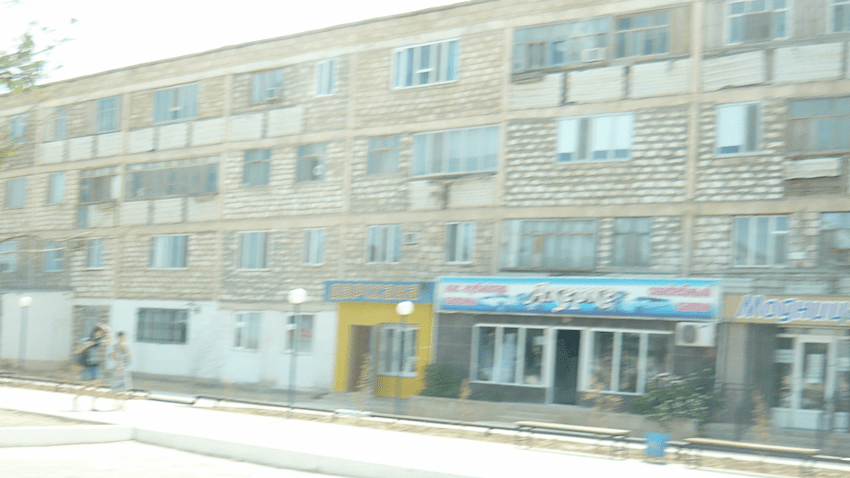
The fatal shootings of 17 men in and around the oil town of Zhanaozen in December 2011 shook Kazakhstan to its core. The Zhanaozen tragedy, as it became known, followed a six-month strike by workers at the huge Uzen oilfield.
The struggle between workers demanding higher pay and better conditions on one side and the authorities and state oil company KazMunaiGas on the other had become increasingly bitter and violent.
It erupted on December 16, 2011, the 20th anniversary of Kazakhstani independence, when enraged workers started wrecking the stage set up for the celebrations. Police opened fire killing 14 people in the town. Another three were killed in riots in nearby Shepte the following day.
I had visited Aktau and Zhanaozen back in May 2011, on a press trip organised by KazMunaiGas, just as the signs of discontent were growing but before the strikes really began.
Marshrutka through the desert
I’m in Aktau for an investment conference, where Kazakh officials will most likely discuss Zhanaozen, but I want to go to the town and see for myself what it’s like now.
On Sunday morning I got out of bed early and walked through the sandy streets to the bus station, where I boarded a marshrutka — a fixed-route minibus — for Zhanaozen.
I didn’t know exactly what I was going to do there. My original plan had been to meet up with some of the opposition Alga party members in Aktau and find out what the situation was in Zhanaozen, but none of the mobile numbers I had been given by Alga’s head office in Almaty seemed to be working.
I was the only non-Kazakh on the minibus, and I sat in a single seat near the front, a headscarf over my ginger hair and a jacket covering my pale arms, as I looked out of the window and tried to be inconspicuous.
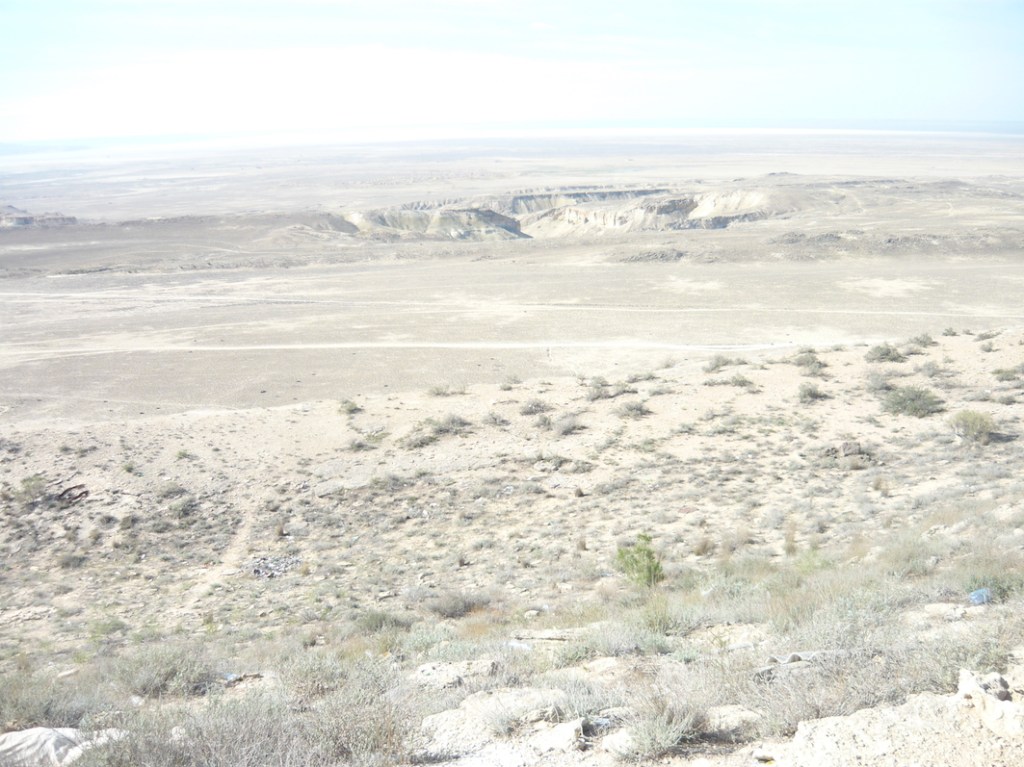
Past Aktau’s concrete blocks, we entered the desert, an expanse of greyish sand broken up by rocks and occasional dead-looking bushes. We were in the Caspian Depression, which is one of the lowest points in the world at 130 metres below sea level (it used to be under the Caspian Sea). Temperatures here can rise as high as 60C in summer, and that day’s forecast for Zhanaozen was 38C even though it was already September.
Soldiers in the street
I followed the other passengers nervously out of the minibus when we arrived in Zhanaozen after an hour and 40 minutes’ drive. I had studied the layout on Googlemaps on the apartment’s shaky internet connection before leaving that morning, and knew vaguely how to get to the central square — where the massacre had happened nine months earlier — from the bus station.
There weren’t a lot of people about but — whether because of a genuine atmosphere or because of the town’s recent history — I felt nervous and on edge, like I was somewhere I had no business to be.
When I was nearly at the main square, a column of soldiers in blue and grey camouflage gear trooped out of a compound and marched ahead of me towards the centre. Not wanting to risk catching up with them, I loitered in the shade of a supermarket — actually the one where we had stopped on the press trip for beer and snacks — until they had disappeared into the distance.
The main square didn’t look much different from what I remembered, despite its blood-soaked history, and there were no traces of the buildings burned down during the riots.
A facelift for the centre
Just over a year earlier, I recalled seeing Kazakhs tending the flower beds and picking up litter, with their faces bandaged in white scarves to protect their skin against the intense sunlight.
This time, teams of women were again gardening and sweeping the sandy verges (one of the ways the government kept unemployment down), but there was also a considerable military presence outside the UzenMunaiGas oil company and local council offices.
The facades of the buildings on the well-kept main streets had been freshly painted, but behind them were dirt tracks and shabby apartment blocks.
I tried calling the Alga reps again, but couldn’t get any signal on my mobile at all, and I felt nervous about approaching people. As on the minibus, mine was the only European face around, so I kept my head down.
I was hungry but decided to wait till I was back in Aktau rather than risk staying longer in Zhanaozen. It was one of the few times in Kazakhstan that I had felt truly nervous about my personal safety.
Return to Aktau
After an hour or so of walking aimlessly, I made my way back to the bus station. I was just entering when a car full of Kazakh men shot out at high speed, swerving dangerously close to me. One yelled something as I jumped out of the way, but I didn’t understand him.
I was still shaking when I got to the ticket office, then I sat on the minibus, my head down again, waiting to leave. A few minutes later my ticket was checked and I was ejected to the bus.
The driver impatiently pointed out to me that the tickets bore part of the number plate of the bus you were supposed to take. I got out just in time to see the bus I was supposed to be on accelerating down the road towards Aktau.
Returning to the ticket office, I was prepared to simply buy a new ticket (they cost about 60p), but the woman behind the grille kindly changed the bus number for me with no charge.
By the time we had driven back through the desert to Aktau I had a pounding headache from the heat and glare of the sun on the sand, and I didn’t know much more about how things are in Zhanaozen.
 Steppe in Style
Leave a comment