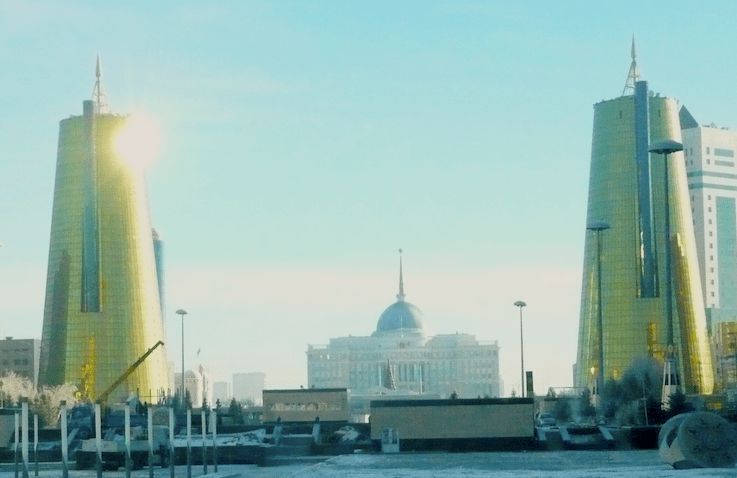
In August 2012 I moved to Astana, Kazakhstan’s 15-year-old capital city.
Well, that’s not entirely true. There’s been a settlement on the bank of the Ishim river since 1830, which two years later became the town of Akmolinsk.
The town’s fortress was burned down during the liberation movement led by Kenesary Khan, but later rebuilt, and the town’s population continued to grow during the Imperial Russian era.
In the Soviet era it became prominent in the 1950s, when the town — newly renamed Tselinograd — was the centre of the largely unsuccessful virgin lands campaign to turn large areas of uncultivated land over to grain.
Strategic move
In 1997, the government of independent Kazakhstan decided to move the capital from Almaty to what is now Astana.
There are various stories of why the capital was moved. The most convincing to me is that the government wanted to put a Kazakh stamp on the northern part of the country to prevent any potential Russian land grab. Northern Kazakhstan merges into south Siberia, and the north also has a large Russian population.
Other theories are that they wanted to move the capital away from the risk of earthquakes in Almaty, or to move it further from the border with Kazakhstan’s other great power neighbour, China.
The city has had many name changes. It started out as the small settlement of Akmola, which means ‘white tomb’ in Kazakh. Two years later this was Russified to Akmolinsk. In 1961 it was given the name Tselinograd in honour of the virgin lands campaign.
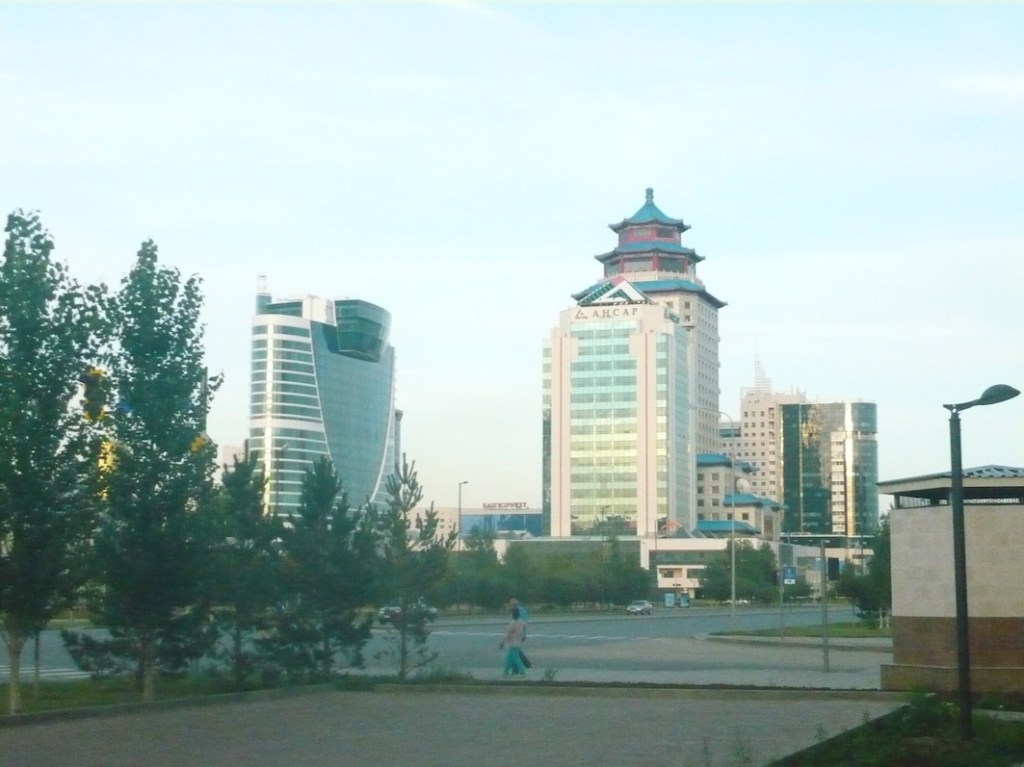
After independence the name was switched back to Akmola, but this was seen as a bit downbeat for the new capital, so it was given the new name Astana.
As Astana simply means ‘capital’ in Kazakh, the lack of though put into the new name encouraged people to think it’s a placeholder name until the president dies and the capital gets renamed Nazarbayev after him.
Building boom with a twist
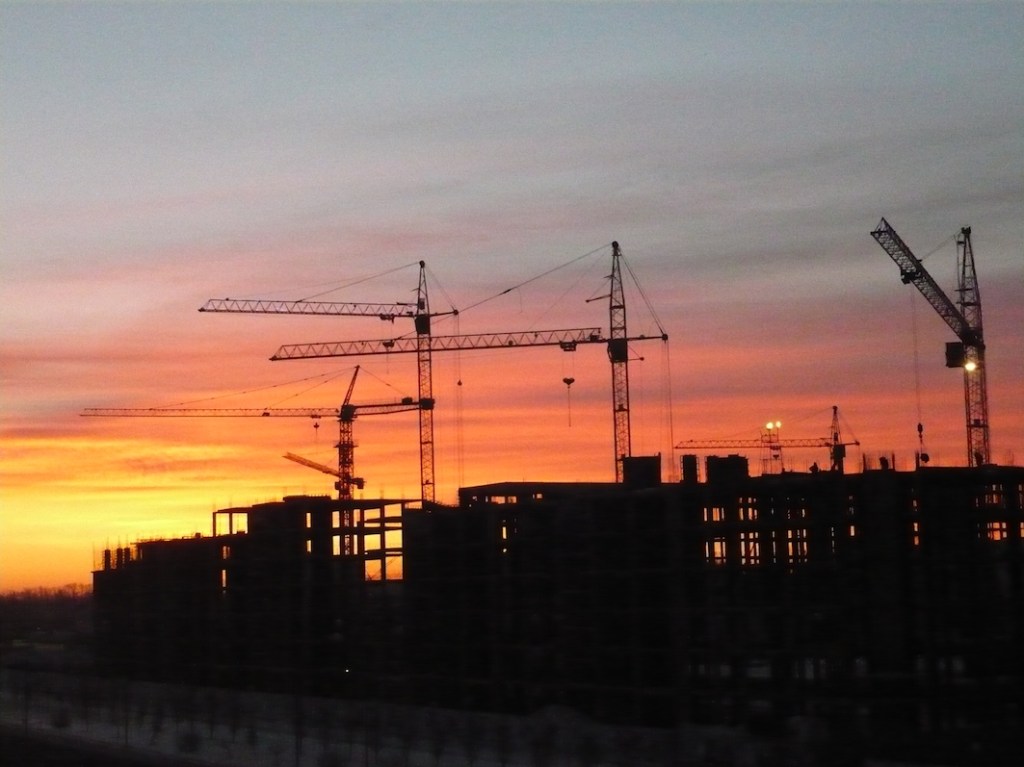
I first visited Astana in 2008, just 11 years after it became the capital, and every time I revisit the changes are startling.
This time I’m staying right in the heart of Astana’s brand new left bank in a temporary serviced apartment, while I look for a permanent place.
It had been dark when the plane arrived at 3am but the next morning I got to appreciate the city’s exotic, high rise, borderline bonkers architecture.
I was just a block away from its central street, Nurzhol Avenue, which ran from the blue-domed presidency — the Akorda — at the east end to the headquarters of Kazakhstan’s state oil and gas company, KazMaunaiGas at the west.
Through the huge arch in the middle of the KazMaunaiGas building was the Khan Shatyr, a new shopping mall in a structure inspired by the traditional Kazakh yurt.
All along Nurzhol Avenue were a bizarre assortment of exotic high rise building that had earned the new Kazakh capital the nickname Dubai of the Steppe.
The Chupa Chups tower
In the long park that ran right along the centre of the avenue was the Baiterek Tower, which had become the symbol of Astana. The futuristic tower rose up into a circle of spikes encircling a huge golden ball, which apparently weighed almost 300 tonnes. The ball was supposed to represent the golden egg laid by Samruk, the bird of happiness, in Kazakh legend.
I’d been to the top on my first visit, looking out at the view of the new city – which at that time ended in empty steppe a block away from Nurzhol Avenue — and placing my hand in a print of Nazarbayev’s palm set in gold.
The Baiterek Tower had been given the nickname Chupa Chups because of its similarity to a giant lollipop. Other buildings also had irreverent nicknames — “the lighter” which housed one of the ministries, the two “golden buckets” on either side of the parliament, and the “egg” where the national library was located.
This bizarre mix of ultra-modern steel and glass together with buildings referencing Kazakh tradition was in stark contrast to the older right bank, which was mainly bog standard communist era apartment blocks though new skyscrapers were springing up there as well.
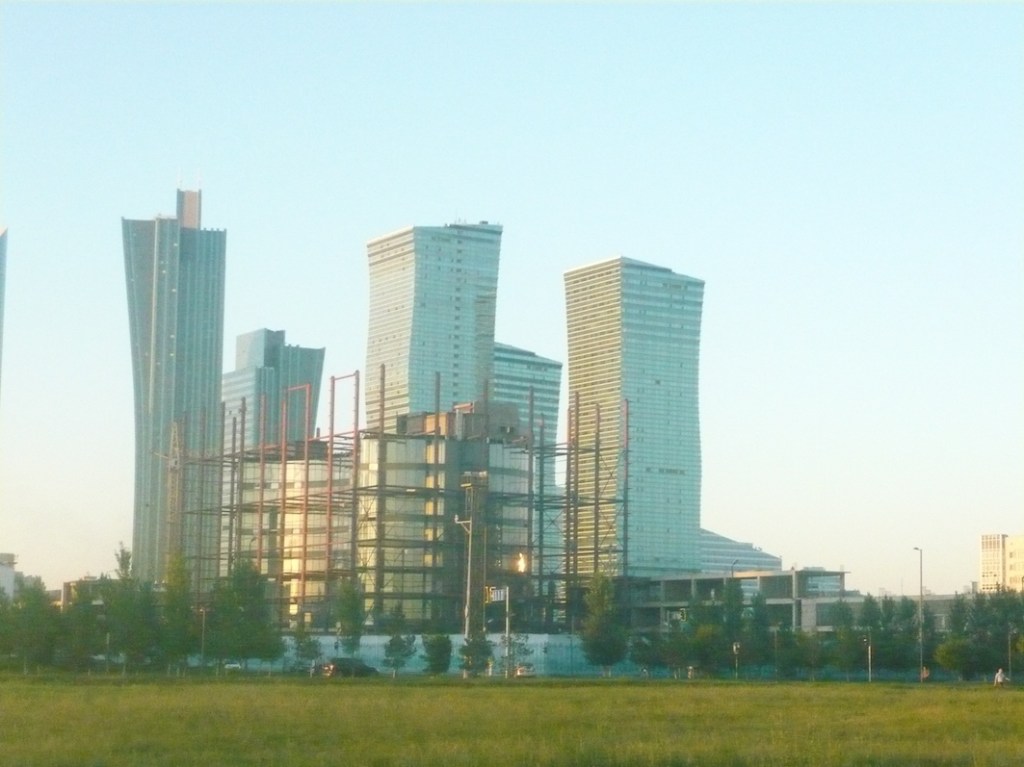
When I looked at the photos from my 2008 trip to Astana it was amazing how much of the new city hadn’t even exited. Landmarks like the three twisted Severniy Sliyani (northern lights) towers were only a few stories high; now the tallest of the three had over 40 stories.
Hardship posting no more
Over the years I found I was making the trip — two hours on the plane or an overnight train journey — from Almaty to Astana more and more, as the new capital gained in importance.
My ex-boyfriend, who had worked there for a while, told me that back when it was first made the capital workers at the government offices would sleep in huge dormitories a bit like student halls of residence because services hadn’t caught up with the move. Even in 2008, it had been hard to find a grocery shop or cafe on the right bank.
People who could afford it would fly back to Almaty on a Friday night and return to Astana on Sunday night or Monday morning in time for work. Apparently those fights were the busiest in the world for some time.
But that was changing. Astana was no longer a hardship placement. Young adults from all over the country had come to settle here, drawn in by the stable government jobs. They married and had children. Others came to work in the shops, cafes and other industries serving the workers at government offices and state owned companies.
Now I’d be part of the growing population of this new city on the steppe.
 Steppe in Style
Leave a comment