While staying in Moldova I took a side trip to the unrecognised rebel republic of Transnistria. Just a couple of hours drive from Chisinau, driving in Tiraspol, the capital of the tiny republic, felt like going back to Central Asia — or indeed back to the Soviet era.
From the border checkpoint — where I got my first glimpse of the hammer and sickle plus corn cob emblem of Transnistria — to the Lenin statues in Tiraspol, it was like a living time capsule.
Getting there was easy; plenty of buses leave from Chisinau’s main bus station. Despite its dubious status, unrecognised by any other country, I had no issues crossing the de facto border from Moldova into Transnistria, simply telling the guards I was there as a tourist and would be returning the next day.
The bus and train stations are next to each other at the end of Lenin street, about a 15 minute walk from the town centre.
About Transnistria
Transnistria is a thin sliver of a country sandwiched between the main part of Moldova and the Ukrainian border. Much of the de facto border between Moldova and Transnistria runs along the Dneistr river, which also flows through the centre of Tiraspol.
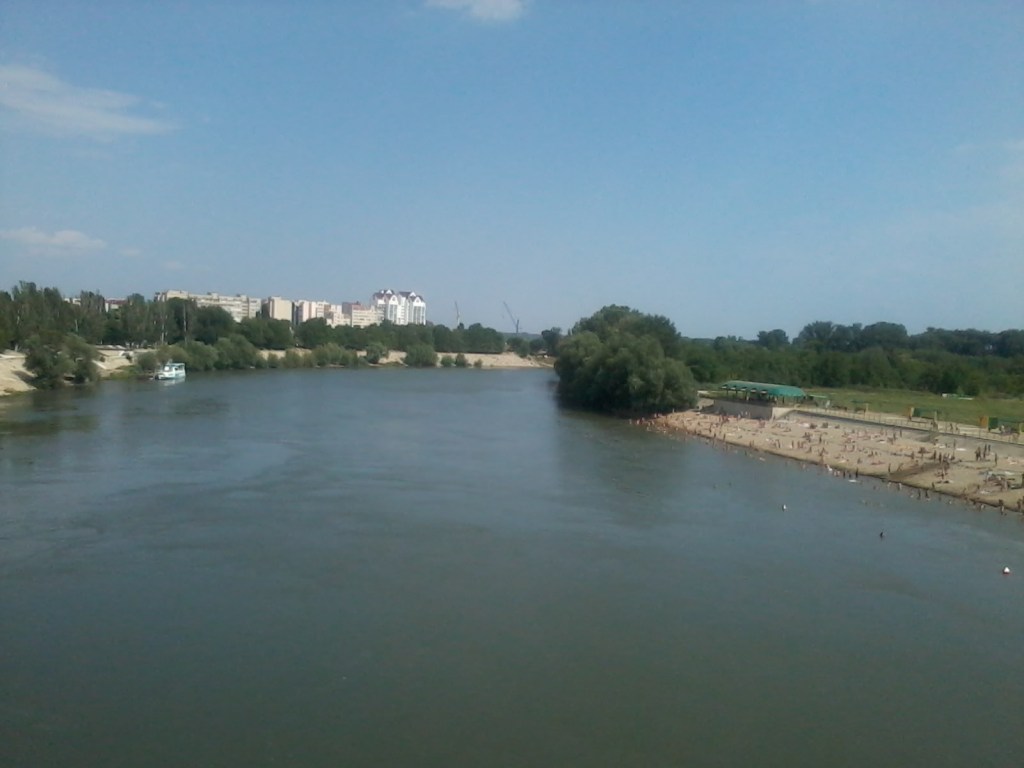
In fact, Tiraspol took its name from the Tyras, the ancient Greek name for the Dniester.
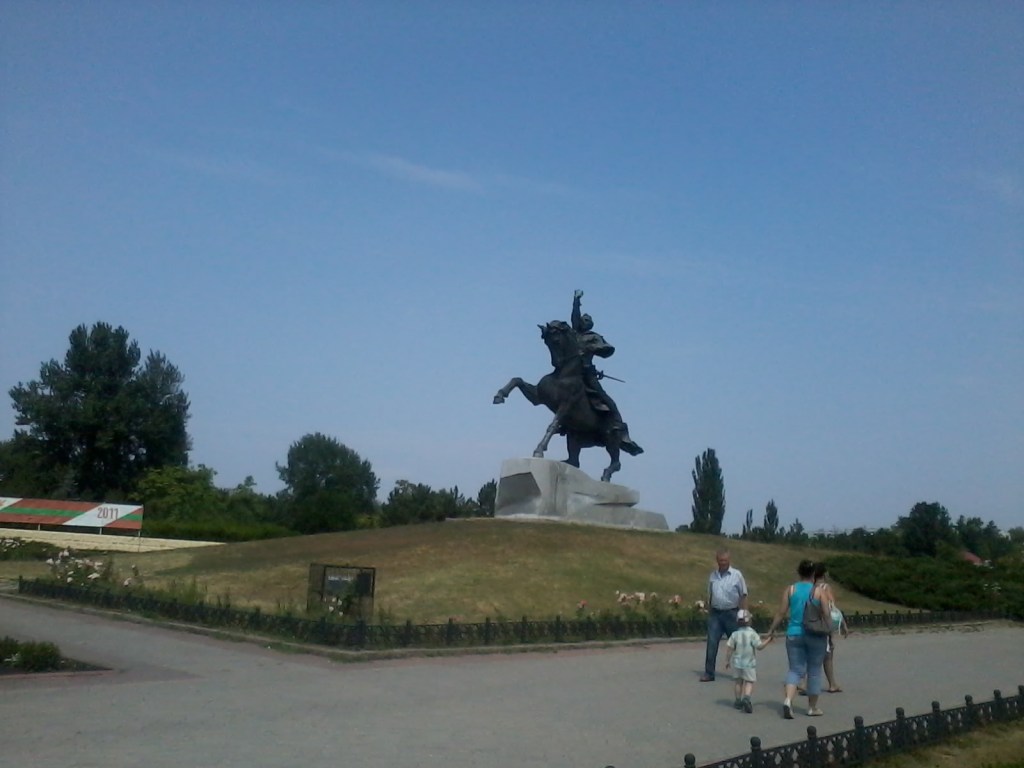
It’s a relatively recent settlement, starting out as a fortress built by the Russian army. Russian field marshal Alexander Suvorov is considered to be the city’s founder; he’s remembered with a huge statue in the city centre.
After the first world war, most of what is now Moldova was handed over to Romania, but the land on the eastern bank of the Dniester became part of the Moldavian Autonomous Soviet Socialist Republic within Ukraine.
In 1940, the USSR forced Romania to give up Bessarabia, which was then Romanian troops, as part of the Axis invasion of the USSR, only to be retaken by the Red Army in 1944.
The rift between Moldova and Transnistria started in the late 1980s when Romania was calling for reunification with Moldova. This sparked an independence movement among Russian speakers on the east bank of the Dniester, and on September 2, 1990, Tiraspol was declared the capital of the Pridnestrovian Moldavian Soviet Socialist Republic.
As the situation escalated, there was sporadic fighting between the Moldovan army and Transnistrians backed by Russia between 1990 and 1992, which intensified in March 1992 until a ceasefire was declared on 21 July 1992. Since then, the conflict has remained frozen, despite efforts by the international community to find a lasting solution.
Today, however, Tiraspol is a fairly quiet city of just under 130,000 people. On the summer afternoon I arrived, hundreds of them seemed to be sunbathing on the banks of the Dniester, or strolling through the pleasant parks nearby.

The sights of Tiraspol such as the local museums, the Kvint distillery and the unfeasibly massive Sheriff stadium are moderately interesting but not worth a trip in themselves.
What to see in Tiraspol
Some of the most interesting sites in Tiraspol are reminders of its turbulent recent history.
The Soviet-nostalgic city has a huge Lenin statue outside the main government building on 25 October street. There is a smaller statue outside the House of Soviets further along the same street,
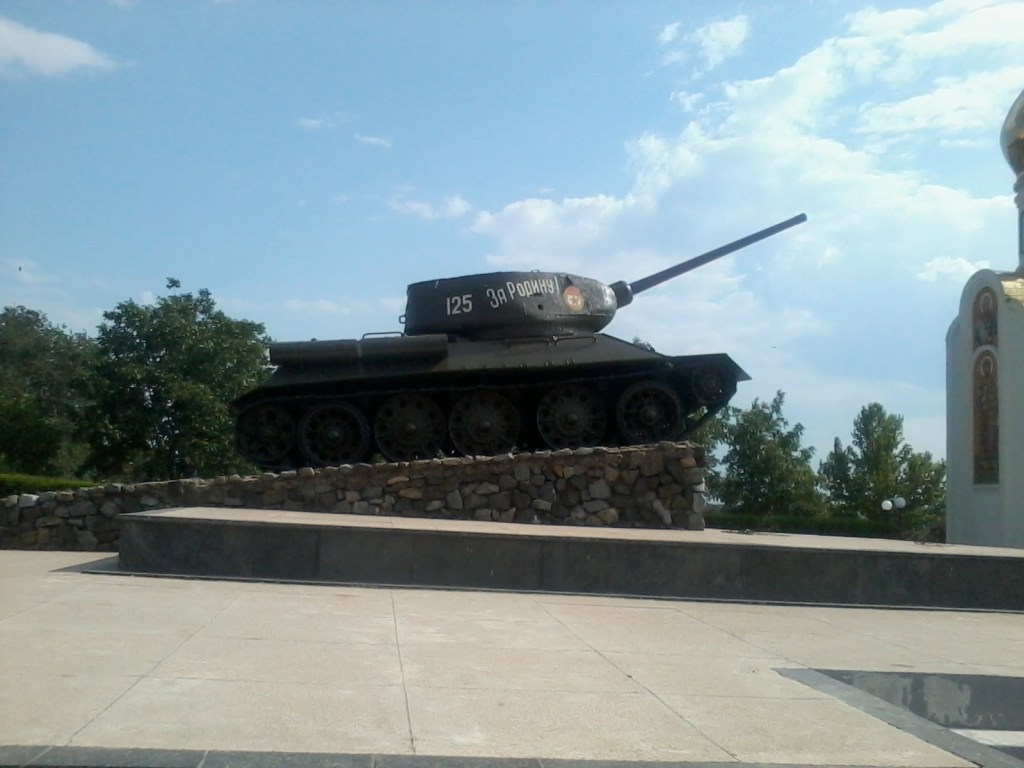
An old Red Army tank mounted on a plinth in central Tiraspol, and pointing rather disconcertingly at a nearby church. A popular spot for selfies for local teenagers and Tiraspol’s few tourists.
The statue of Russian general Alexander Vasilyevich Suvorov mounted on his prancing horse has become a symbol of Tiraspol. It’s impossible to miss at the side of central Constitution Square on the city’s main artery 25 October Street.
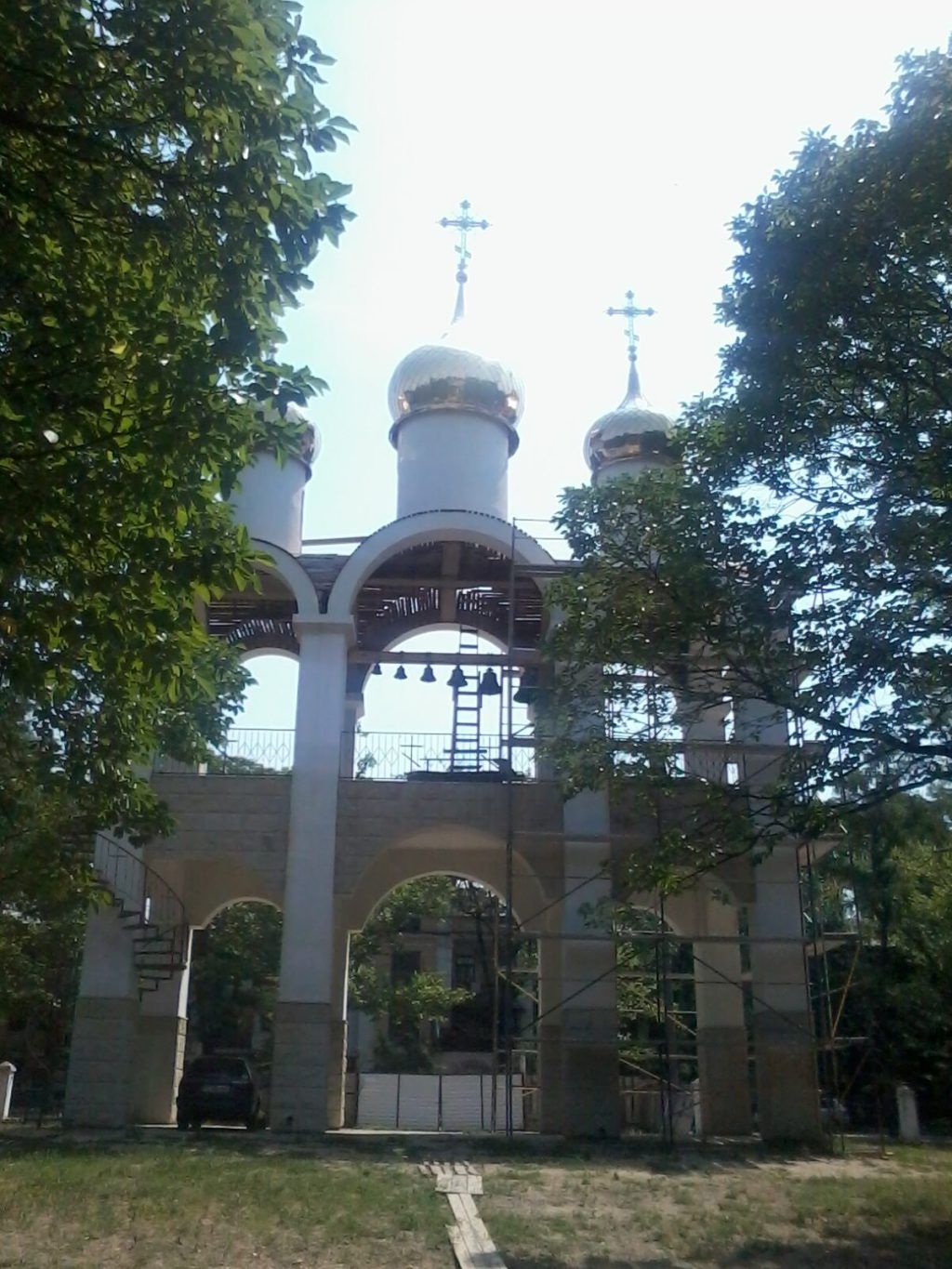
The Christmas Cathedral on the corner of Shevchenko and Karl Marx streets is a beautiful sight with white walls, green roofs and golden domes. Venture in, and you will see it’s a perfectly formed gem of a church, with walls and ceilings densely covered in paintings and icons. The cathedral, formally known as the Cathedral of the Birth of Christ was completed in 1999.
There’s also a flea market in the park near the Dneistr, where you can pick up old medals and other Soviet memorabilia.
On a completely different theme, Tiraspol offers tours of the Kvint brandy distillery. English speaking guides are available, and tours are followed by a brandy tasting and and light meal.
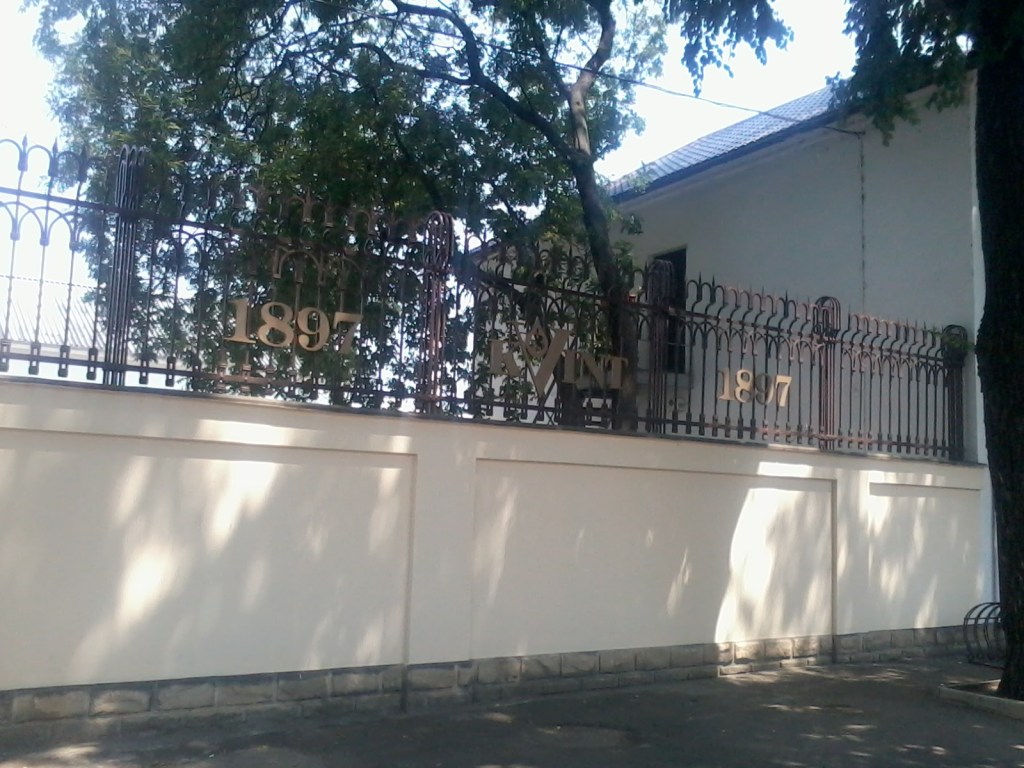
Kvint was founded back in 1897, initially producing 40% proof spirits from local grapes. Things got a lot more sophisticated over the following 119 years. The distillery now has its own 2,000 hectares of vineyards, where it grows more than 20 varieties of grapes, and a cellar where it ages its spirits for anything from a year to six decades. It produces around 20 million bottles a year, including wine, vodka, gin and calvados as well as brandy.
Unusual souvenirs from Tiraspol include Kvint brandy, whose bottles have a map of the republic on the side (available from the distillery), or linens from Tirotex, Europe’s second-largest textiles mill, available from Textile House Tirotex.
Wild capitalism and a gigantic football stadium
For a country that likes its Communist symbols – the hammer and sickle features on the flag and coat of arms – Transnistria has its fair share of “wild capitalism” too. Coming into town by road, the huge Sheriff stadium is impossible to miss.
This is owned by the Sheriff group, a giant holding company set up by two former officers, Viktor Gushan and Ilya Kazmaly. Sheriff’s assets range from chains of supermarket and petrol stations to a mobile phone network to the country’s largest stadium. It has huge political influence, being the backer of the current ruling party, Renewal.
The giant stadium was completed in 2002. It seats around 14,000 people – almost one tenth of Tiraspol’s entire population. The sports complex also includes various training fields, a children’s football school and accommodation for the FC Sheriff team.
Tiraspol museums
To learn more about Tiraspol’s history, I visited the Universal Museum. The museum has an eclectic collection of items from Tiraspol’s history, from traditional costumes to the history of independence, with the flags and other state symbols adopted in its bid for statehood prominently displayed. Most interesting is the photography exhibition with many pictures from the early 1990s was with Moldova.
Unlike the fortress in nearby Bender, Tiraspol fortress has been almost completely destroyed. Nonetheless, the fortress museum – an affiliate of the Tiraspol Universal Museum – was recently set up.
Plans to build the fortress were initiated after the Russo-Turkish war of 1787-1791, after which the Treaty of Yass stipulated the dividing line between the two empires was along the Dniester. At the end of the 18th century plans were drawn up to strengthen the border along the river, and the first stones of the Tiraspol fortress were laid in 1793.
Based on an octagonal design, it was completed in under three years, despite many builders falling victim to sickness, as there were fears of a new war erupting. However, in 1812 the border was moved westwards to the Prut river, and the Tiraspol fortress was never needed to defend the empire. Instead it was turned into a prison.
Today, only the powder cellar and the earthen rampart surrounding where the fortress used to be still exist.
Where to stay
I stayed at the CityClub, Tiraspol’s first four star hotel. I didn’t go out in the evening, but there was entertainment enough in the hotel itself, where there was a steady stream of black SUVs rolling up to discharge suited men and a few glamorous women for an evening at the bar and restaurant.
Where to eat
My favourite was 7 Pyatnits (7 Fridays), a popular cafe/bar /restaurant. I didn’t try the chips pizza on the menu though!
The Bristol Coffee Bar has a great selection of coffees and teas.
For self catering, the chain of Sheriff Supermarkets offer the closest thing to a western style supermarket in Tiraspol. There are supermarkets at Clara Zetkin St 1/2, Strada Karl Liebknecht 70, Strada Sverdlov 96 and Strada Șevcenco 10.
An alternative for fresh food including fruit, vegetables, meat and dairy products, is the open air Green Market on Strada Karl Liebknecht 226.
 Steppe in Style
Leave a comment