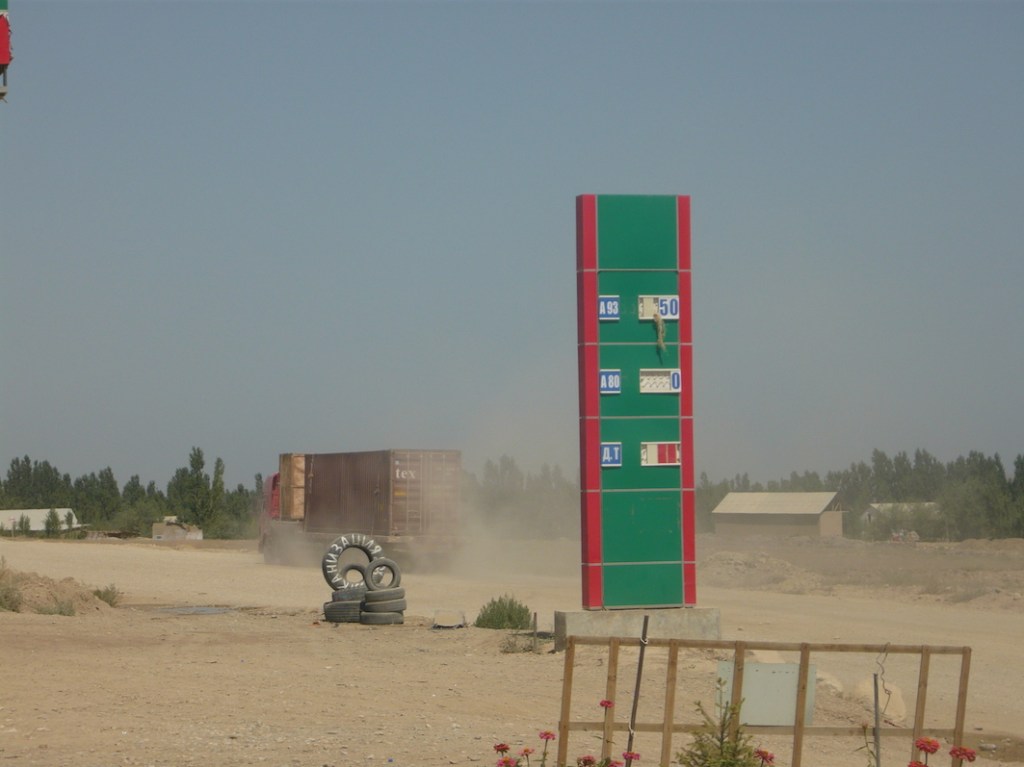
Getting from one end of south Kyrgyzstan to the other involves skirting around several of the Fergana Valley enclaves, unless you happen to have a Kyrgyz or Uzbek passport.
I’ve done this twice, without any problems — unless you count a day-long journey in place of what should be a fairly short trip.
Here’s how I did it — and why.
How to get from Osh to Batken avoiding the Fergana Valley enclaves
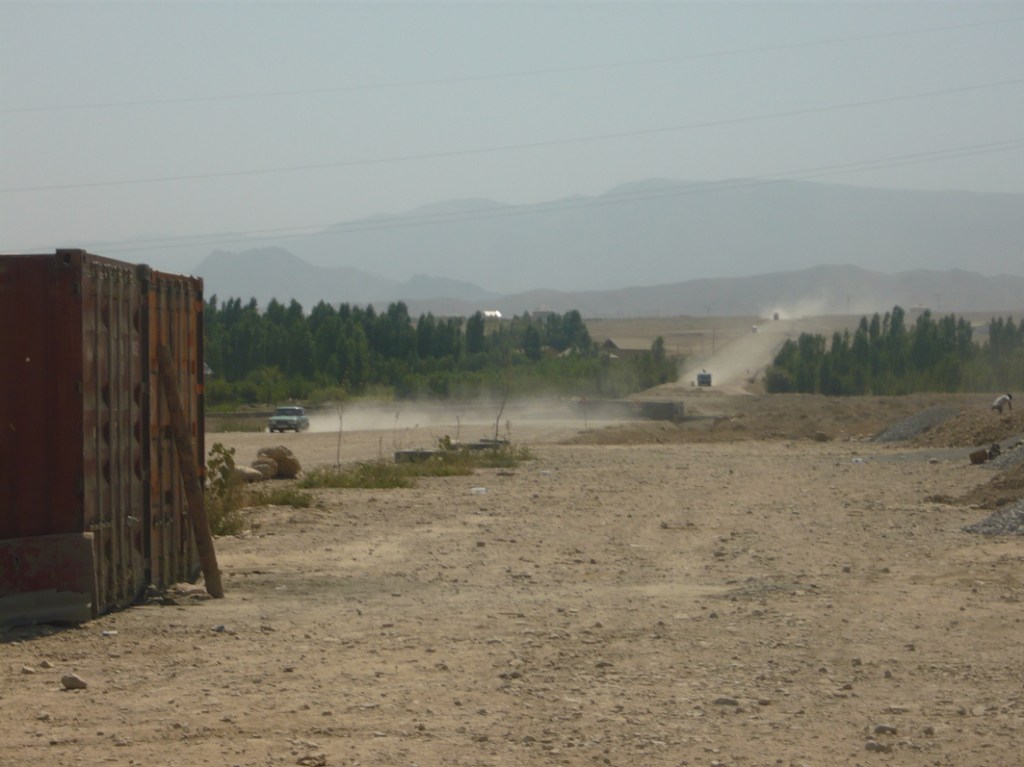
The main road from Kyrgyzstan’s ‘southern capital’ Osh to Batken, the small city at the western extreme of the Kyrgyz Fergana Valley and the Kyrgyz-Tajik border passes though small Uzbek enclaves.
Anyone who doesn’t have a Kygyz or Uzbek passport can’t take that road, and needs to find a shared taxi willing to travel the long road around the enclaves.
The price at time of writing was $100 for one person in a car. We paid $120 for two people. You’re unlikely to share the taxi with anyone else unless you’re travelling with a friend or agree with another traveller to share the cost.
How to find a taxi?
The first time I booked the taxi through a hostel, where I stayed precisely because I knew it offered this service.
The second time I stayed at a guest house, and the proprietor knew someone who knew a taxi driver who would take us. Asking a local generally does the job.
When should you leave?
Leaving Osh around 9am or even earlier means you should get to Batken or north Taikistan by late afternoon or early evening.
What destination to pick?
The first time I booked a taxi as far as Batken, and was planning to find another taxi to go as far as Khujend, the main town in north Taikistan the next day. That was a memorable journey involving a fire in the car and an unscheduled stop at a kindly Kyrgyz woman’s family home.
I later discovered that you can simply book a taxi right though from Osh to Khujend. You may need to switch to a Tajik taxi on the border, but unless you’re unlucky this shouldn’t involve an extra cost.
Taxis can also go to Isfara, a Tajik city between Batken and Khujend.
How to stay safe
The biggest and most likely danger is a car accident. Cars go very fast on poor roads, and I saw accidents on the stretch between Nookat and the turnoff for the detour road.
The detour road is basically a gravel track and accidents are possible. My first time we had a blowout but nothing more serious — though we did travel onwards for a hundred miles or more with no spare tyre.
If you’re travelling alone it’s worth noting that parts of the detour road are very remote. So it’s better to make arrangements via your guesthouse, a travel agency o someone you know in Osh rather than flagging down a random taxi off the street.
The hostel kindly gave a place in the car to a Kyrgyz woman to act as a kind of chaperone. I usually travel with a pepper spray which are sold at hunting shops in Kazakhstan.
My personal advice is that if you feel in any way uncomfortable with the driver in Osh or on the first part of the journey, leave the taxi before it gets onto the lonely detour road.
What to wear
In summer it’s going to be an all-day journey in very hot weather. Loose comfortable clothing is a good idea.
In winter, make sure to wrap up warm and bring extra jumpers in case the car breaks down and you’re waiting for a while.
What to pack
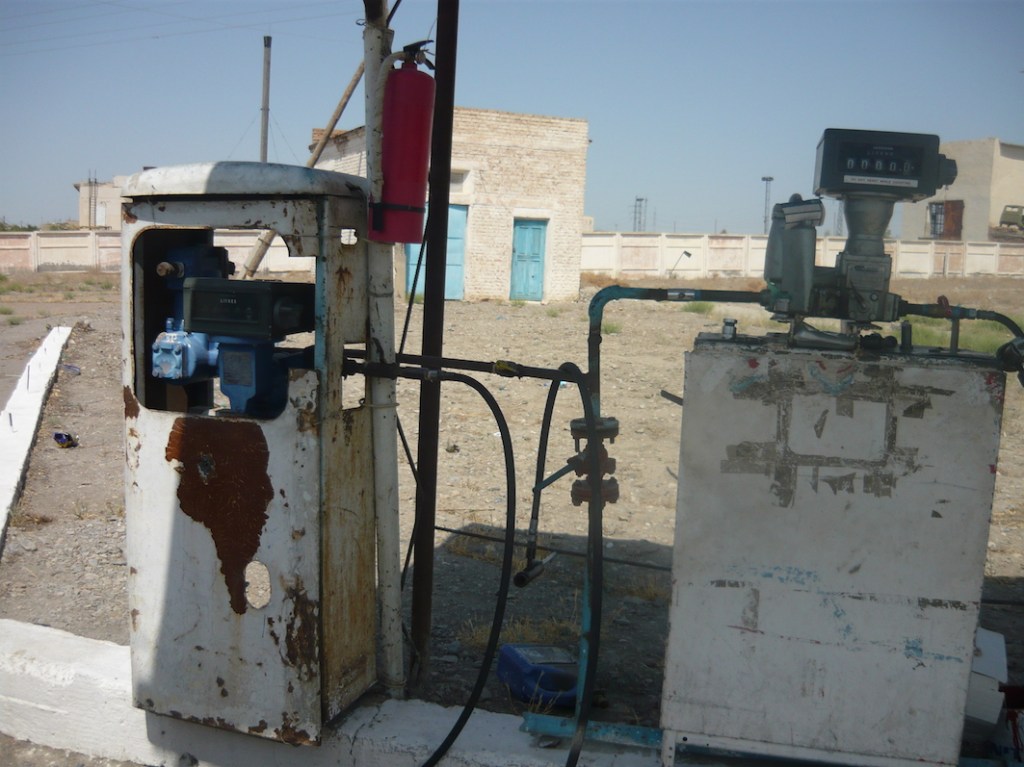
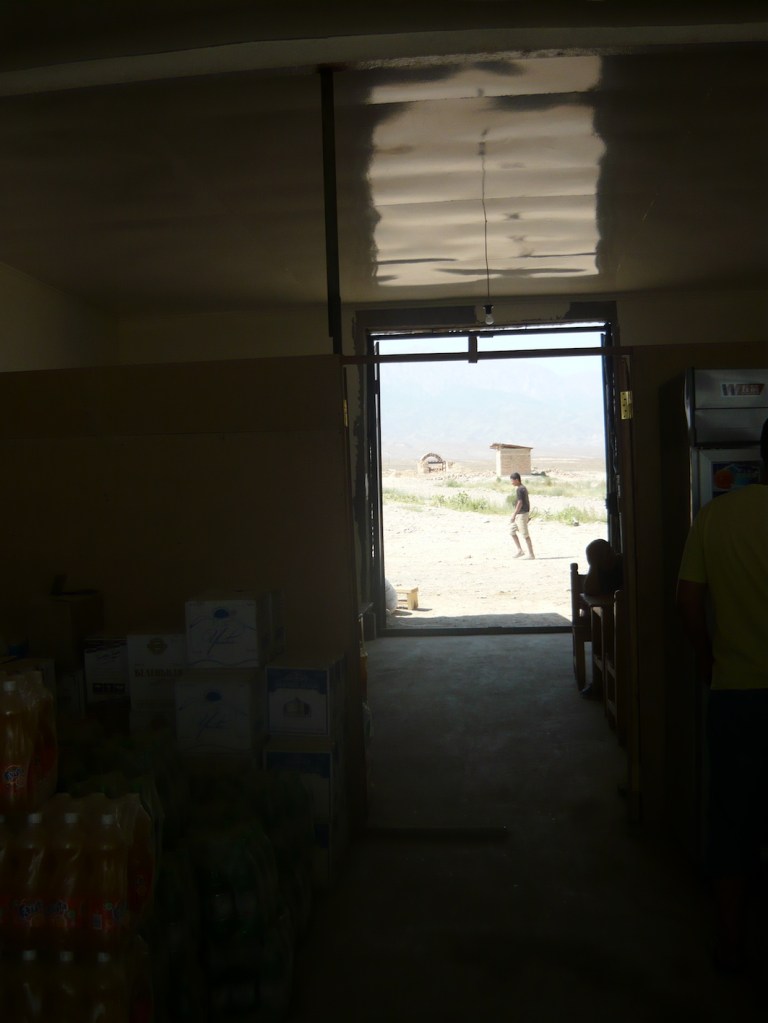
The road passes through Nookat and other small towns, and there are even a couple of petrol stations with small shops on the detour road. However, it’s a good idea to bring plenty of water and some snacks.
Sunglasses will protect your eyes from the dust on the detour road.
Now the why…
The valley, bordered by the Pamir and Tien Shan mountains, has an area of 22,000 sq km or 8,500 sq miles. Its population is 7mn, which means it’s Central Asia’s most densely population area.
The complex distribution of ethnic groups in the Fergana Valley has resulted not only in highly convoluted borderlines but also the creation of eight enclaves of varying sizes.
The large Uzbek enclaves of Sokh and Shakhimardan as well as the smaller Qalacha, and Jangail are all located within Kyrgyzstan.
Also in Kyrgyzstan’s Batken region are two Taik enclaves, Vorukh and Western Qalacha.
In Uzbekistan, Kyrgyzstan’s Barak and Tajikistan’s Sarvak are inside the Fergana region.
What this means for travellers
All this adds massively to travelling times. The distance as the crow flies from Bishkek to Khyjend is 503km. The distance we actually travelled was not much less than 1,000km. We not only had to skirt around the enclaves between Osh and Batken, the road from Bishkek to Osh also makes a large circle around part of Uzbekistan that juts out into Kyrgyzstan.
In theory you could go through Sokh with multiple entry Kygyz and Uzbek transit visa, but I’ve heard even then foreigners aren’t always allowed through, and the borders can close without notice.
Ethnic violence
There are periodic flareups of ethnic tensions — often caused by competition for water and land resources. On top of that, the Uzbek authorities have tightened border controls over concerns about Islamist terrorism.
My first trip took place in autumn 2009, just a few months after a clash between Kyrgyz and Uzbek citizens at a Kyrgyz border checkpoint near Sokh.
A year later southern Kyrgyzstan erupted into bloody ethnic fighting between Kyrgyz and Uzbeks, concentrated in the cities of Osh and Jalal-Abad, but with smaller incidents across the region.
The situation has calmed since then, but the enclaves are still potential flashpoints.
 Steppe in Style
Leave a comment