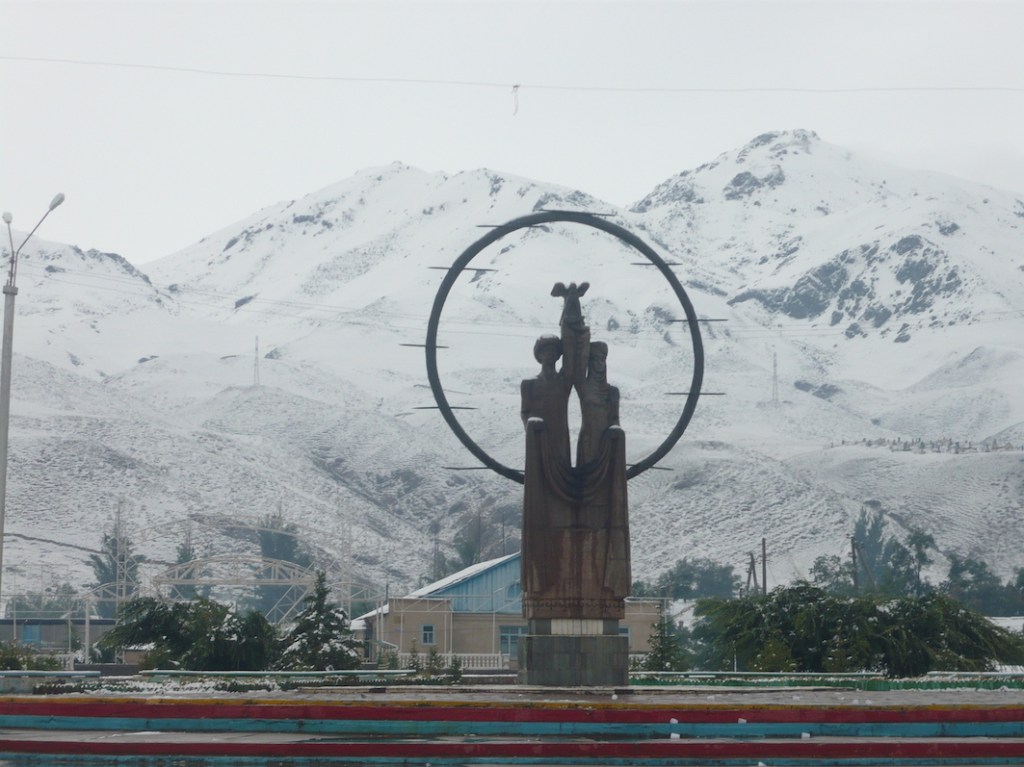
We arrived in Naryn in mist, sleet and driving winds. Out of the mist loomed the mostly Soviet-built city, but the low clouds obscured the mountains towering over it.
Set high among the Tian-Shan, Naryn is the only major town in the region of the same name, which is the highest in the country — 70% of it is mountains — and also the poorest. Naryn itself is around 2,000 metres above sea level.
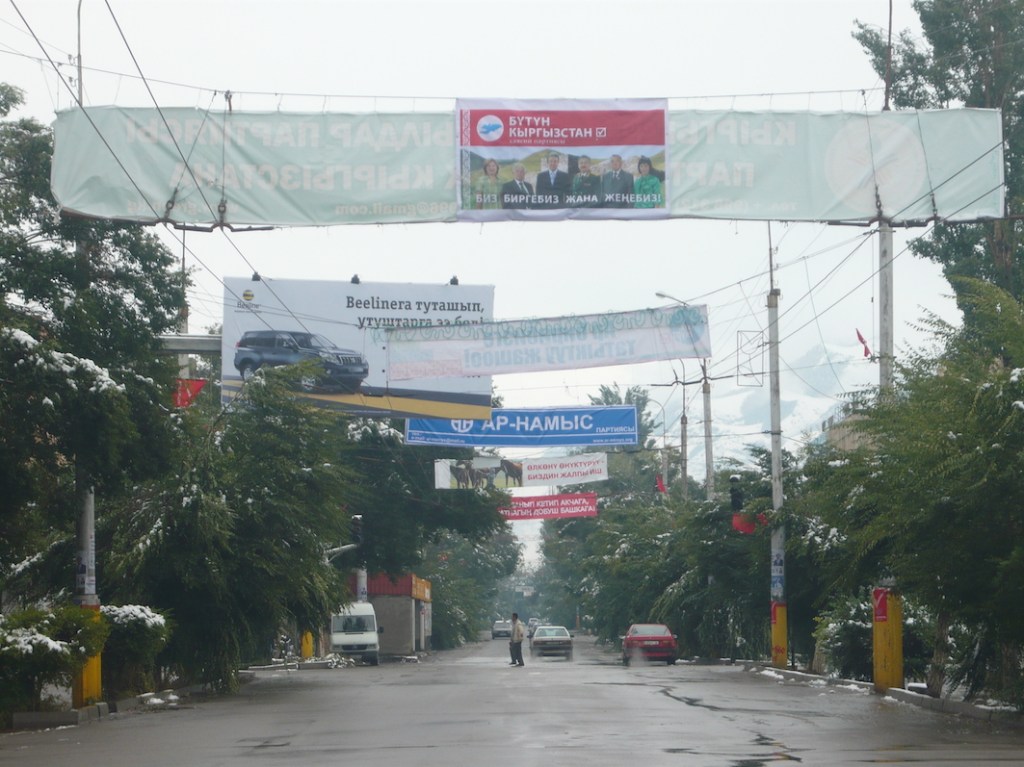
Outside of Naryn, most of the region’s population are small scale farmers or herders, still following the ancient tradition of wintering in the lower lands then migrating to the high mountain pastures with their horses, sheep and other animals in summer. Mines dug in the Soviet era have since mostly been abandoned.
In this unlikely setting, the town of 35,000 people (and growing) is the only cultural centre with a university, theatre and an increasing number of hotels and cafes for the tourists that are starting to come here.
Naryn on the old Silk Road
It lies on one of the many strands of the old Silk Road, which ran though the mountainous region to the Torugart Pass that separates Kyrgyzstan and China around 200km away by road. Today this is still the main route between Kyrgyzstan and China.
Naryn has become a centre for tourist treks, horse rides and hunting trips in the Tian-Shan, as well as a stopping off point on the route to Kashgar, just over the border in China.
Set along the river Naryn, one of the tributaries of the Syr-Darya, one of Central Asia’s two great rivers, Naryn is supposed to be an attractive town but we saw nothing of this as it was blanketed in cloud.
One of the theories about the city’s name is that it comes from the Mongolian word for sunny — ironic given the low clouds and sleet on the day we arrived — though other theories are that it’s from a Chinese word for “narrow”, reflecting the gorge.
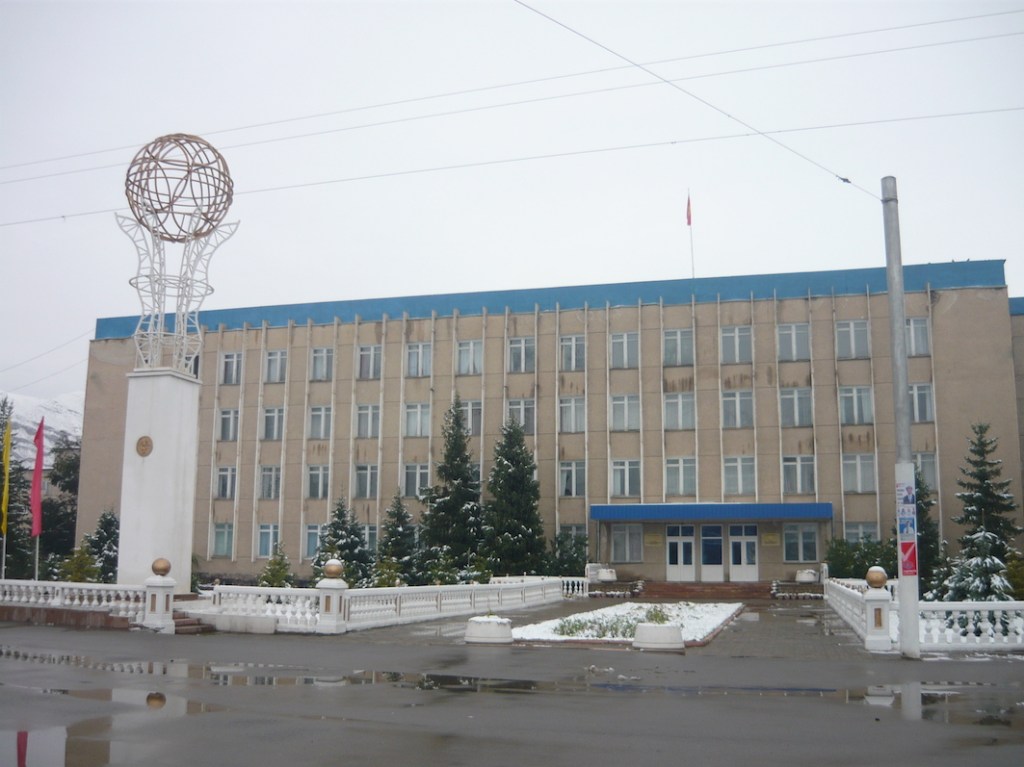
I visited the mayor’s office to discuss the situation in Naryn following the revolution earlier this year.
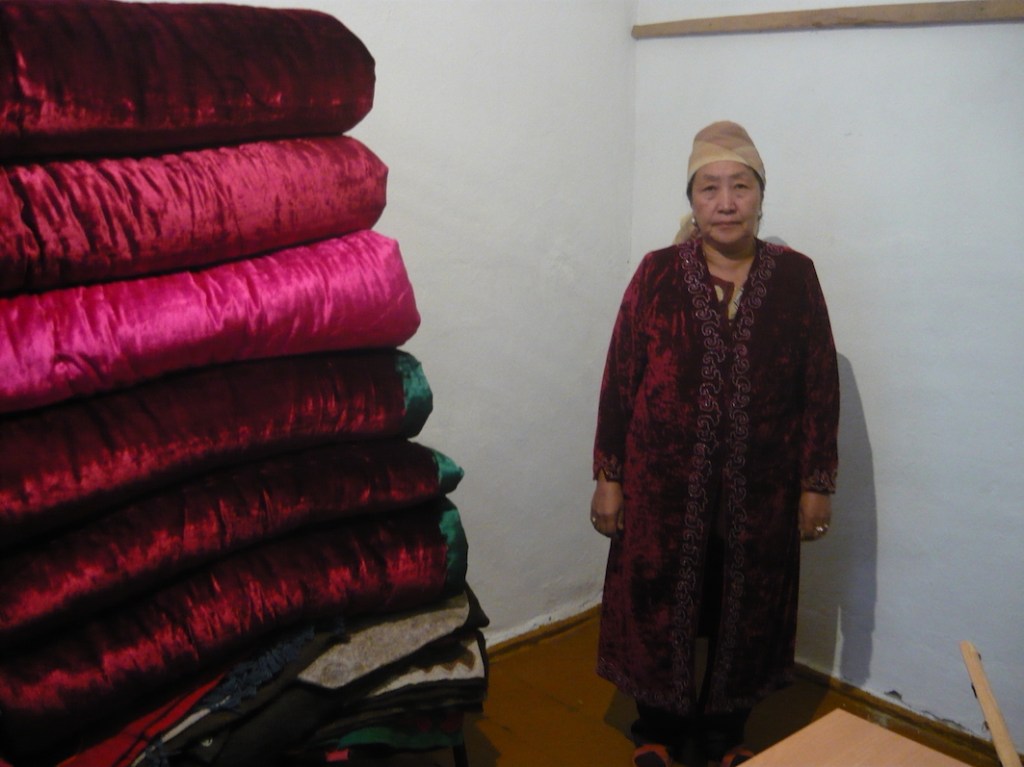
We then went on to visit a workshop where local women were making some of the traditional Kygyz textiles.
Worst meal ever
Dinner that evening was in a local restaurant. I never got the name, and in any case won’t be recommending it … in fact I can safely say it was the worst meal I ever had.
The first course was a plate of egg and sweetcorn drowned in dubious smelling mayonnaise. It was strangle crunchy, which turned out to be the large amount of eggshells the cook had failed to remove.
Next came a plate of pasta. Can’t go wrong with plain pasta? So I thought until I pushed some strands aside to see a huge dead fly.
I didn’t want to make a fuss, as our poor host was mortified and said he would go straight to the mayor’s office and demand that the restaurant be closed down after presenting such food to an “honoured guest from England”.
Cosy haven
The apartment he found for us more than made up for the restaurant (and some rye bread and cheese from a local kiosk filled the gap in our tummies).
We were staying in an apartment in an old three story Soviet building, just like those that make up most of the modern day town.
There were two regular sized rooms, with an explosion of carpets on the floors and walls. They were a bit threadbare, wth torn lino showing through on the floors and held down with duct tape.
But it was warm and welcoming with wooden beds, cotton sheets, and on top the brightly coloured traditional quilts, known as sholpons, in bright velours with gold and silver embroidery
The kitchen was a small room, with a fridge and ancient cooker, but all scrupulously clean.
Naryn in heavy snow
I woke to the sounds of town life, but muffled by the foot or more of snow that had fallen overnight.
Despite the cold, the town, which had been almost deserted the night before, was now buzzing with activity.
Men in bulky black weather jackets and women in bundles of shawls were out sawing away at the trees that had come down in the storm, stacking firewood neatly onto sledges.
Other men were winding up the copper cables that had fallen down under the weight of the snow or the fallen branches and coiling them up to take home.
It was also feast time for the cows that had somehow appeared from somewhere and were busy tearing of the leaves from the fallen trees and chomping happily.
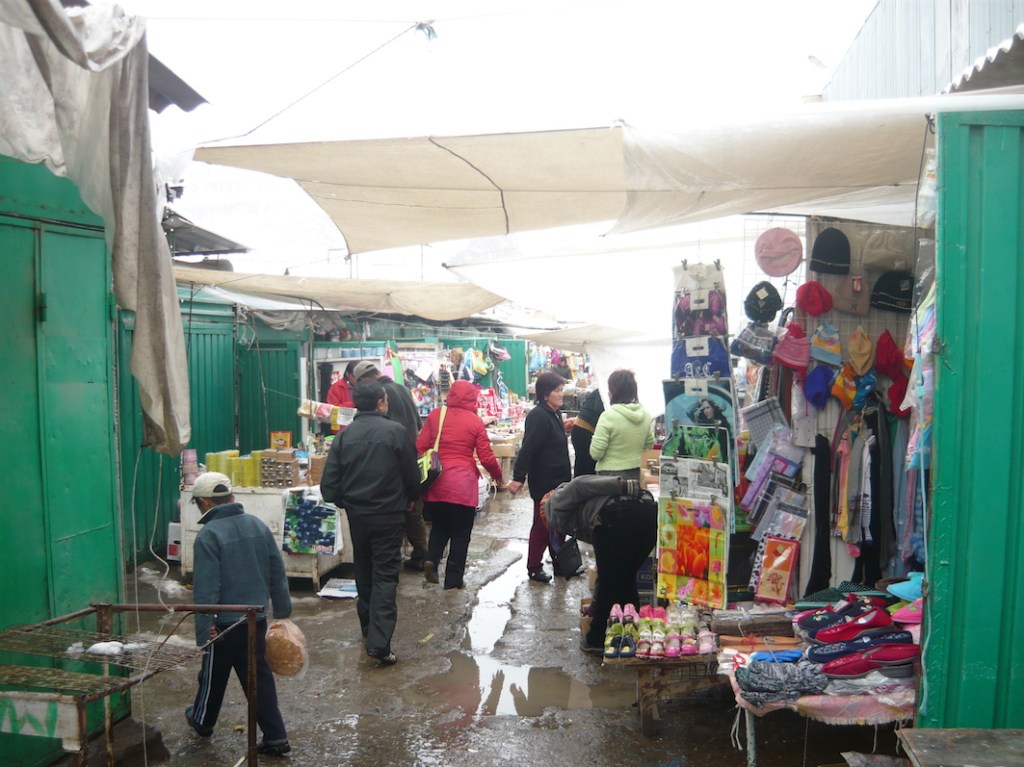
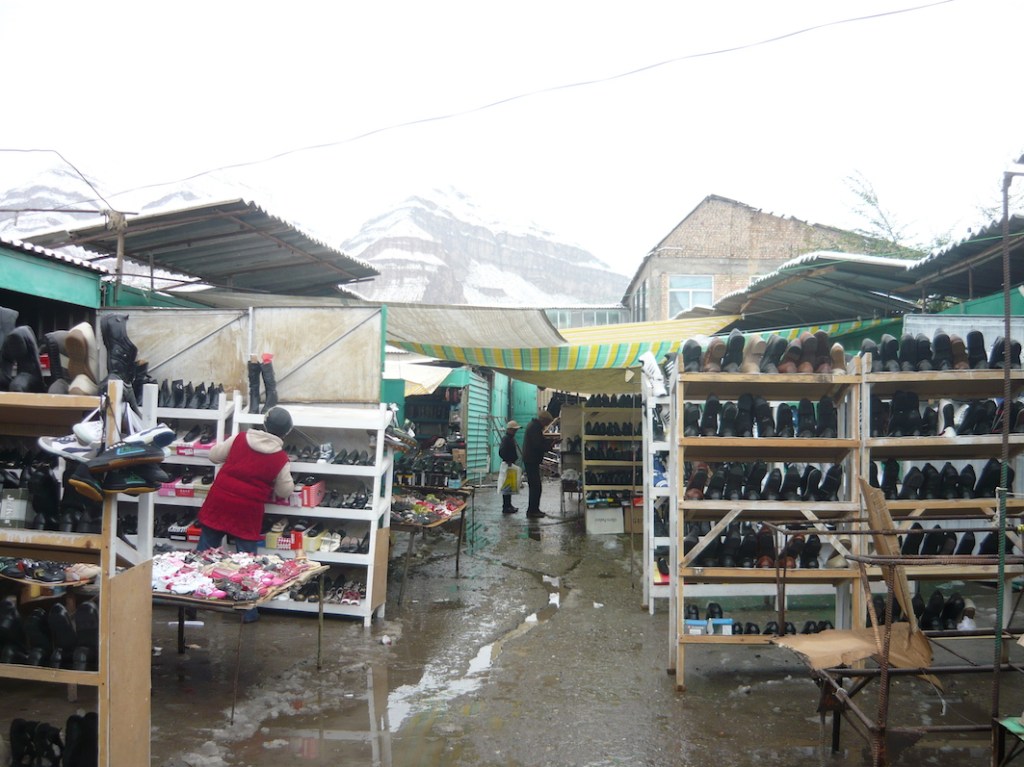
Treading carefully through the soft snow, we walked to the local bazaar so my colleague, who had come only with a pair of ballet flats, could buy some winter boots.
Beyond the snow-laden awnings and cheap plastic goods from China, the mountains spiked upwards into the white-grey sky.
With the roads deep in snow that morning we didn’t have the chance to go on further to the Tash-Rabat complex, a mediaeval caravanserai at more than 3,000 metes love sea level. Built in the 15th century on the old silk road to China, it is very well preserved and the largest building from that era left in the region.
Also nearby is the Koshoy-Korgon hillfort, the remains of a fort on the same route in the seventh to 10th centuries. It used to be big enough for a whole army to live there, with 50 watch towers. But that didn’t stop Mongol armies destroying it.
 Steppe in Style
Leave a comment