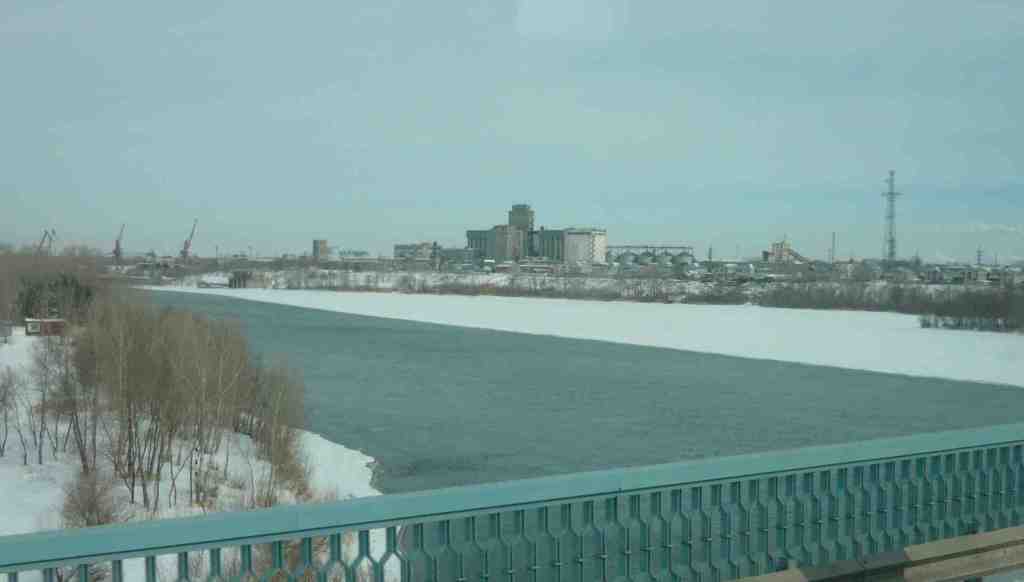
I arrived in Pavlodar on a snowy afternoon in February. With the temperature below freezing for the last couple of months, the sides of the Irtysh river, which the bus crossed entering the city, were frozen and covered in snow, with water flowing only in the broad central channel.
Areas of the city that hadn’t been cleared were buried under around 50cm of snow that lower down had packed down into grey ice.
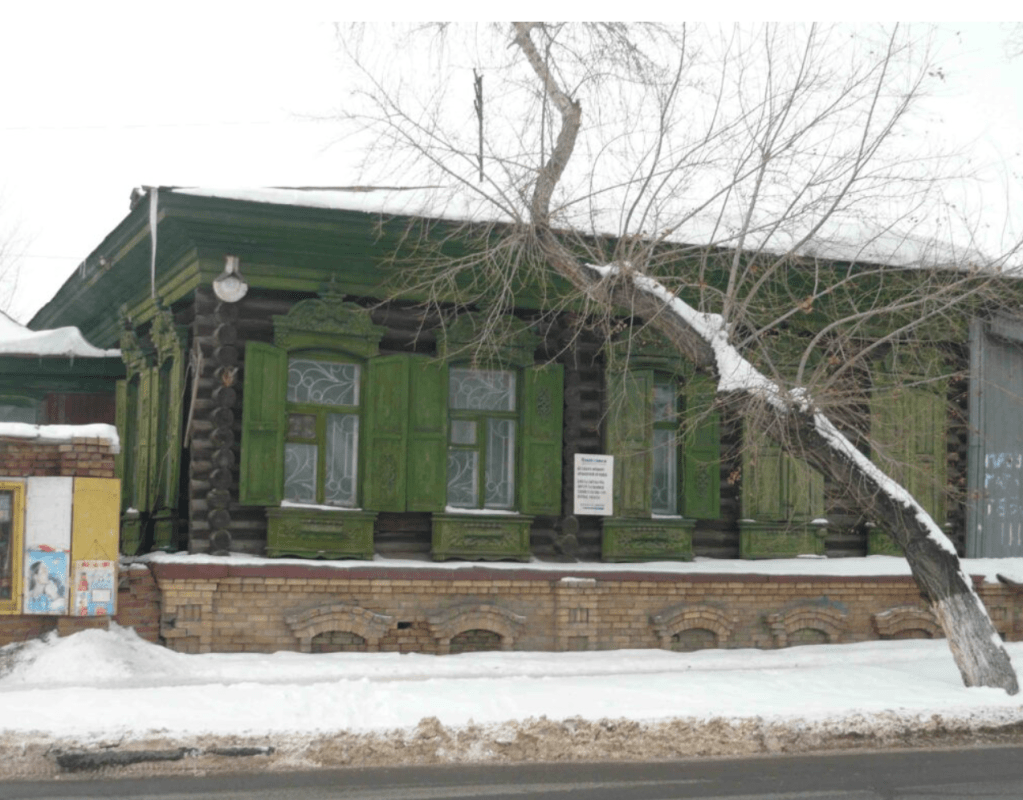
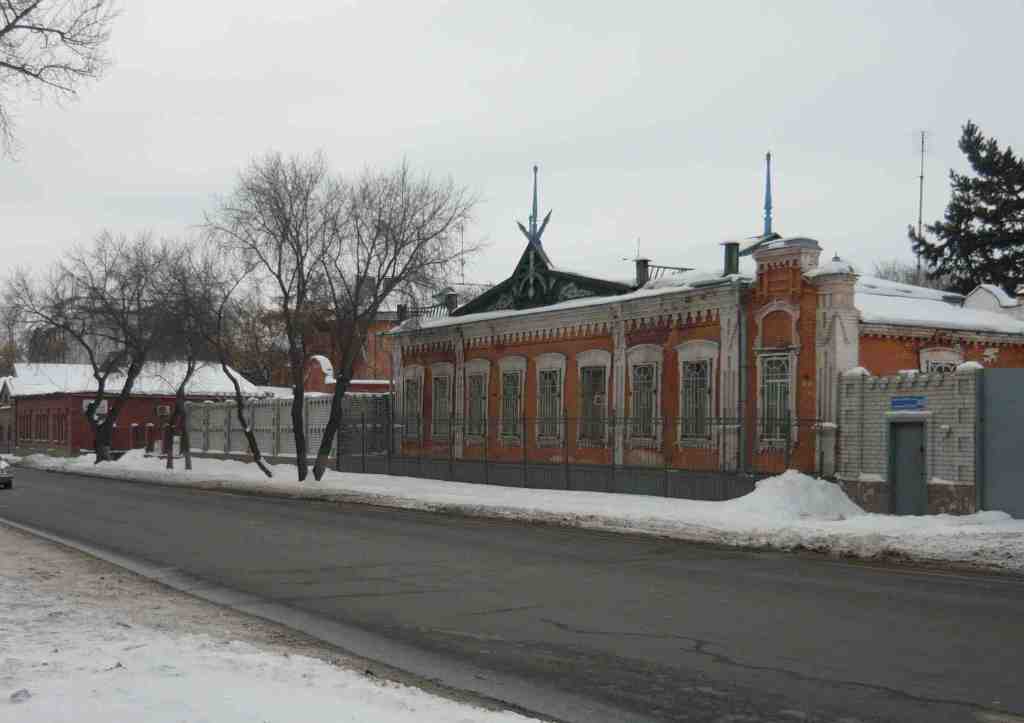
Snow blanketed the sloping roofs of the the city’s many old painted one-story buildings, and brief thaws had created jagged icicles hanging down from their awnings.
A historic city
The city in northwestern Kazakhstan was founded as a Russian military outpost. Since then, it has become an important industrial centre in the region, and Soviet-built blocks that house many of its population tower above the traditional old houses. Today, it is home to more than 300,000 people.
Its history is an interesting one. The earliest mention of the region that would come to be known as Pavlodar dates back to 1720. At that time, it was just a small settlement called Koryakovka on the banks of the Irtysh. It started as a fort to protect Russian settlers from nomadic raids, but by 1782, Koryakovka had become an official Cossack settlement and was renamed Pavlodar after a local river.
The 19th century was a period of significant growth for Pavlodar. In 1868, it became an official district centre and underwent rapid industrialisation over the next few decades. Factories were built to produce matches, bricks, flour and many other things. The population also increased significantly during this time as more people moved to take advantage of job opportunities in the city’s new industries.

Pavlodar’s museums
One of the old single-story buildings houses the Bogaev Museum, which used to be the home of a local photographer, who founded of the city’s first museum. (He also apparently liked to hide in bushes to photograph people unawares.)
Another stunning old timber building houses the Bukhar Zhyrau Literature and Art Museum.
The bigger History Museum gives an overview of the city right through from prehistory to the present day.

After what is now Kazakhstan became part of the Soviet Union, Pavlodar’s population continued to grow as people moved moved there from other parts of Russia or Central Asia seeking work.
Alongside the older buildings dating back to the imperial Russian time are theatres, museums and libraries built in the Soviet period.
Turn of the century Pavlodar
And while Pavlodar has more historic buildings than many cities in Kazakhstan, which is why I spent much of my stay exploring the older part of the city, one of its main sights has to be the huge Mashkur Zhusip Mosque. Built in 2001, it has a distinctly space age look, and four dramatic minarets jutting skywards.
Just two years before, the Russian Orthodox Cathedral of the Annunciation was completed, highlighting Pavlodar’s mix of Christians alongside Muslims. There is also a Roman Catholic church in the city.

Notes on a romance
I arrived in Pavlodar at the tail end of a romance, briefly rekindled then ended again. The long bus journeys from Astana to Ekibastuz to Pavlodar then back to Astana were unwelcome thinking time to the soundtrack of songs we’d listened to together.
It also wasn’t long since I’d visited the UK for Christmas then returned, an always unsettling process that stirred up usually-absent homesickness, compounded by jetlag.
Trekking frozen-footed through the sub-zero streets of an unfamiliar city was a melancholy way to spend the days that only reinforced my earlier unhappy feelings. The little flame of hope that remained, I knew needed to be buried deep and extinguished, possibly under those50cm walls of ice and snow that lined the pavements of Pavlodar.
Probably in summer there was inspiration to be found from the soaring minarets of the Mashkur Zhusip Mosque mosque or the glowing dome of the cathedral, and company splashing in the Irtysh river or lazing in the sun.
For now I relied on the blasts of warm air and warming colours I found inside the city museums and coffee shops to carry me through the cold, dark days until spring appeared.

 Steppe in Style
Leave a comment