The name Ekibastuz translates from the Kazakh as ‘two heads of salt’, yet it’s not salt but coal that this north Kazakhstan town is known for.
It’s famous for being the site of the world’s biggest open-cast coal mine, and there are an estimated 74mn tonnes of coal per square kilometre in the area or a total of 13bn tonnes of coal in total.
The coalfield was found in the 19th century by Kosym Pshembayev, a local man employed by Russian merchants to seek out resources in the area. The field was later sold to Scottish engineer and businessman John Leslie Urquhart.
However, mining waned post-revolution, after a messy dispute between Urquhart and the new Soviet government for control of the coal field.

Ekibastuz gulag
A gulag prison camp was set up in Ekibastuz where political prisoners were sent to do hard labour from the 1920s to 1950s. Its most famous prisoner was the Nobel size winning writer Aleksandr Solzhenitsyn. The camp was the inspiration for Solzhenitsyn’s book “One Day in the Life of Ivan Denisovich”.
Another famous exile was Georgiy Malenkov, who briefly led the USSR after the death of Stalin in 1953. After being on the losing side of the ensuing power struggle, Malenkov was sent off to Ekibastuz to manage the local thermal power plant instead.
It wasn’t till the second half of the 20th century that Ekibastuz became the important centre of coal mining it is today. Industrial development started in the 1950s, and by 1955, 1mn tonnes had been produced.
Alongside the vast open cast coal mines, two coal fired power plants were built. This gave Ekibastuz another record: the second plant, GRES-2, has the tallest chimney in the world at just under 420 metres.

Pylons on the steppe
I travelled there by bus from Astana, spending the night before moving on to Pavlodar, and the town was heralded by hundreds of pylons looming out of the steppe. They transport the electricity to other parts of north Kazakhstan, and some are parts of the world’s longest electricity transmission line.
The sun set as the bus trundled east, and I saw little of Ekibastuz in the darkness. But, while the buildings were mostly in darkness, the streets were gaudy with weeks-old New Year decorations.
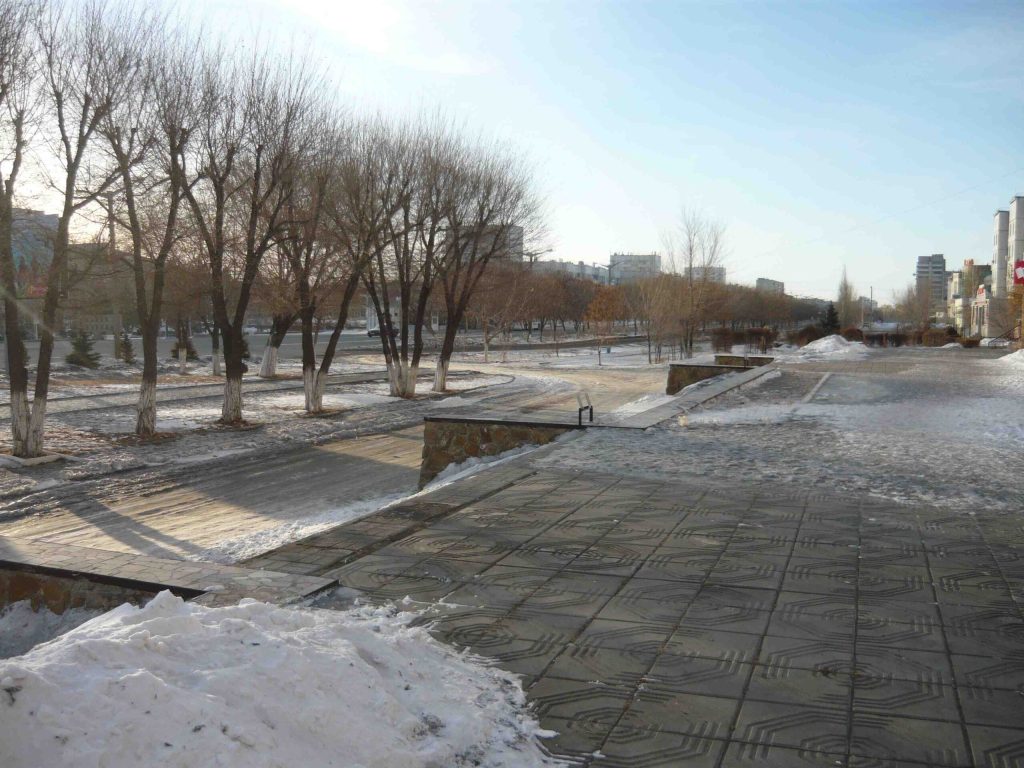
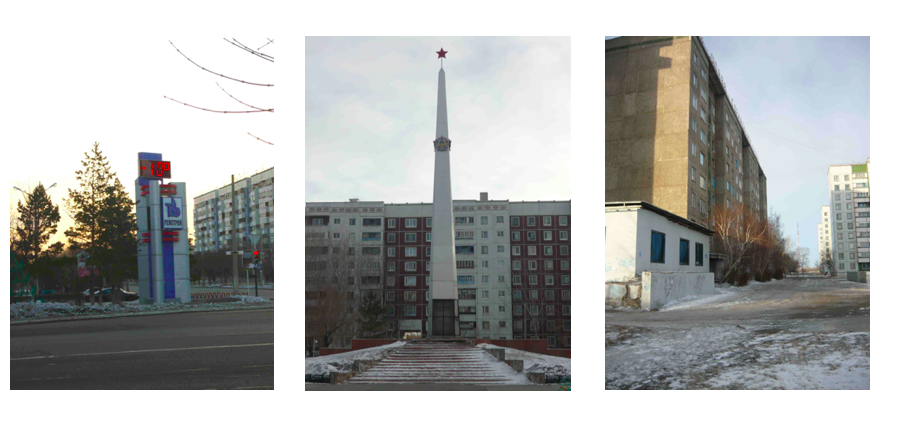
The next morning, I could see the town was mainly Soviet built, with a smattering of colourful new offices and apartment blocks among the grey concrete. An illuminated sign announced the temperature was -10C.
I’d heard the city was heavily polluted with smoke from the nearby power plants, but the day was clear skied and frosty. Snow had been swept into huge mounds on the wide boulevards of the town centre.

What to see in Ekibastuz
I’d been late arriving because my flight from Almaty to Astana was delayed, and I was heading off for Pavlodar, so I had very little time in Ekibastuz, but there was just time to walk around the town and visit the museum of history and local lore.
This has an interesting display about mining, with a large model of an early mine — disturbing if you image the conditions working in a confined space deep underground. This contrasts with the diorama of the immense Bogatyr mine in a later part of the museum.
A whole section is dedicated to the history of the Ekibastuz gulag, including numerous pictures of Solzhenitsyn. Then there’s a display dedicated to local runner Marat Zhilanbaev, who ran across the Sahara desert in the 1990s.
And reflecting the mix of Muslim and Orthodox people in Ekibastuz’s population since 1998 the town has had the Ekibastuz mosque, considered to be one of the most beautiful in Kazakhstan, as well as the Ekibastuz cathedral completed two years later.
 Steppe in Style
Leave a comment