Two days into my stay in Dushanbe I was invited to visit Garm, a small city in the semi-lawless Rasht valley, to interview some potato farmers. So of course I said why not.
One of the nice expats I met in Segafredo told me about a project to help farmers diversify funded by the Organisation for Security and Cooperation in Europe (OSCE) and European Bank for Reconstruction and Development (EBRD). He then introduced me to the head of the OSCE outpost in Garm.
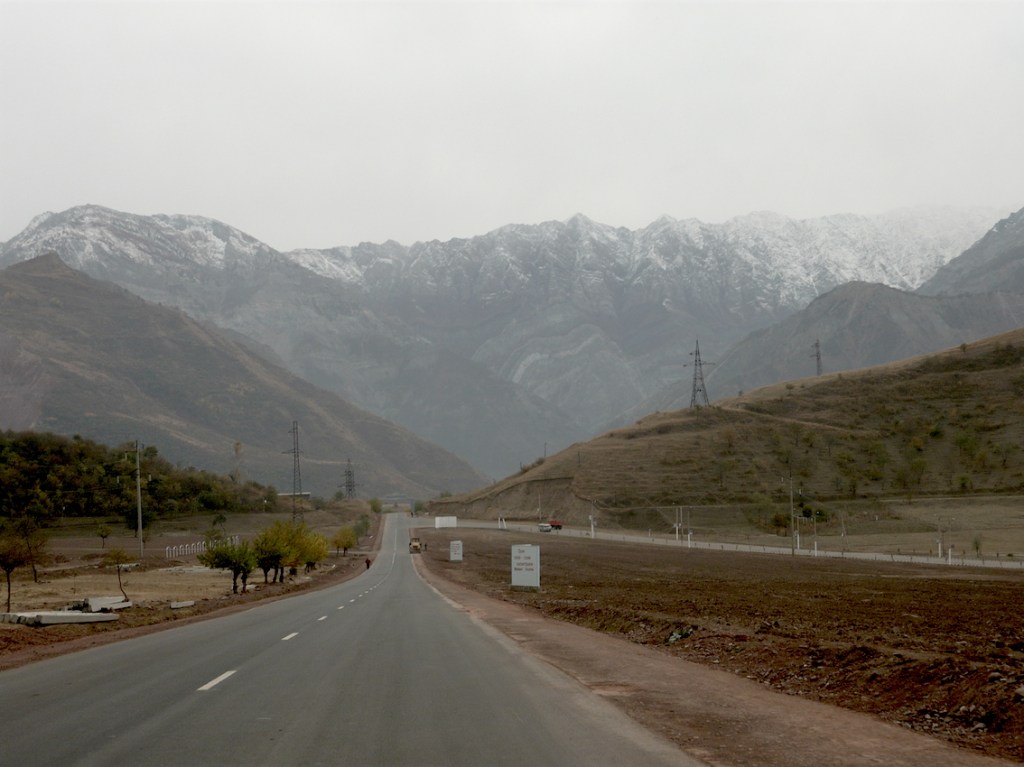
That’s why I’m in a very old shared taxi with four strange men all headed east out of Dushanbe, following the Vasht river, as it runs almost parallel to Tajikistan’s border with Afghanistan.
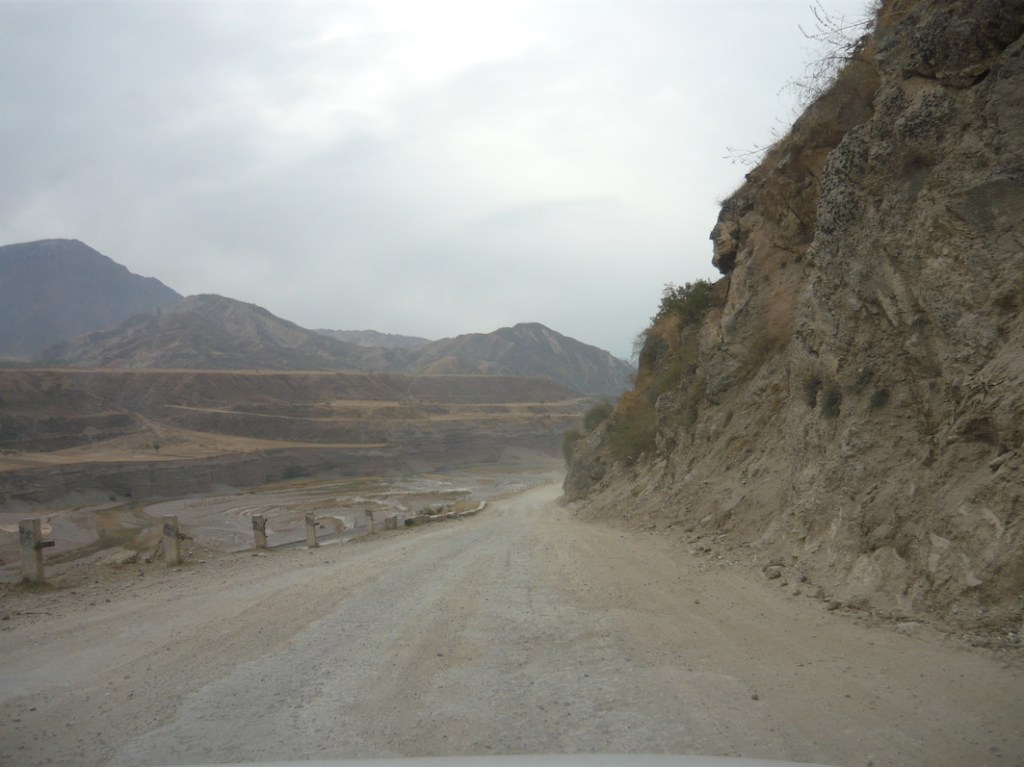
While we don’t have to scale any mountain ranges, just like the road from Khujend to Dushanbe the road to Garm takes us past towering mountains, on a mixture of paved and long-neglected winding roads.
Home from Russia
Apart from the driver, the men in my car are returning home having spent the summer labouring on construction sites in Russia.
“Every family has someone in Russia,” the driver tells me.
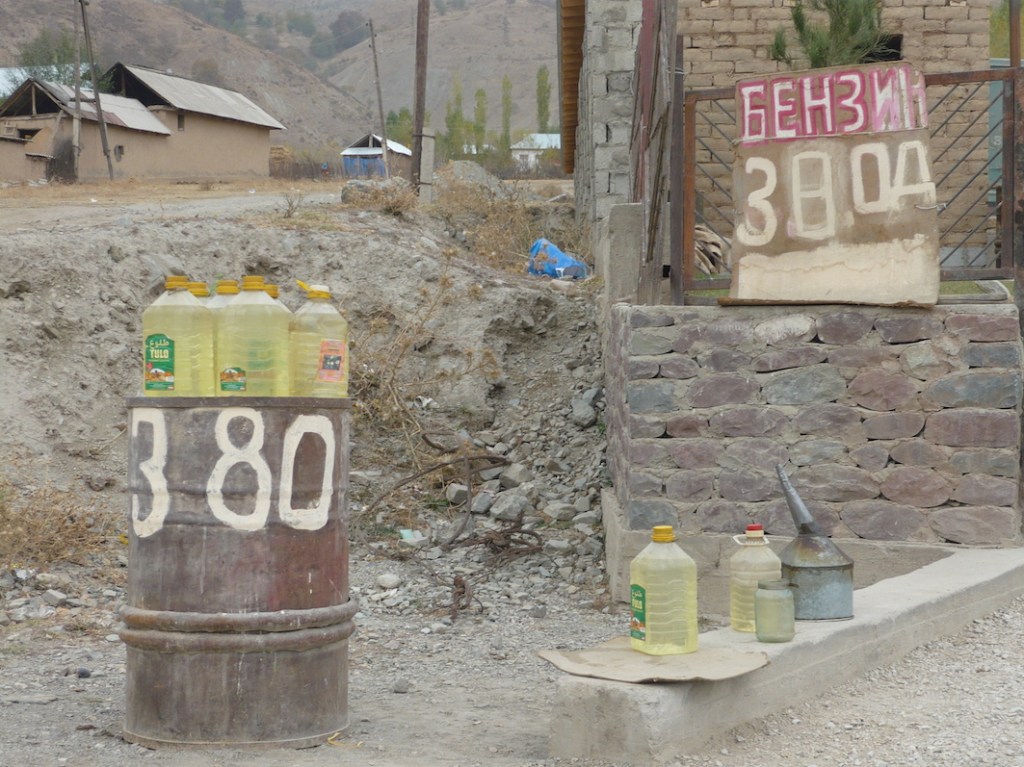
We stop once for petrol, and later at a roadside stall where the men buy huge bunches of tiny sweet smelling grapes, telling me how they have missed the fresh food of Tajikistan.
One of them jams several bunches into a carrier bag and hands it to me; despite my protests — I’m travelling with a small rucksack and what would I do with a huge bag of overripe fruit? — I have no choice but to accept.
Rebel town
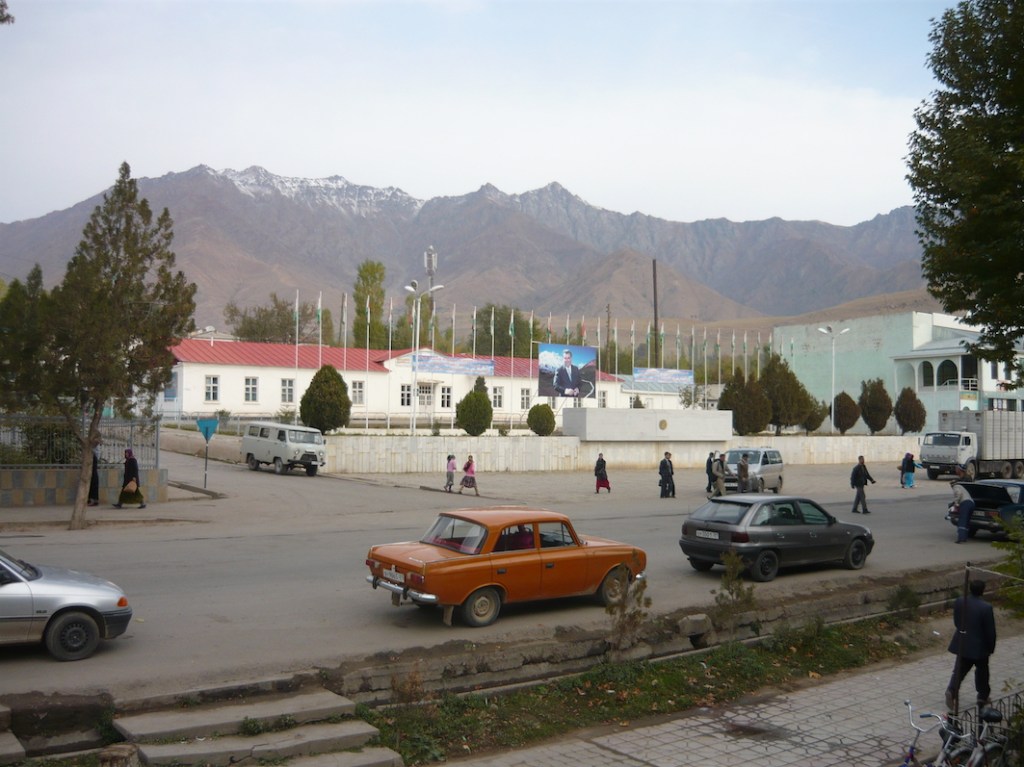
Garm, when we arrive there, is a small mountain town. The cars are old, and many of the people wear traditional garb — the women in long velvet dresses, while the men sport embroidered hats.
There’s the ubiquitous picture of President Emomali Rakhmon in the central square — but Garm has long been an opposition stronghold.
Back in the 1920s, the remote and hard to access Rakhsh Valley was one of the last resorts of the anti-Soviet Basmachi rebels.
Seven decades later, it was one of the main bases for opposition to the government in the Tajik civil war of the 1990s, and Dushanbe’s control over parts of the region remains patchy.
Egg and chips
I’m at a guesthouse that seems quiet until I venture down to the dining room for dinner and find it full of people. Male people. Who stare blatantly.
One of them, a clean cut young man who unexpectedly speaks English, appoints himself my protector. I suspect he must be employed by the local authorities and have been sent to keep an eye on me.
As there’s no menu that I can find, I explain to him that I’m vegetarian — always a perplexing choice in Central Asia — and he has a word with the waiter.
10 minutes later he reappears with — surprisingly — a plate of egg and chips and a cup of green tea. I tuck in. Even more surprisingly, it’s the best egg and chips I’ve ever tasted.
Mystery men
As the room became even more crowded conversations start up among the tables. Two men on a neighbouring table tell me they’e from Moldova. What brings them to Garm, I ask. “Import export,” says one.
My minder politely detaches me from the conversation. “They say they are Moldovan,” he says in a low voice, “but I heard them speaking another language, a Caucasian language. I think they came across the border from Afghanistan illegally.”
Whether that means they’e drug traffickers or insurgents isn’t clear. Either is possible around here; the heroin route from Afghanistan to Europe runs through Tajikistan, and Afghanistan also exports militants to its northern neighbours.
When I’ve finished my meal and get up to leave, one of the Moldovans/Caucasians says goodbye and gives me a plastic wrapped sweetie. I thank him but instead of eating it I put it in the bin in my bathroom. Just in case.
Harvest time in Garm
The next morning I go to interview the OSCE official stationed in Garm to talk about potato farming. As there’s very little money in potatoes and it’s hard work in this mountainous land, the project’s consultants are proposing other ways to earn money such as beekeeping.
I meet one of the potato farmers, and we also have a look around the open air bazaar where there are great mounds of grapes, apples and other summer fruits, as well as fresh bread and pots of golden mountain honey.
It’s only a brief visit though. There’s no chance of a second encounter with my charming minder or the mysterious ‘Moldovans’. That afternoon, I’m on my way back to Dushanbe.
 Steppe in Style
Leave a comment