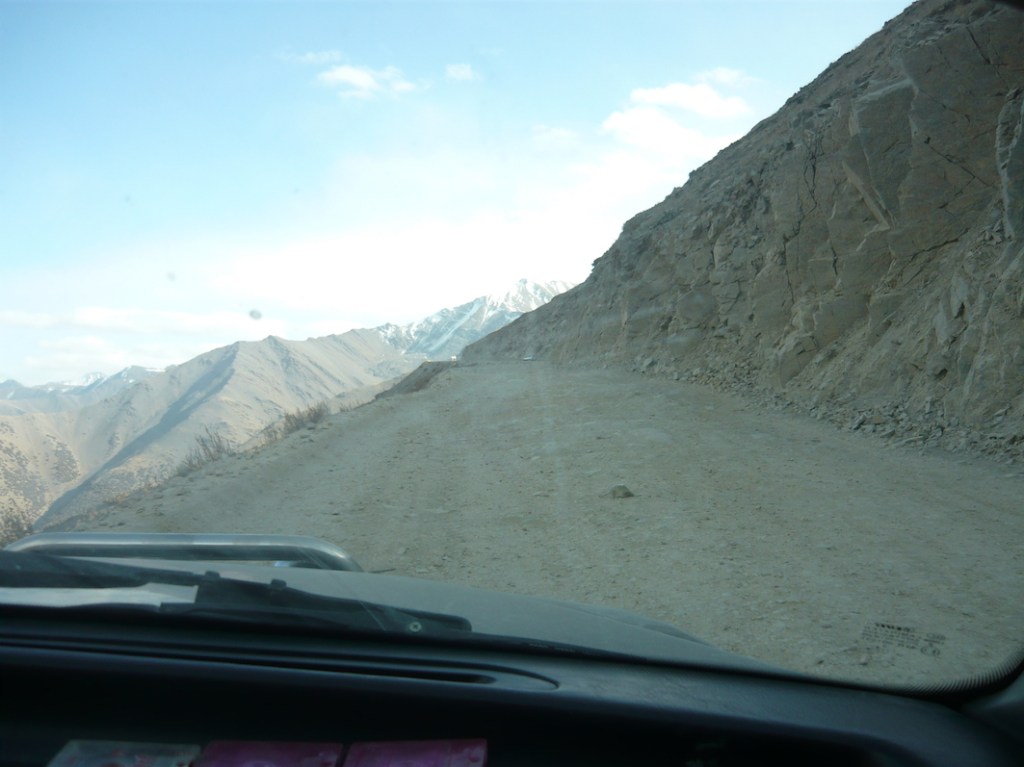
Just like Kyrgyzstan to the north, Tajikistan is divided by high mountain ranges.
In winter the road between Dushanbe and the northern cities of Khujend, Istaravshan and Isfara is cut off as the high mountain roads become too dangerous.
Luckily I’m travelling in autumn, before the snows begin. In fact the temperatures are still in the mid 20s.
Nonetheless, Zohirjon selects a sturdy looking vehicle for the journey from Istaravshan to Dushanbe and quizzes the driver to make sure he’s experienced. I soon discover why.
Not far out of Istaravshan, the road starts to ascend, as we leave the flat Fergana Valley behind.
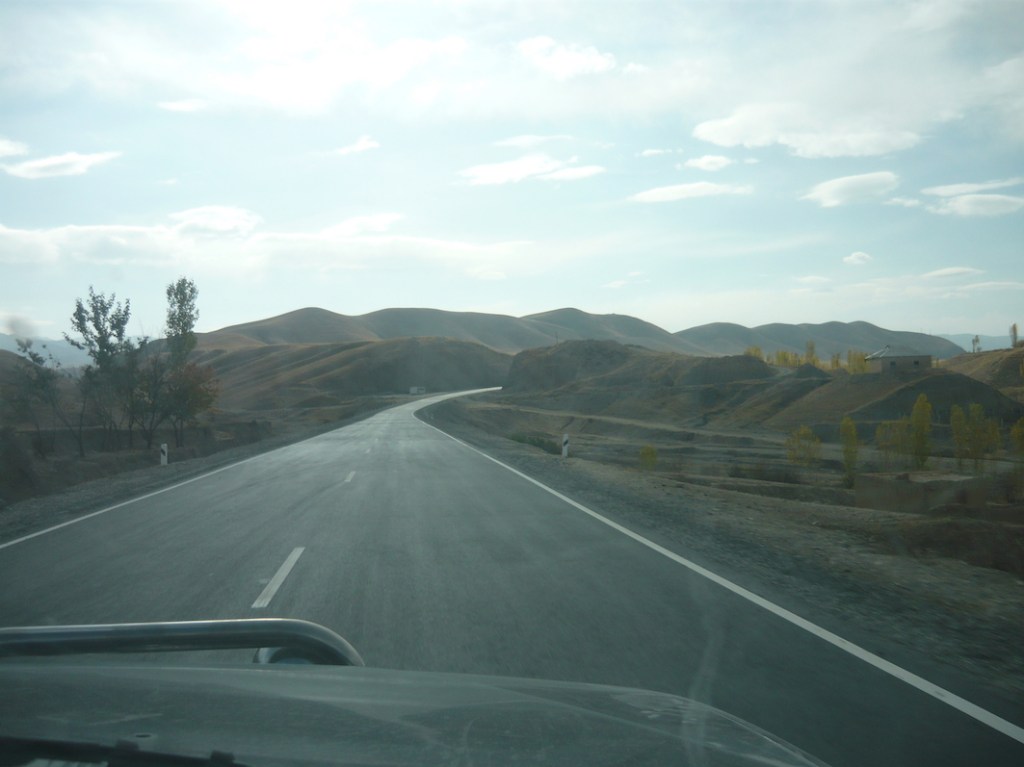
Meeting my ‘sputnik’
As well as the driver, I’m in the car from Istaravshan to Dushanbe with Zajan, a young Tajik man who says he’s been working in Kazakhstan.
“Dushanbe isn’t rich like Almaty,” he tells me.
There’s also Talib, an older businessman from the west Tajikistan city of Penjikent. He’s on his way to visit his son who has a food business in Dushanbe.
The fourth passenger is a young Tajik woman. Born shortly before the fall of communism, she speaks very little Russian so we don’t manage to communicate much.
Together the four of us, plus the driver, make up the ‘sputnik’, or ‘shuttle’ — a little unit of five who have come together to share the journey.
The three Tajik passengers doze, but I stare out of the window, snapping photos as we leave the green fields and tress behind and climb steeply upwards.
Gravel track through the mountains
On the rocky grey slopes, I can see only a few tenacious bushes, and then no trees at all.
The road — if I can call it that — is a gravel track cut into the side of the mountain. Cars and lorries veer from side to side to avoid giant potholes.
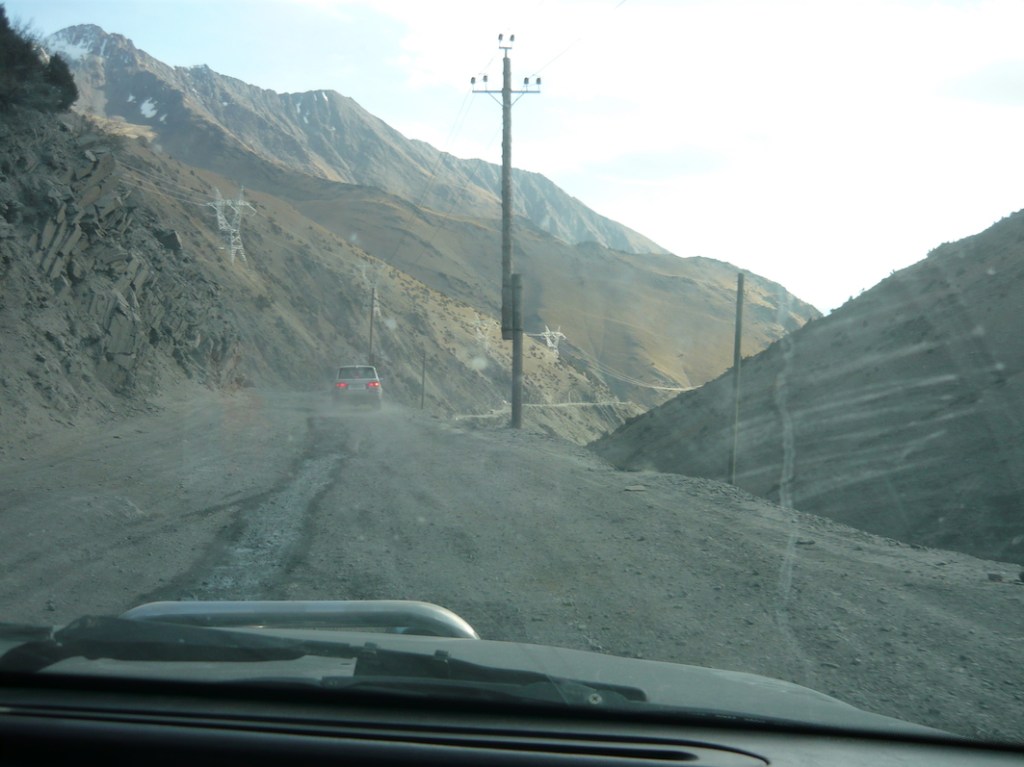
When the driver shoots close to the edge I clutch the side of the seat. There are no crash barriers, just loose gravel then a sheer drop.
Then it’s the driver’s turn to look worried.
“Do you feel sick?” he snaps.
“No, I’m scared.”
That, apparently, is so hilarious he turns back to look over his shoulder — instead of keeping an eye on the highly dangerous road ahead — to share the joke with Zajan and Talib.
Laughing heartily, he cranks up the Iranian disco track on the car cassette player, takes his hands off the wheel and clicks his fingers in time to the beat.
“Not funny,” I tell him.
But he knows this road well. Every week he drives one day south to Dushanbe, one day north, three times, and has a single day off. When we reach the next hairpin bend he puts both hands on the wheel and concentrates on getting us safely round and onto the next stretch.
“Do you know when they last resurfaced this road?” asks Talib from the back seat. “In the Soviet time!”
Through the Shakhriston Pass
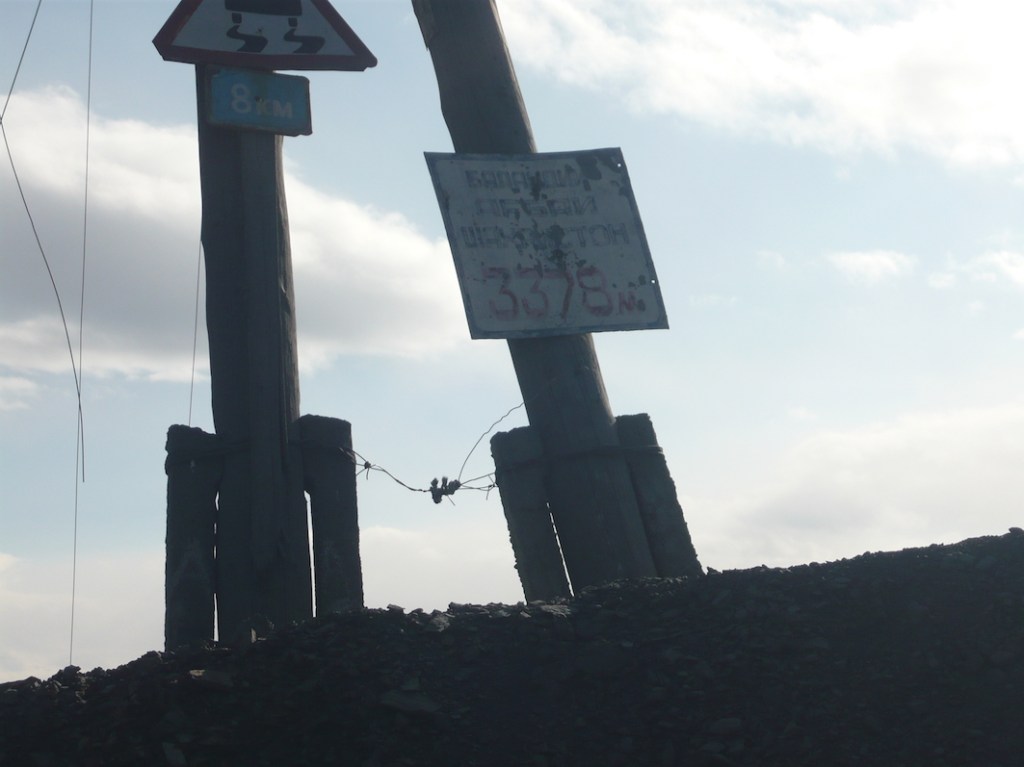
Eventually we get to the Shakhriston Pass, where a sign proclaims we are 3,378 metres above sea level.
Through the pass, to my surprise there are some better stretches of road and a couple of tunnels. Crews of labourers are by the roadside and manoeuvring trucks on one section under construction.
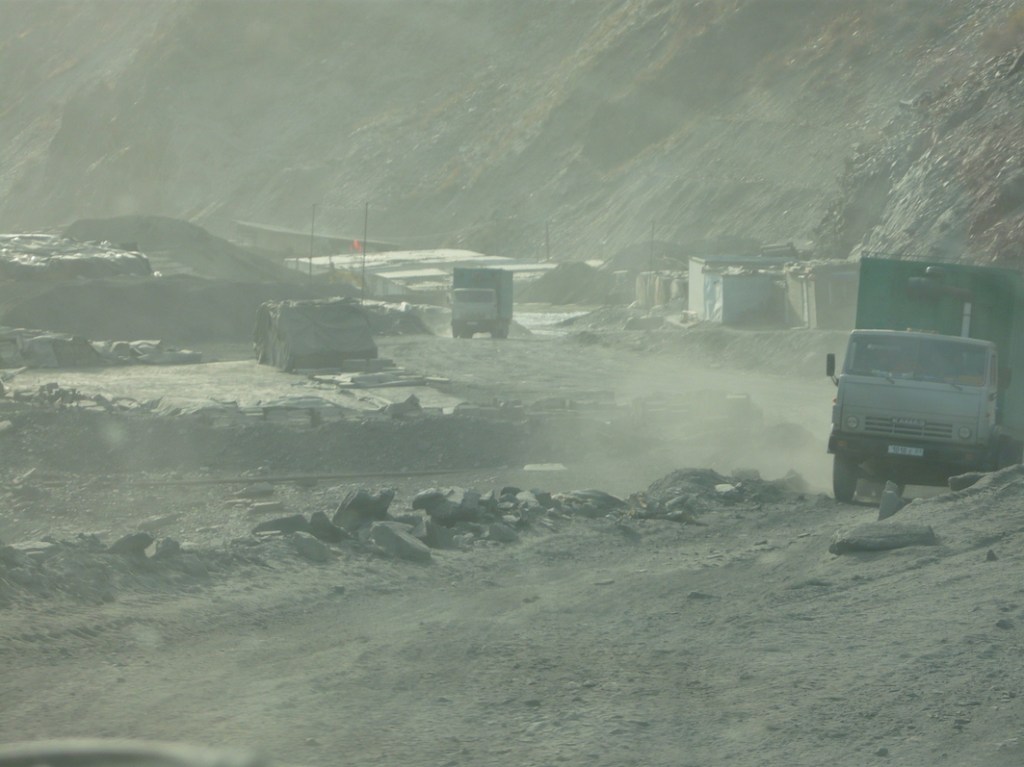
“Chinese!” says the driver, pointing to their faces, and the red hammer and sickle flags flying from one of their huts.
China is one of Tajikistan’s neighbours, and Chinese companies have won some road construction contracts, which they’re building with Chinese labour and financed by loans from Chinese state banks.
Lunch in the Zerafshan Valley
The road gradually descends and we stop for lunch in the Zerafshan Valley, between two ranges of high mountains.
Over fresh bread with sloppy jam, sour cream and green tea, the driver explains that we have lunch after the first range of mountains to reduce the risk of people getting car sick.
The cafe, really just a blue painted hut with a few tables outside, is in a small meadow among the trees. We can hear birds singing and the occasional car passing on the nearby highway.
I’d happily have stayed longer, but we have another range of mountains to cross on the road from Istaravshan to Dushanbe and it gets dark early.
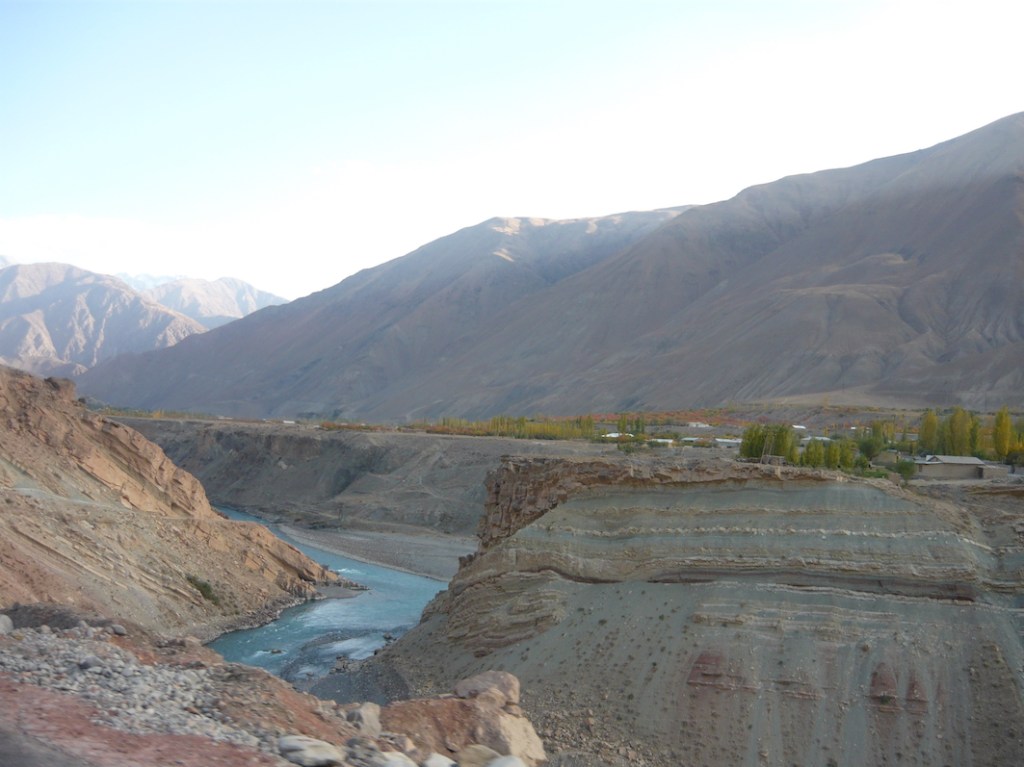
In the valley, the road runs alongside the Zerafshan river, which eventually flows into Uzbekistan and joins the Amu Darya. Zerafshan means “spreader of gold” in Persian, a name given because of the gold-bearing sands in its upper reaches. Here, the changing colours of the rocky landscape indicates the presence of different minerals.
A new kind of gold
Talib points out several small hydropower stations to me as we pass them.
“We are poor now but in five or six years we will be rich. We will export electricity to Iran, Pakistan, India…” he says.
It’s already dusk when the road starts to climb again towards the Anzob pass, which at 3,372 metres is only a few metres lower than the Shakhriston pass we crossed this morning.
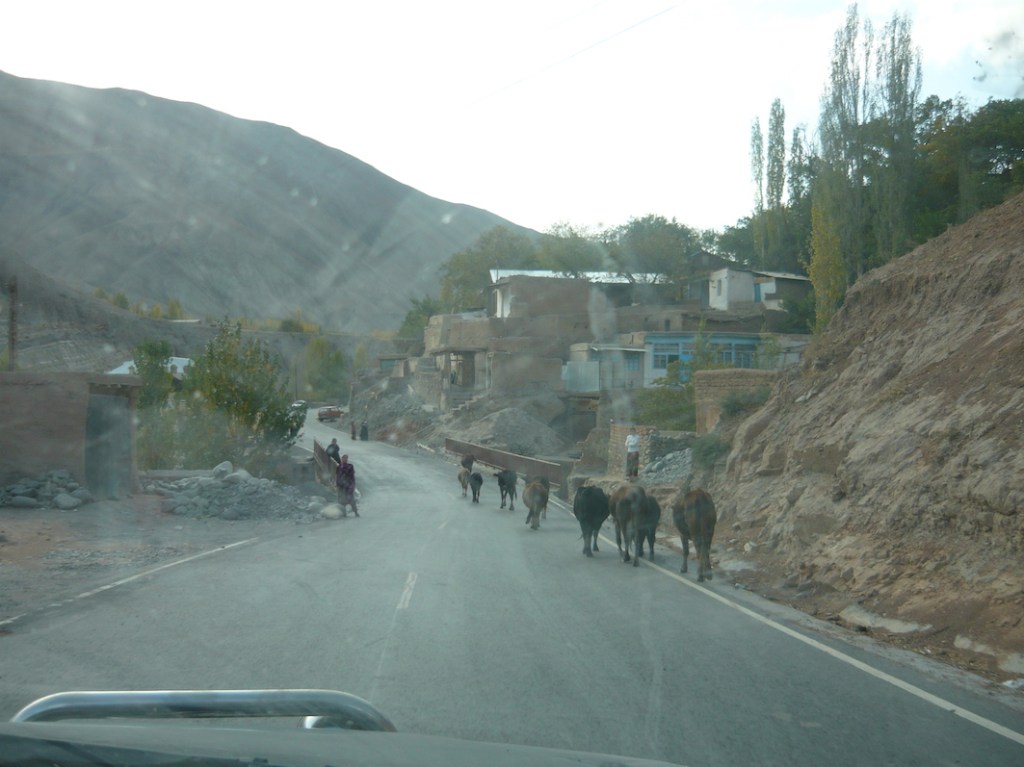
Even with the bad roads, I’m relived that we’re going over the pass rather than through the Anzob tunnel that is so dangerous it’s been dubbed the “tunnel of death”.
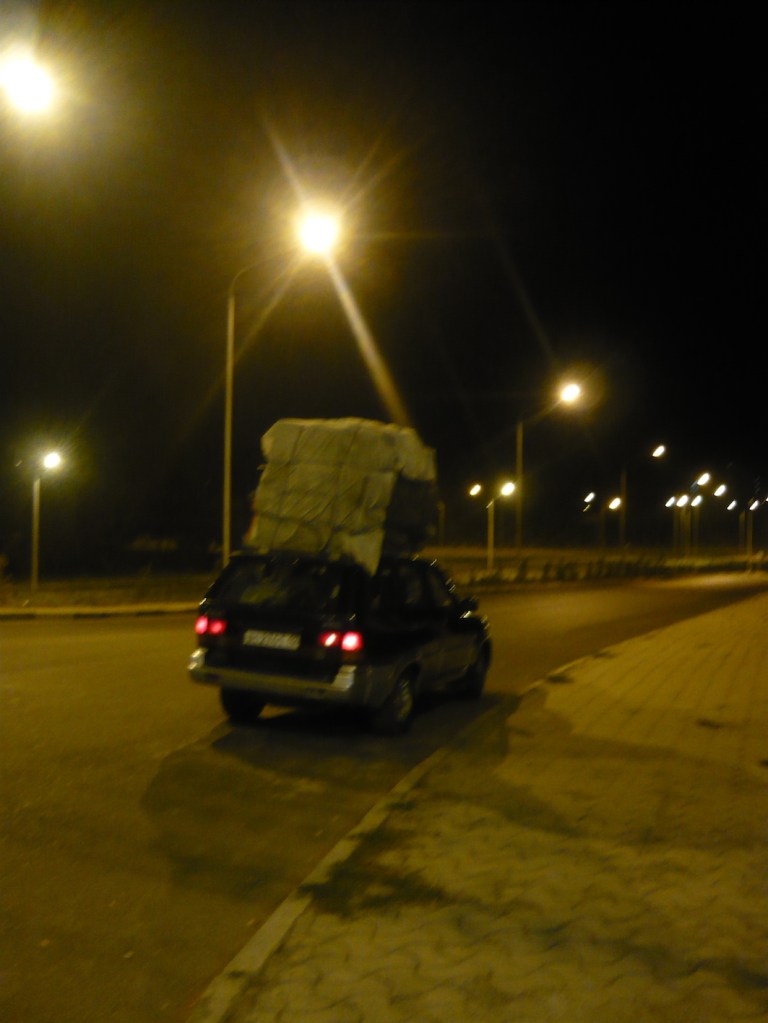
As darkness descends, I miss the Anzob pass and the final part of the journey from Istaravshan to Dushanbe along the Varzob gorge, seeing little until we reach the streetlights of Dushanbe’s suburbs. The taxi driver drops me off outside the hotel I’ve picked and I wave goodbye to the rest of the sputnik. It’s late and dark. I’ll explore Dushanbe tomorrow.
 Steppe in Style
Leave a comment