Early on Monday morning I’m waiting outside the Hotel Leninabad, bag packed, ready for Jyldyz’s husband’s friend to come and pick me up and drive me to Istaravshan.
Zohirjon, when he arrives, is a stylish, handsome man, with the accessories I’m starting to recognise as the hallmarks of the nouveau Tajik: a newish car, a mobile phone and a packet of slim cigarettes.
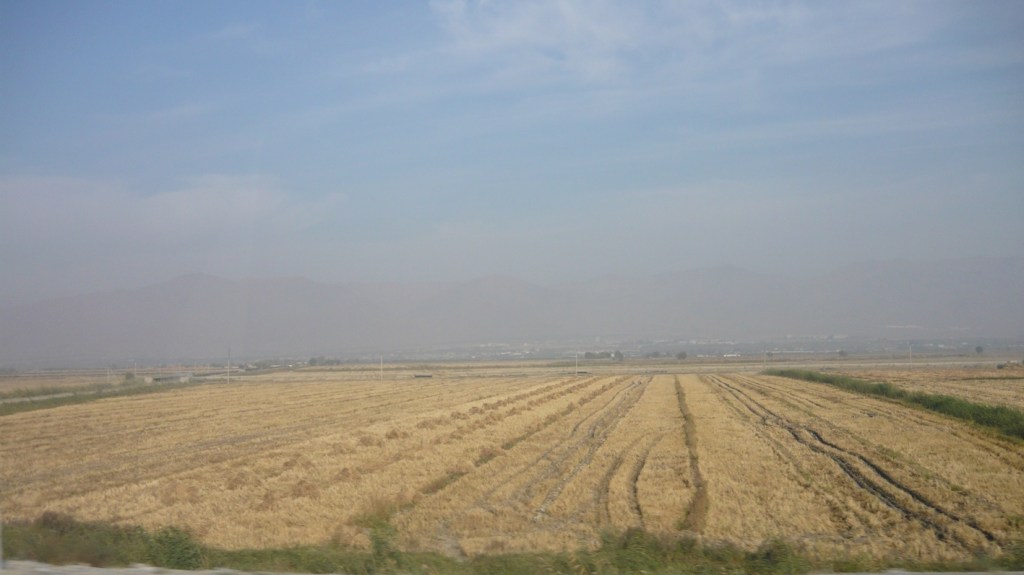
We chat about his business and my travel plans for the hour or so it takes to cover the 78km from Khujend to Istaravshan. When Jyldyz told me he would take me there, show me around and put me in a shared taxi for Dushanbe, I somehow had the impression he was going there anyway for work, but it turns out he’s never visited before.
Lost in the old town
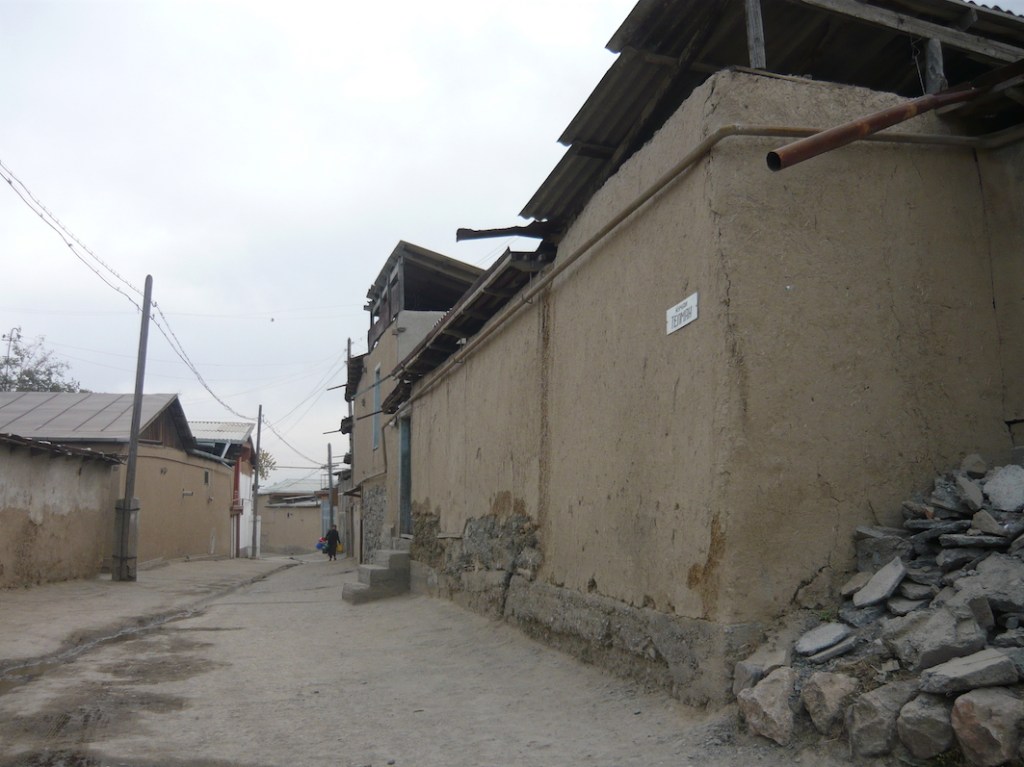
This becomes apparent as we become lost in the tiny winding streets of the old town — Istaravshan is one of the oldest cities in Central Asia. It celebrated its 2,500th anniversary in 2000.
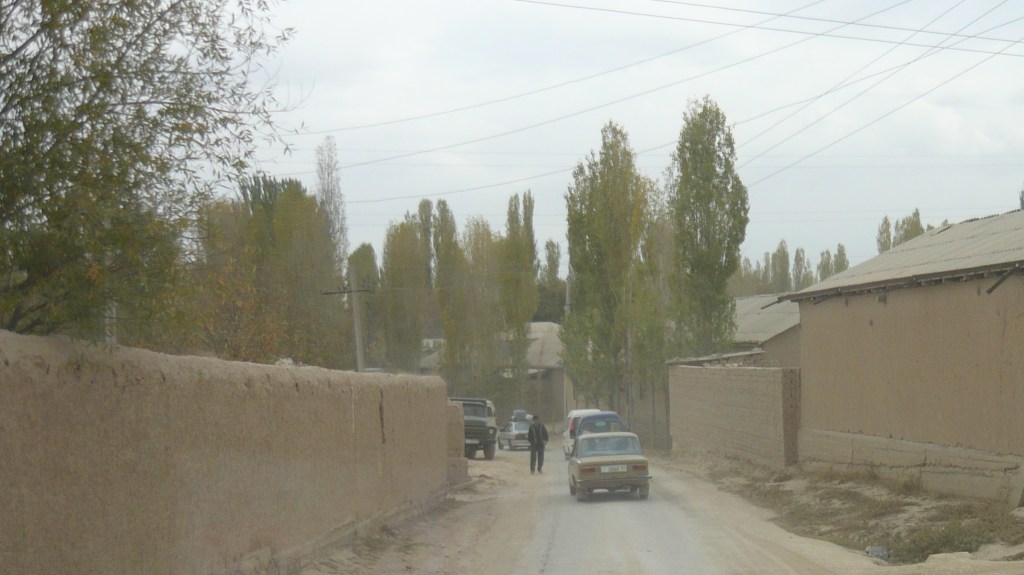
Zohirjon’s sedan churns up dirt and dust as he seers it among the mud houses. We catch occasional glimpses of the Mugteppa Fort, but we don’t know how to get there.
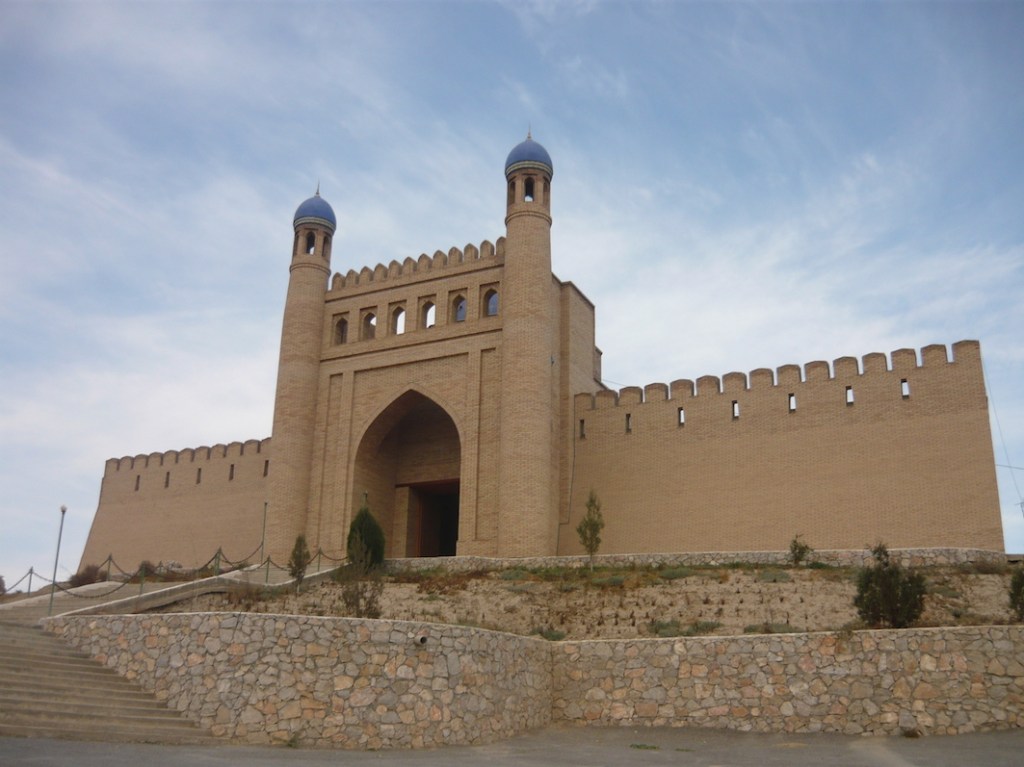
Eventually he lights on a road heading upwards and we park close to the wide stone steps leading up to the fortress’ entrance with its twin blue domes.
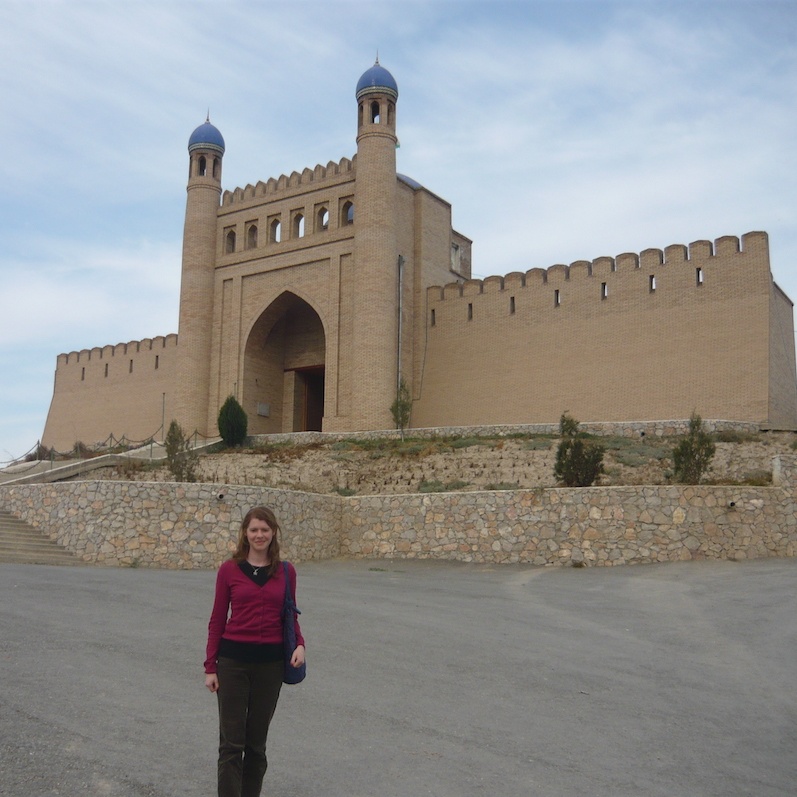
Most of the fortress was destroyed long ago — it was stormed by Alexander the Great and later by Arab tribes — but the entrance was rebuilt for the 2,500th anniversary celebrations.
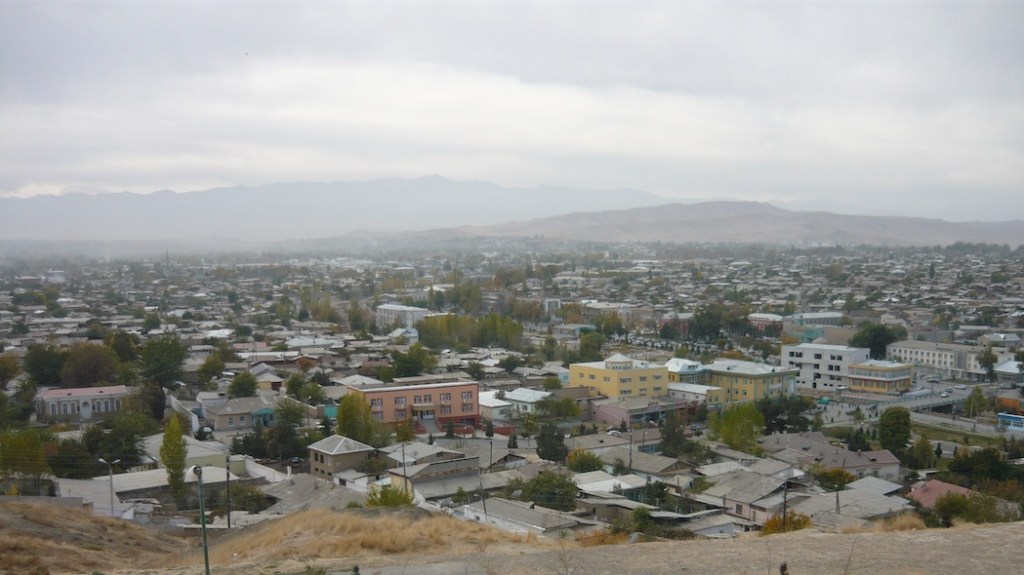
Spread out below is the city of Istaravshan. We head downhill, this time looking for the Kok Gumbaz mosque and Khazrat-i-Shokh Mausoleum.
“Russian girl!”
Back in the old town, we consult the small map on one of the pages torn from my Lonely Planet guide without success.
Zohirjon suddenly slams on the breaks to avoid a ditch in the street, and goes over to ask a boy filling plastic cans from a standpipe for directions.
We park the car and continue on foot. I’m immediately the centre of attention. With my pale skin and ginger hair I have no hope of blending in in this city of mainly dark haired, dark eyed Tajiks.
“Russian girl! Russian girl!” chant the crowd of small boys now following us through the street.
“She’s not Russian, she’s English,” calls back Zohirjon.
This causes confusion. Even Russians are quite exotic in Tajikistan, where most of the Slavic population left when the civil war broke out. But what is an English person doing in Istaravshan?
Kok Gumbaz and the Khazrati-Shokh Mausoleum
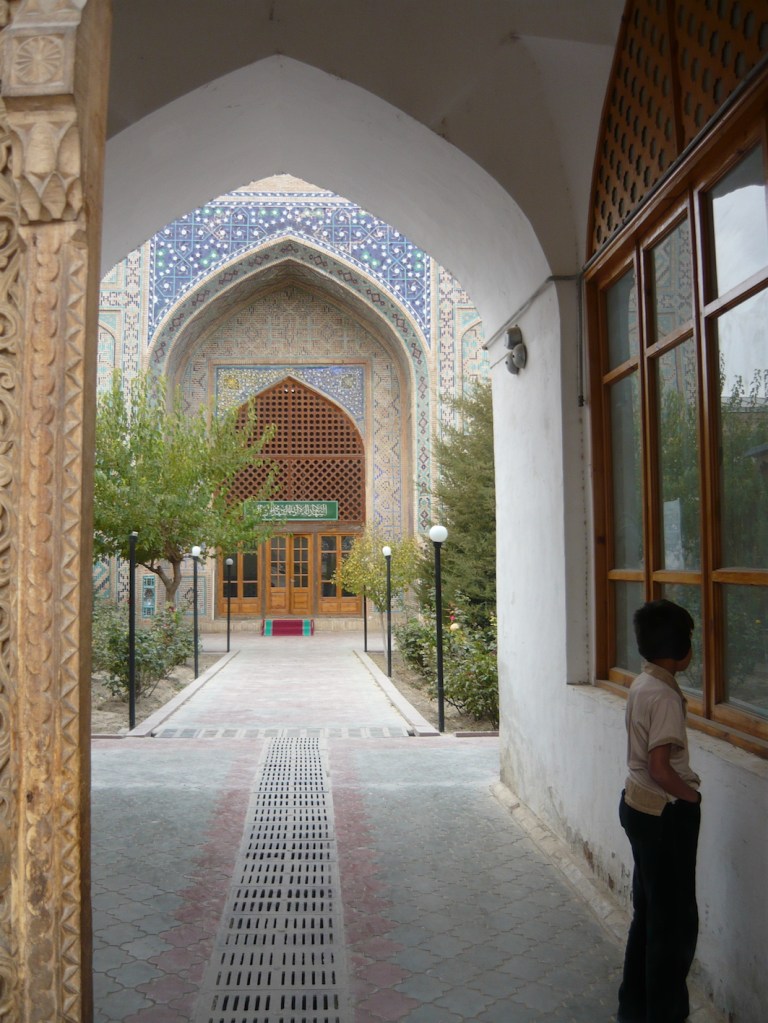
The answer is visiting the Kok Gumbaz — ‘blue dome’ in English — mosque and the Khazrati-Shokh Mausoleum, or at least trying to.
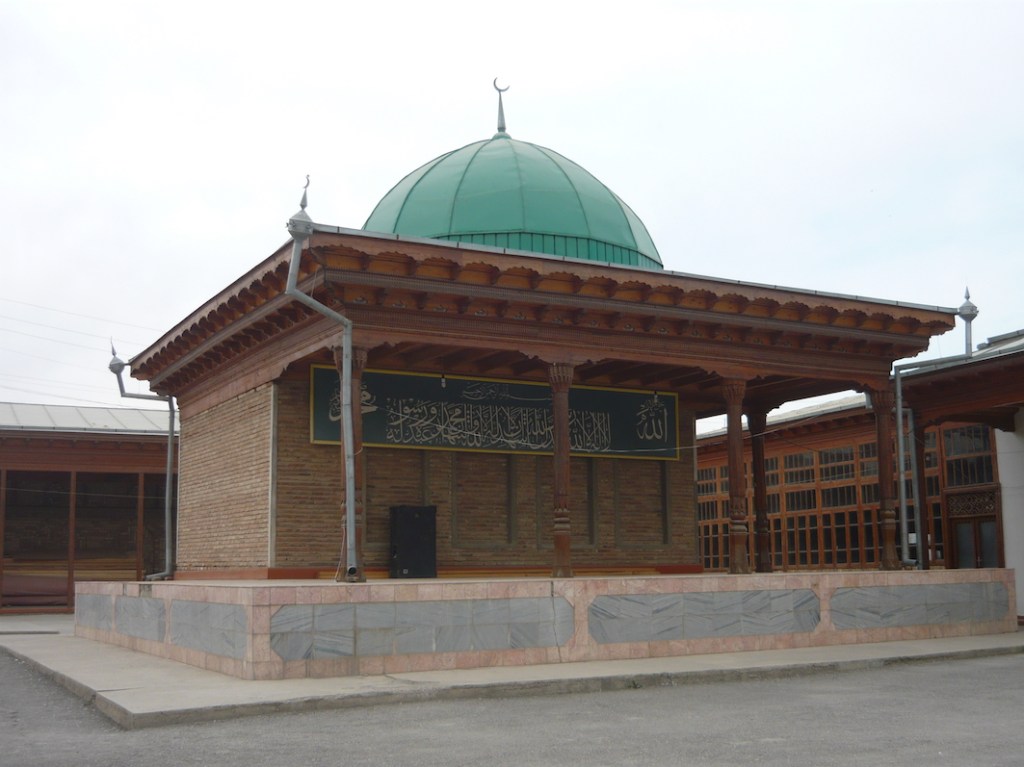
We locate the Khazrati-Shokh Mausoleum, which is part of a religious complex with working medressa. Zohirjon goes inside to ask permission to show me around. Through the door I catch a glimpse of the young, male students.
Legend has it that St. Khazrati-Shokh, the brother of the Prophet Muhammad, is buried in the Khazrati-Shokh Mausoleum, a square brick building with a turquoise dome.
A few streets away is the Kok Gumbaz mosque, built back in the 16 century on the orders of Abdulatif Sultan — son of the scientist and philosopher Ulugbek, and great-grandson of Tamerlane.
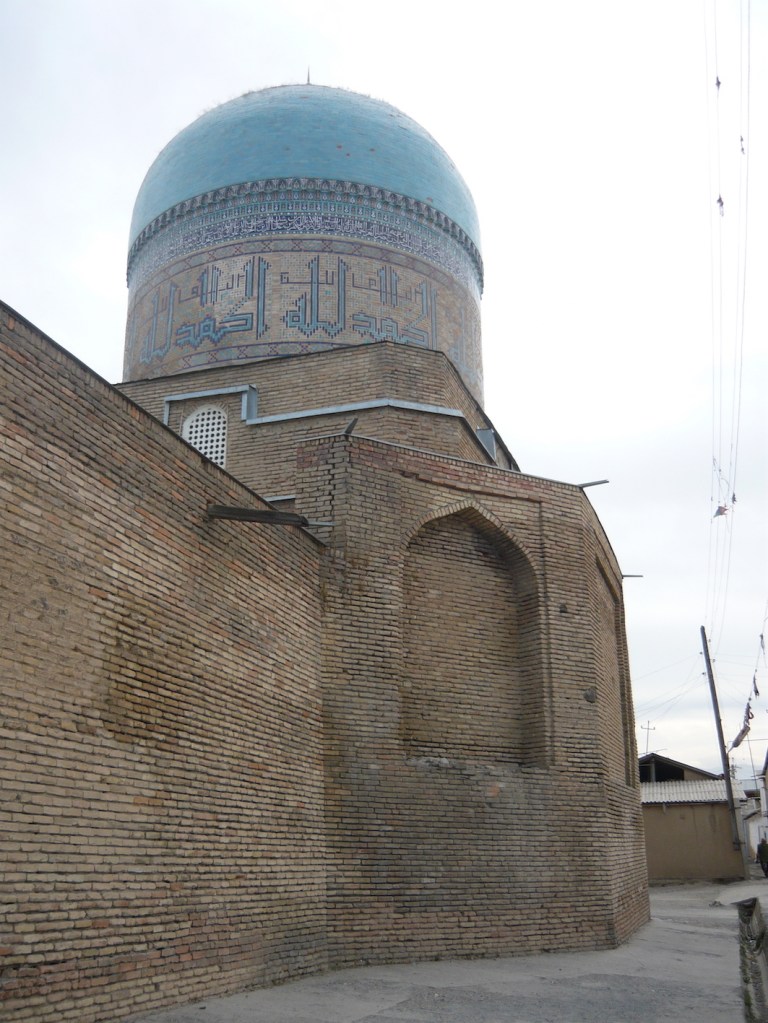
From Kok Gumbaz we walk back to Zohirjon’s car. It’s time for me to find a place in a shared taxi to Dushanbe, while he goes back to whatever he should have been doing on a Monday morning, if he hadn’t been instructed to show a strange English woman around a city he doesn’t know.
 Steppe in Style
Leave a comment