Approaching Bishkek’s main bus station, the river tumbles sullenly between concrete banks, on one side the tatty backs of a city bazaar and on the other an electricity substation. Behind them, a solitary and dilapidated Soviet era apartment block is silhouetted against the distant mountains. The leaves on the trees are turning from dark green to yellow and crispy dead brown.
At the bus station, the local Mr Big is loudly allocating travellers from Bishkek to Osh to shared taxis. I’m in one with a Kyrgyz couple and an old man travelling alone. He’s wearing a traditional kolpak hat, and when he smiles at me I see his gold tooth and the crinkles in the burnished skin around his eyes. His seniority means he gets the coveted front seat, while the woman and I are squeezed onto the left side of the back seat by her husband’s bulk.
The car bounces along the wide straight road out of Bishkek, lined with single-storey Russian-style houses, interspersed some taller buildings housing shops or restaurants, and the odd metals container with doors and windows sawed into it — an outhouse, a chicken shed or perhaps someone’s home.
Across the mountains
Then we take an abrupt left turn and start our sharp ascent into the mountains. Before long, we’re travelling along a deep ravine by a fierce mountain river. Craning my neck, I can make out a sliver of sky between the steep rocky sides with patches of scree. The road, funded by international development banks, is newish and in good condition, with blue and white signs announcing each small river we cross.
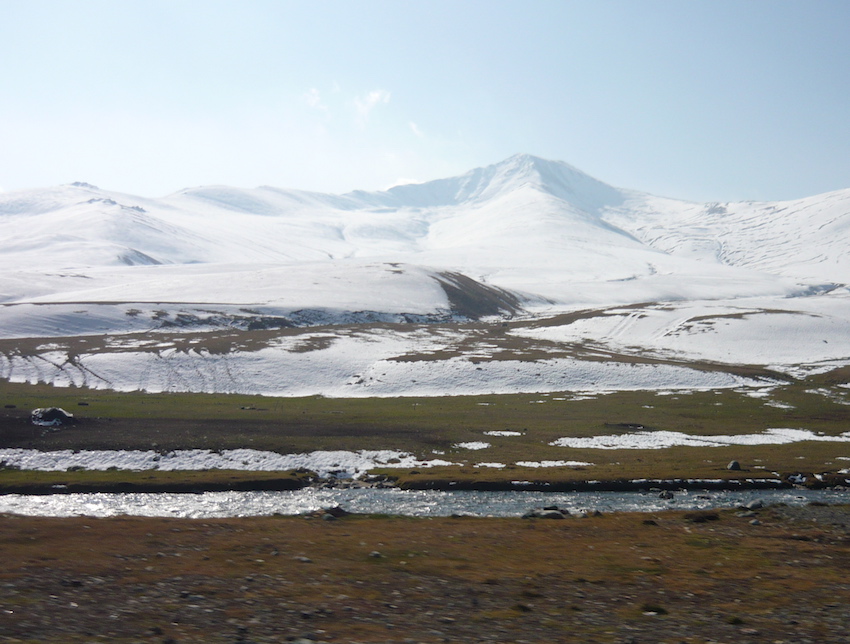
As we climb upwards the small patches of snow become more frequent, until we suddenly shoot through a long tunnel and emerge on the other side of the mountain range looking down over a wide, high plain. There are with smaller peaks spread out in the morning haze below us.
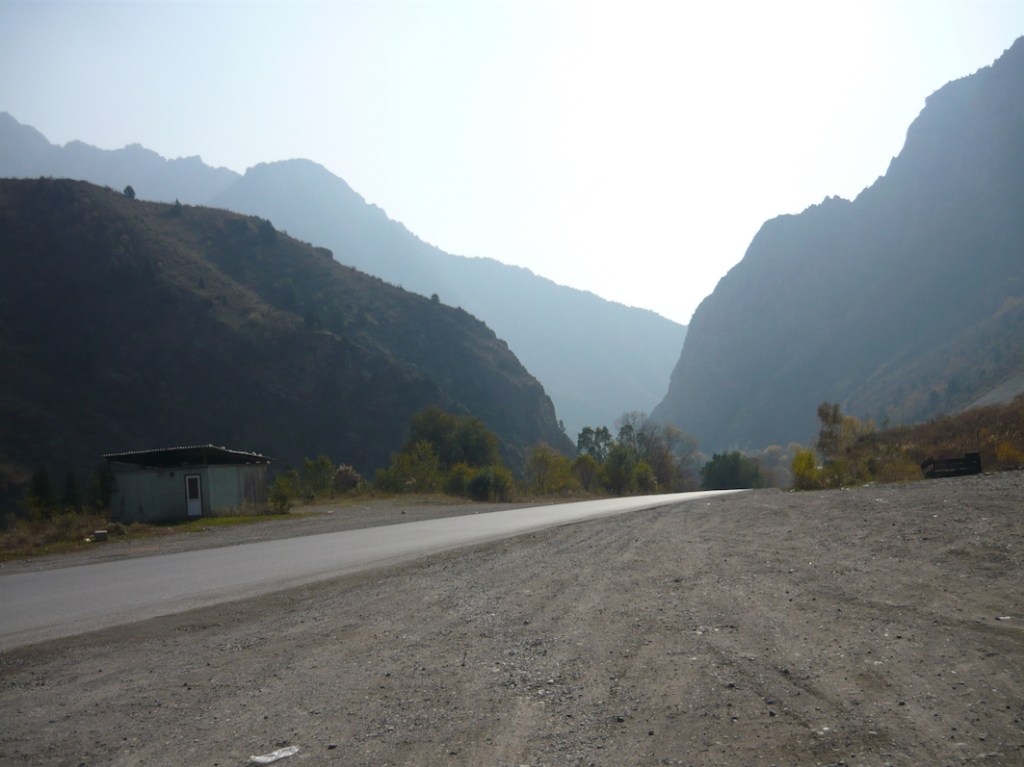
Towns are rare in this part of central Kyrgyzstan, but we pass many caravans painted blue or green, as well as more permanent looking wooden huts, but painted in a similar style so they look almost like the caravans. Then of course there are dozens of yurts, many of them with the words KUMYS spelled out in white stones on the grass front to alert travellers thirsty for fermented mare’s milk. We do flash through one small town though, just catching a glimpse of a silver painted Lenin statue in front of the town hall.
The posters of former president Askar Akayev, looking solemn and often wearing a kalpak — I remember from when I lived in Bishkek in 2003-04 are long gone, torn down after the 2005 revolution when he fled to Russia. In their place are posters of the new president, Kurmanbek Bakiyev, whose trademark look is a wide smile and a debonair wave.
Friendless in Kyrgyzstan
I try to snap pictures through the window on the journey from Bishkek to Osh, which amuses the others.
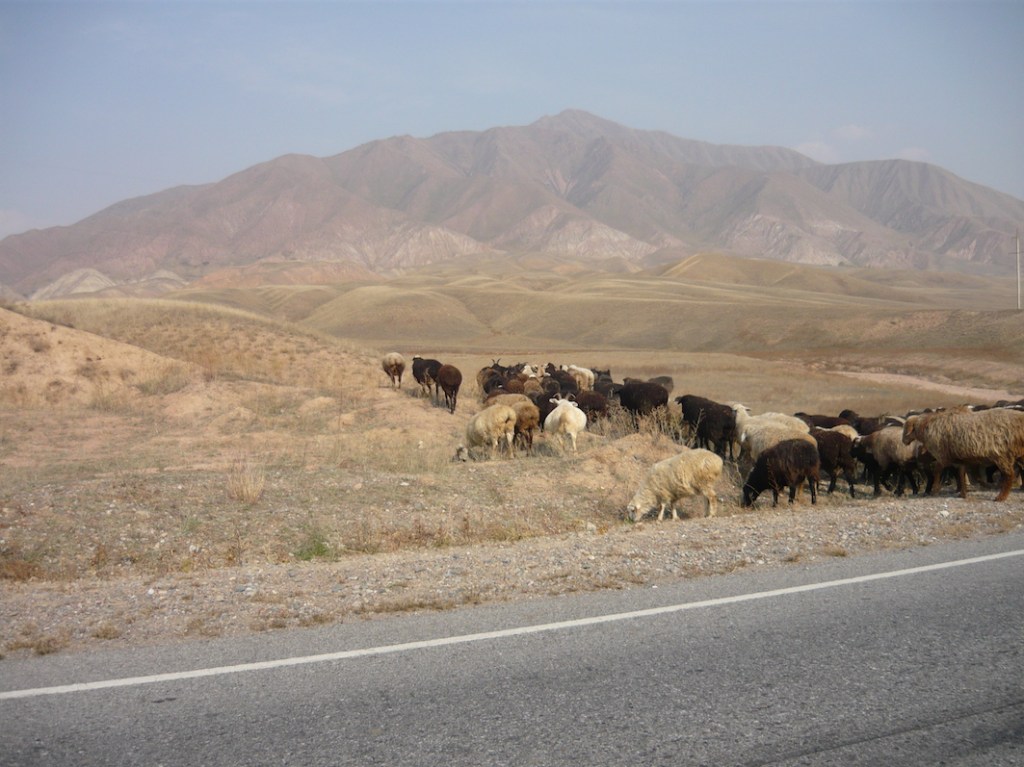
“She’s photographing our sheep!” chortles the husband.
I talk a little with the woman next to me, Asana, who says she’s a lawyer, but she’s more interested in why I’m travelling alone down through Kyrgyzstan.
“Don’t you have any friends?” she asks with concern.
“My friends are in Almaty.”
She goes on to tell me that she got married at 23, and was the last of her friends to do so. You must get married by 25 if you’re a Muslim, she says.
Every so often we pass a little shrine by the side of the road, and the three Kyrgyz passengers plus — worryingly — the driver say a little prayer and bring their cupped hands up to their faces.
We also pass the twisted, burnt out remains of cars beside the road, some of them mounted on plinths.
How to break into a car
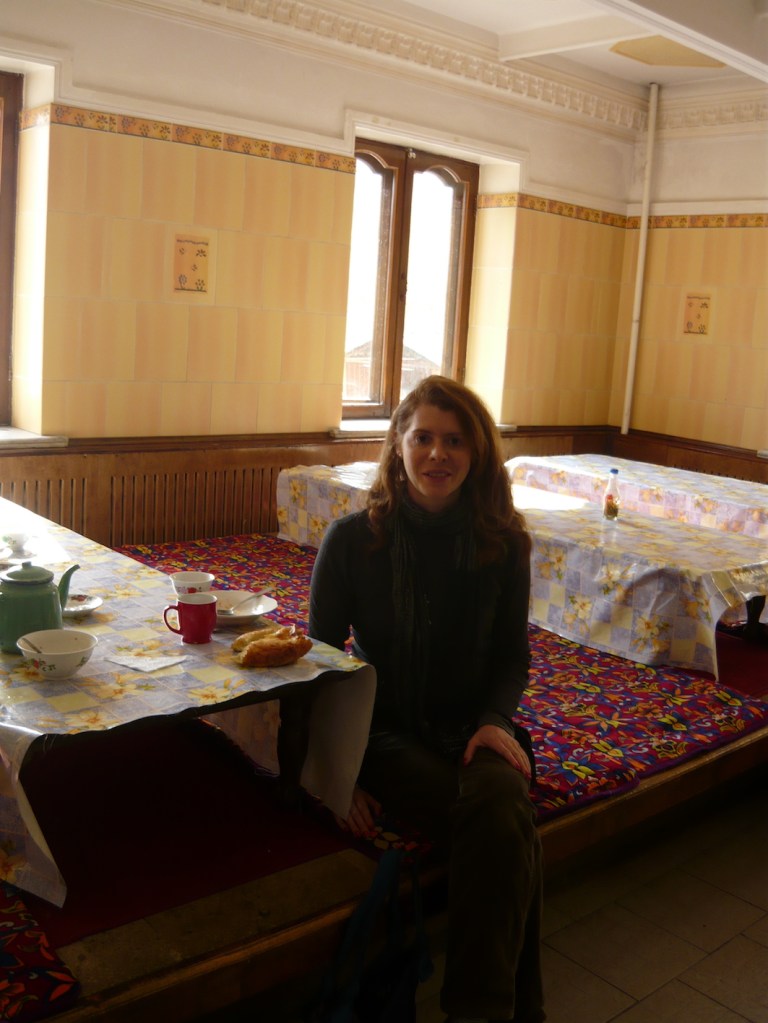
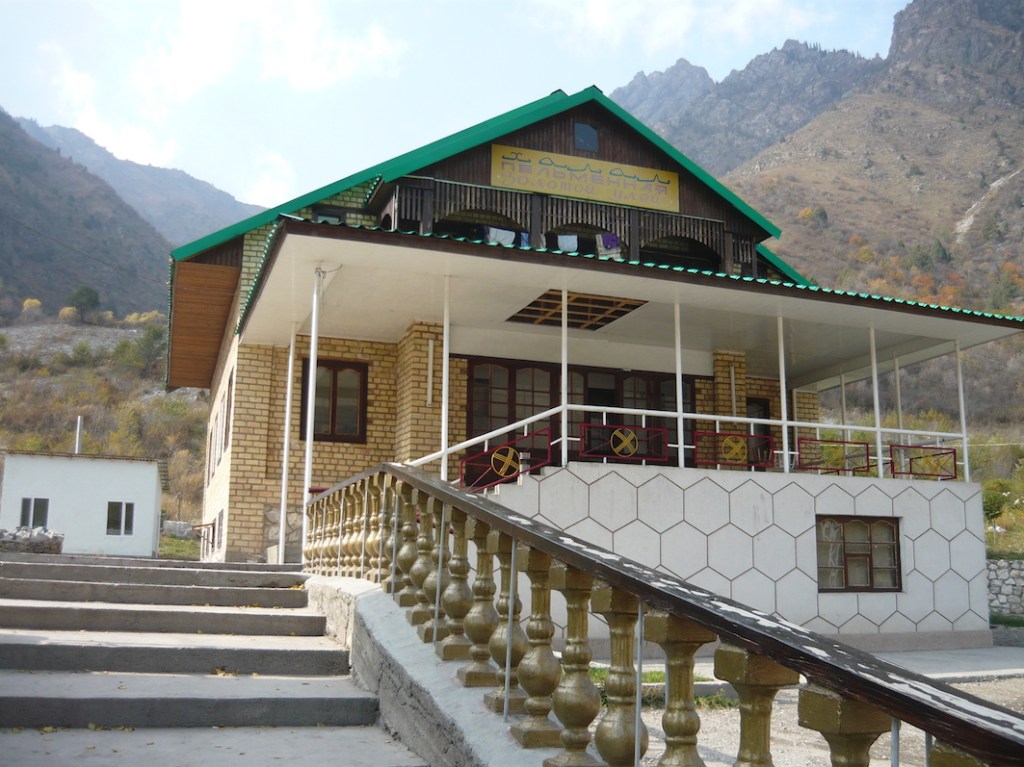
Around lunchtime we start passing restaurants on both sides of the road — apparently we have reached the halfway point from Bishkek to Osh — and the driver draws up to one, the Altyn (‘golden’) something. Pelmeni (meat dumplings) in a clear broth are served up. I eat the lipyoshka bread, and sip the tea, poured out by Asana.
When it’s time to continue our journey there’s a kerfuffle. Asana explains that the driver has locked his car keys in the boot. He tries to open the car with various knives, a piece of rusty metal he picked up off the ground, various other drivers’ keys, my house keys… but with no luck. The old man, helping enthusiastically, peels off the rubber around the back window with a knife but fails to remove the pane of glass. Eventually Asana’s husband borrows a bread knife from the kitchen and after several minutes of jiggling it through a crack in the door manages to get the car open.
Heading south
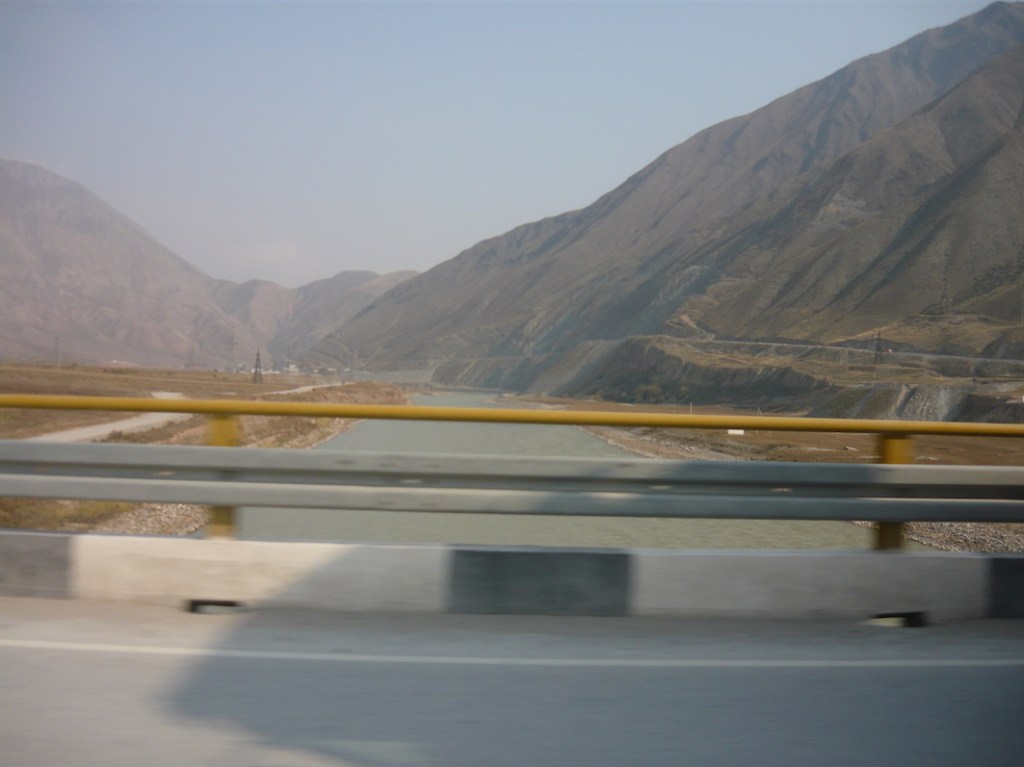
The landscape after lunch is very different from the Ala Too mountains and the high plane. We pass fields of maize and orchards, then the road skirts round the Toktogul reservoir.
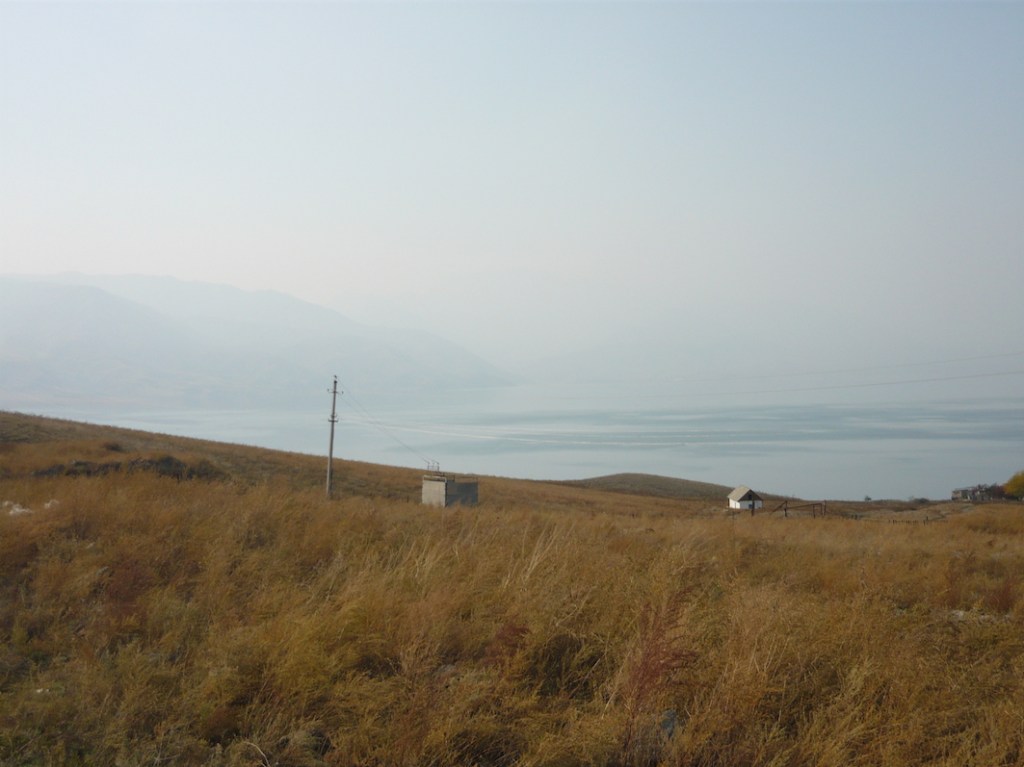
I ask Asana about the Kambarata Dam project, which makes her suspicious.
“Why have you heard about Kambarata if you live in Kazakhstan?” she asks.
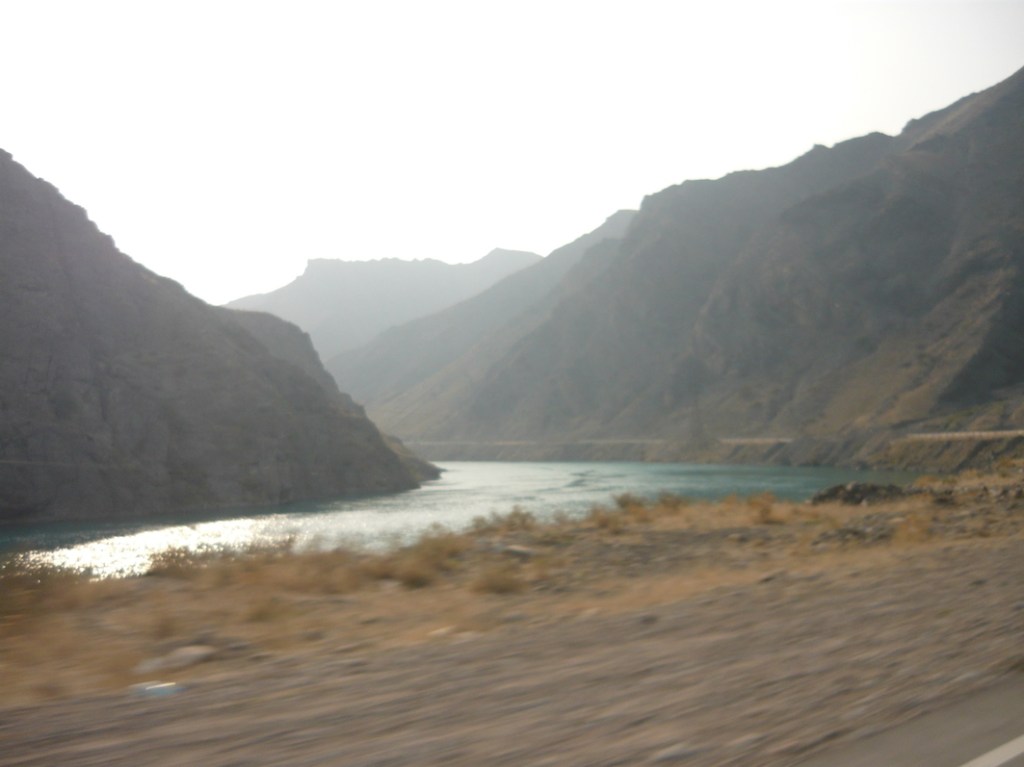
From Toktogul the road winds southwards along the deep blue Naryn river until the gorge opens out onto the wide, flat Fergana valley.
It’s dusk by the time we get to the town of Uzgen, where Asana and her husband want to be dropped off, and in Osh I can only make out the apartment blocks by the street lights.
It’s been a full day’s journey from Bishkek to Osh, and I’m only fit for dinner and bed. Tomorrow will be another long day of travelling along the Fergana valley to Batken.
 Steppe in Style
Leave a comment