At 6.05am I’m at Hammersmith tube station, sitting on an almost empty Hammersmith & City line train, carefully positioned directly under the emergency passenger alarm. I feel surprisingly good for someone with a bad cold, who got up at 4.30am. I’m still 35 minutes behind schedule on a journey that will end in Pula, Croatia though! Hope this train leaves soon…
By 8.50am I’m sitting on the Ryanair flight to Pula — recently added by Ryanair and very popular. The flight is full and I’m by the window next to a complaining couple.
He’s got designer stubble and black shades (on a plane!). When he leans over to grope her, his waistband gapes and I can see his hairy bum.
With the man distracted, I read the newspaper over his shoulder. A reminder that Gordon Brown has been PM for three months now. I also learn that Croatia is topping its Euro 2008 qualifying group.
“The sky’s griy,” he says as we come down to land.
“No I think it’s blue. I can see shadows,” says the woman, who’s in the aisle seat.
“No it’s griy.” Maybe if you took your sunglasses off…
“Thit’s one of the local irlines.”
It’s got Sibir written on the side in Cyrillic an URL that goes www.s7.ru. I think not.
So I’m crabby. I was looking forward to drinking lots of East European beer and smoking in bars (which was recently banned at home), but with a bad cold I don’t even feel like doing that.
At 12.40pm, I’m sitting on the curb outside Pula airport. The grumpy woman in the information kiosk says the bus to town doesn’t go till 2. And yes, the taxis are very expensive. She doesn’t know how much they cost, I have to ask the driver.
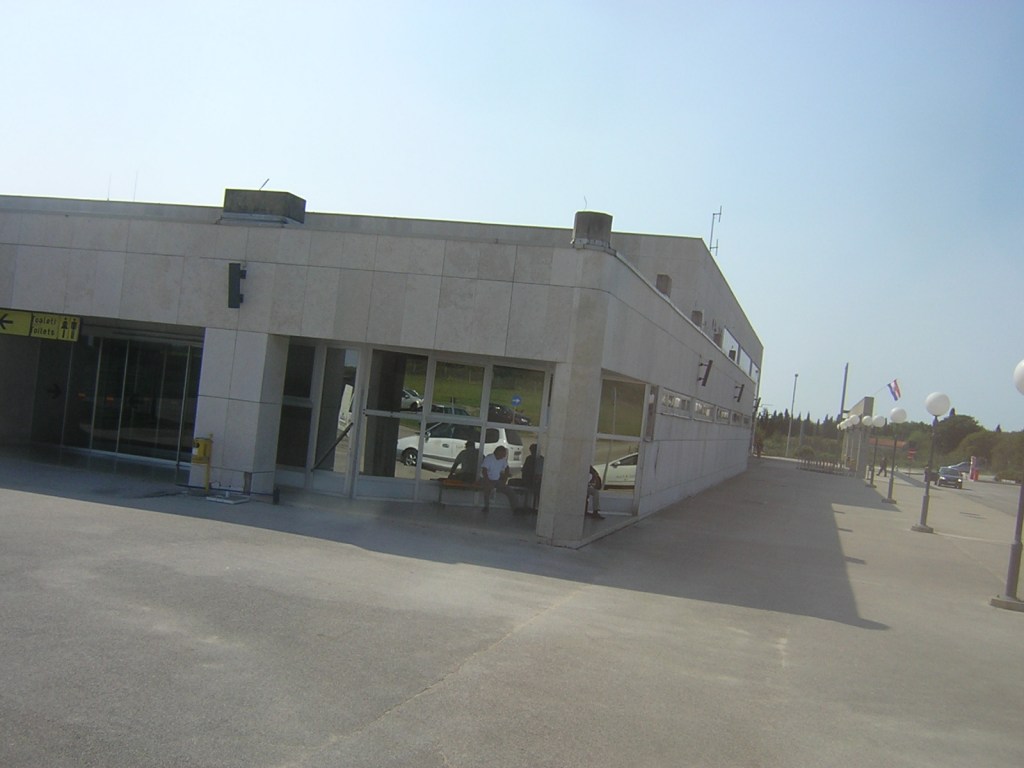
Instead of taking a taxi, I walk about a bit and buy a bitter little espresso to pass the time. I almost choke on it; I’ll have to regain my taste for these.
As I sit, coaches are regularly decanting loads of lumpy people in printed t-shirts and poorly fitting jeans outside the airport. Istria is the new Costa.
In the cafe, a couple in late middle age are drinking Croatian beer, smoking and sniping at each other. I catch pieces of their conversation but it makes no sense out of context.
“I was phoning all night until nine o’clock when I went out to Asda,” he grumbled.
Their gold lab is chewing on a rag doll under the table and makes a coughing noise as if it’s going to be sick (fortunately it isn’t).
Even though it’s September, the temperature is 24C and rising, according to the information board.
Finally, the bus into town, about 5 miles away, turns up and I get on, trundling along sun-drenched roads, and finally into Pula, the biggest city in Croatia’s Istria region.
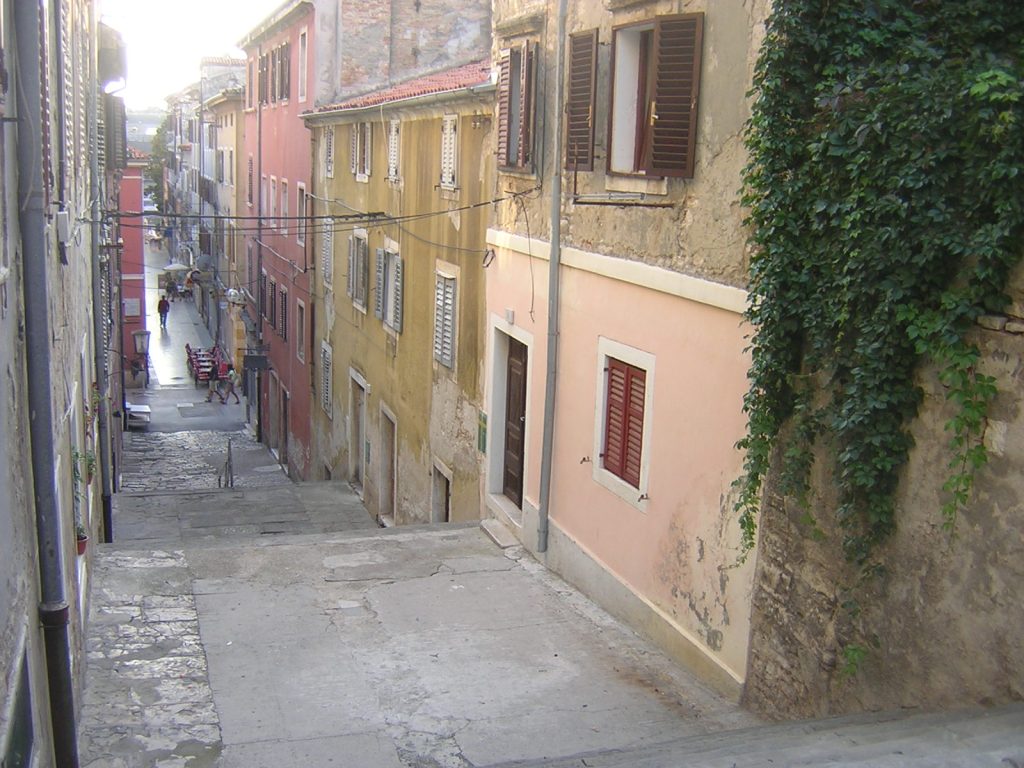
Leaving the bus, I wandered about through the narrow cobbled streets, up and down stone stairways and through small squares, with occasional glimpses of sparkling blue sea.
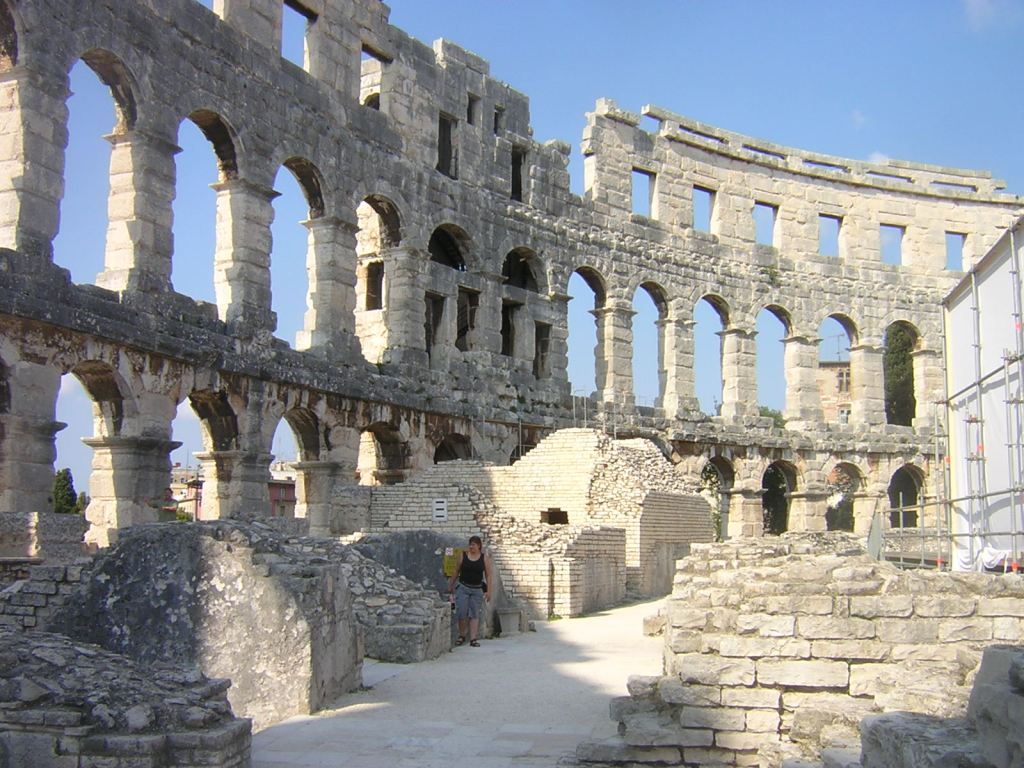
Pula is renowned for its rich history and ancient Roman architecture, including the iconic Pula Arena, a well-preserved Roman amphitheater.
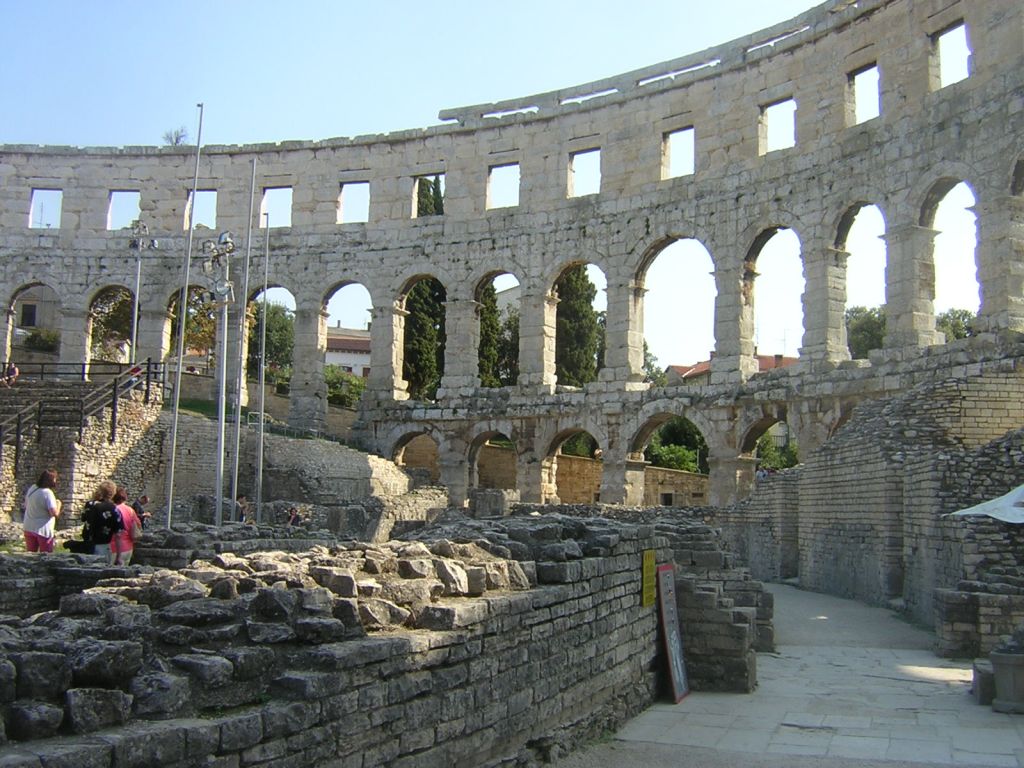
That was my first point of call. Built between 27 and 68 AD, this amphitheater has the distinction of being the only Roman amphitheater in the world with a complete circle wall and the capacity to seat 20,000 spectators.

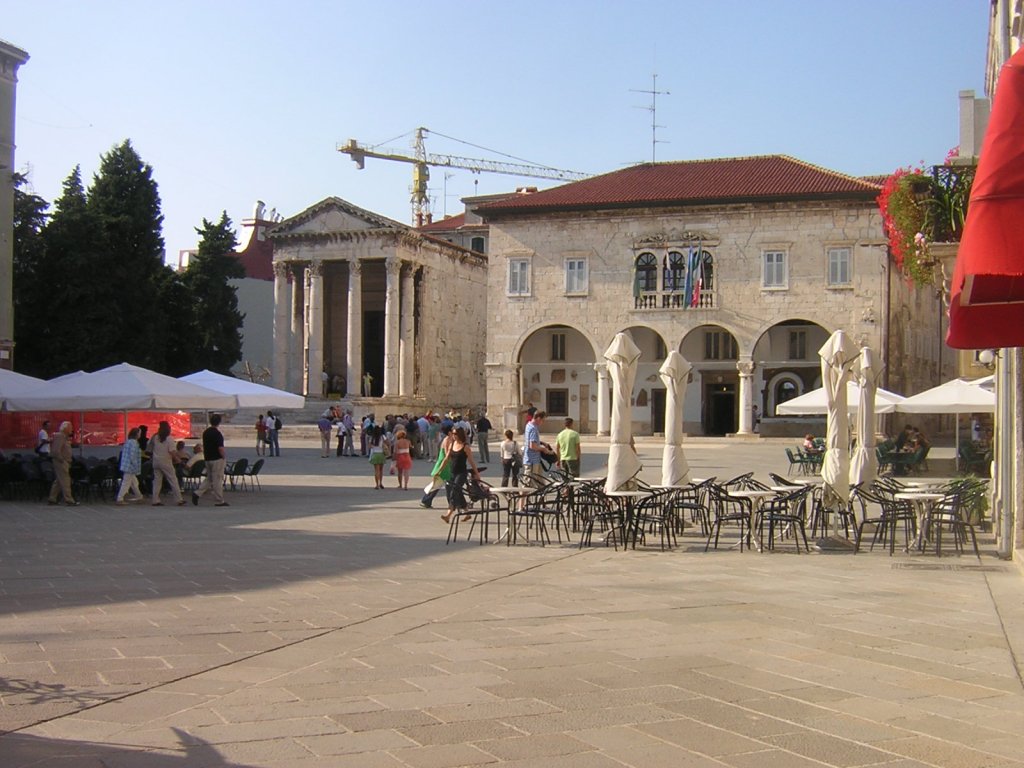
I also visited the triumphal arch and the Pula forum — its main marketplace in Roman times — both built in the first century BC.
While those are some of the main sites, Pula’s history goes back far beyond Roman times. Archaeological evidence suggests that the area may have been inhabited as far back as 40,000 to 1mn years BC. Back in the 11th century BC that Pula rose to prominence as a major settlement for the Illyrian Histri tribe.
When the Roman Empire expanded into Istria in 177 BC, Pula became a Roman colony. During this time, several important buildings were built, including the amphitheatre, and the town gained strategic and economic significance for the Romans, becoming a hub for local trade.
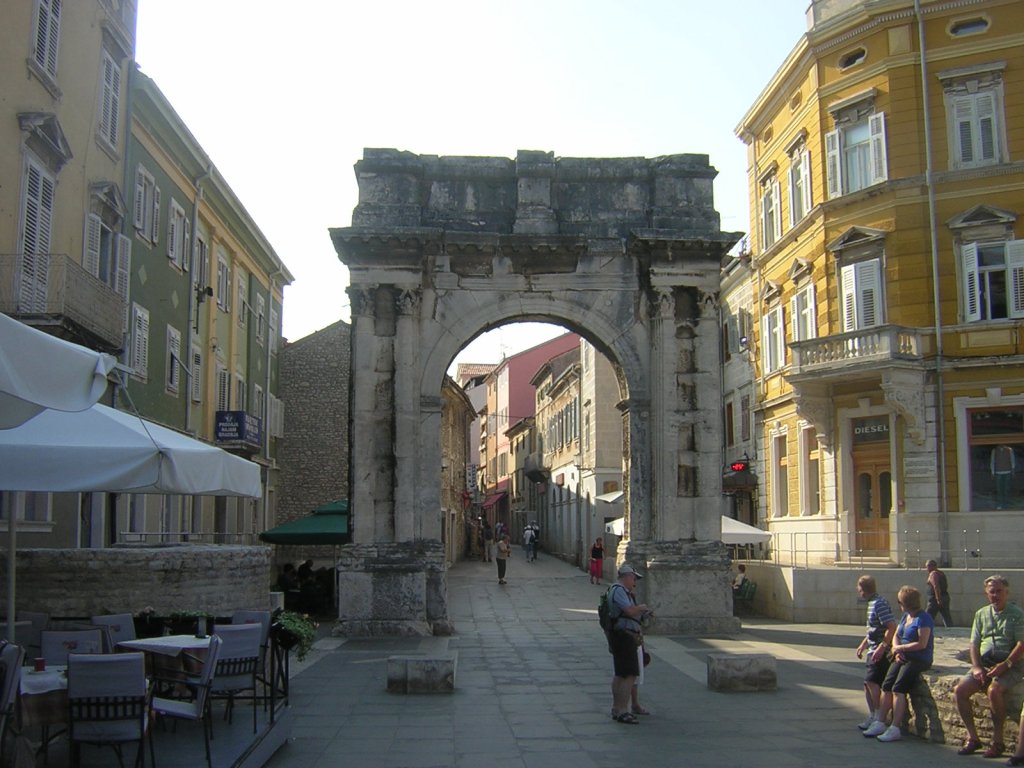
Later on, the town was influenced by Slavic, Venetian and Hapsburg culture.
Interestingly, Pula almost died out in the 16th century. The population fell from 5,000 to 1,000 and by 1631, only 300 people lived in Pula following attacks and plague epidemics.
However, it revived in the following centuries and in the 19th century it became the chief port of the Austro-Hungarian Empire.
The influence from nearby Italy is also evident in the many pasta dishes on the menus of the cafes in the old town. I dined on cheesy pasta and a salad before heading to the bus station for my overnight journey to Split.
 Steppe in Style
Leave a comment