Bucharest was the very first place I visited in Eastern Europe. I came here in summer 1998 as one of a group of students on our way to teach English in neighbouring Moldova for a few weeks. We flew into Bucharest, where we stayed one night, got our Moldovan visas then took the Bucharest-Iasi-Chisinau overnight train.
I have vivid memories of the plane jerking and plunging in severe turbulence as we approached Bucharest. I looked down onto the small squares and rectangles and strips of land, baked brown by the sun on the flat land as we approached. Once in the city my impression was of beiges and browns too — thin dark-haired people wearing beige and brown clothes, old-fashioned brown or white cars whizzing along the broad streets, dry leaves on the trees, grey-brown concrete apartment blocks…
That was on 29 June 1998. I returned to Bucharest nine years later very nearly to the day, on 30 June 2007.
This time from the modern airport terminal to the colourful clothes people were wearing — people who were no longer thin but well fed (maybe not unconnected to the McDonalds on central Unirii Square and large number of other fast food outlets) — everything was different. In summer 2007, Romania had been a member of the EU for just over six months. We no longer needed visas, and instead of the time consuming changing of travellers checks in a musty smelling bank we could take money out on our debit cards at the ATMs.
Bucharest was the first stop on a five-country tour of the Balkans I’d planned, when the alarm at passing 29 promoted me to do something to mark the last year of my 20s other than getting pissed at the pub. I was with a schoolfriend who fell in love with the itinerary and decided to join me. We flew out of Luton with Wizz Air, an airline we’d never heard of before.
We were flying from Luton, with Wizz Air, both of which were new experiences for me. Tamara had never heard of Hungary’s budget airline Wizz Air. The only reason I had was that I was working for a private equity magazine, and Wizz Air was backed by two American private equity firms. Rumours of a planned IPO had brought them to my attention. founded in 2003 and by 2007 was flying to close to 50 destinations
We stated to regret this when the plane disappeared from board when it approached the (late) departure time. Another passenger said it used o be ok but recently there have been lots of delays. Last time he flew, they were delayed for one and a half days, then as they were preparing to take off the plane caught fire and has to be evacuated. However, we had a lot of fun with the Wizz Air brochure, which was full of tips by East Europeans on travels to London as well as gifts like an inflatable Wizz Air plane for €11 and jumbo muesli cups for €19.
We stayed at a hostel near Piata Arcul de Triomphe in the northern part of the city. This made it an easy (though very long) walk south through the city, much of it along the Calea Victoria — which I knew from reading Oliva Manning’s “Fortunes of War” had been the city’s main street for decades — then on to Piata Unirii and rounding off the day of exploration with a tour of the Parliament Palace.
Arc de Triomphe
We started out at the Arcul de Triumf, which closely resembles the Arc de Triomphe in Paris. The current arch replaced the original wooden one put up shortly after Romania gained its independence in 1878 – that was built quickly so victorious troops could march through it but it soon needed replacing.
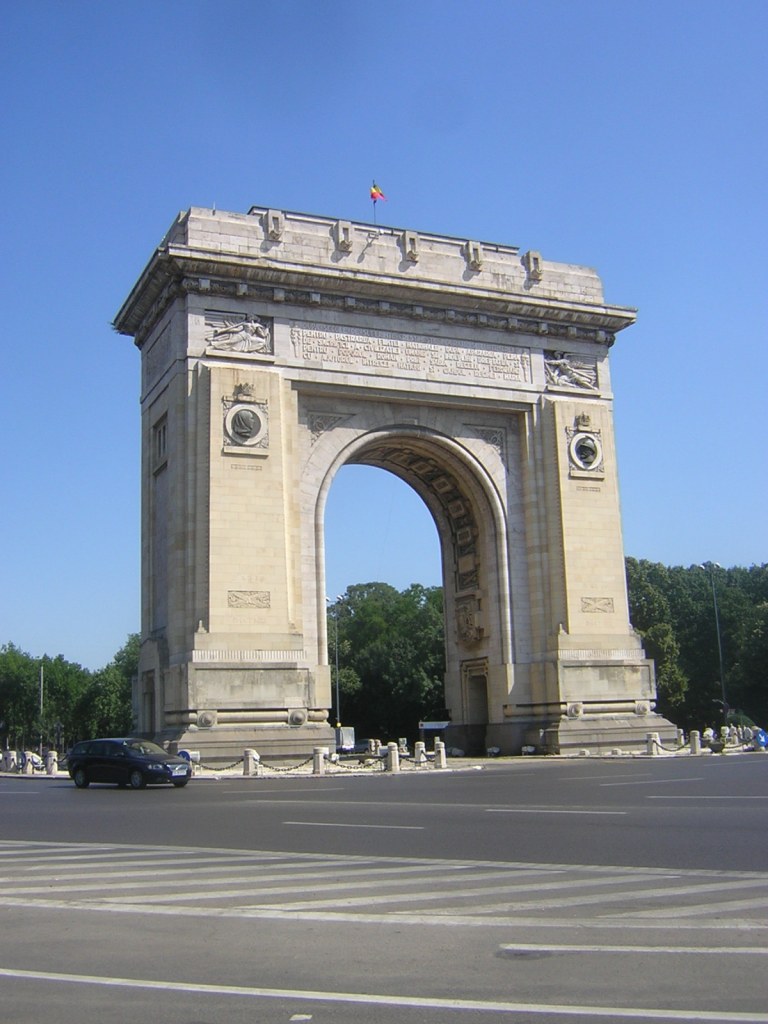
From the Arcul de Triumf we walked south along the broad Kiselef Boulevard, which took us past museums, embassies and other grand villas, as well as though Kiselef park, one of the oldest parks in Bucharest.
Museum of the Romanian Peasant
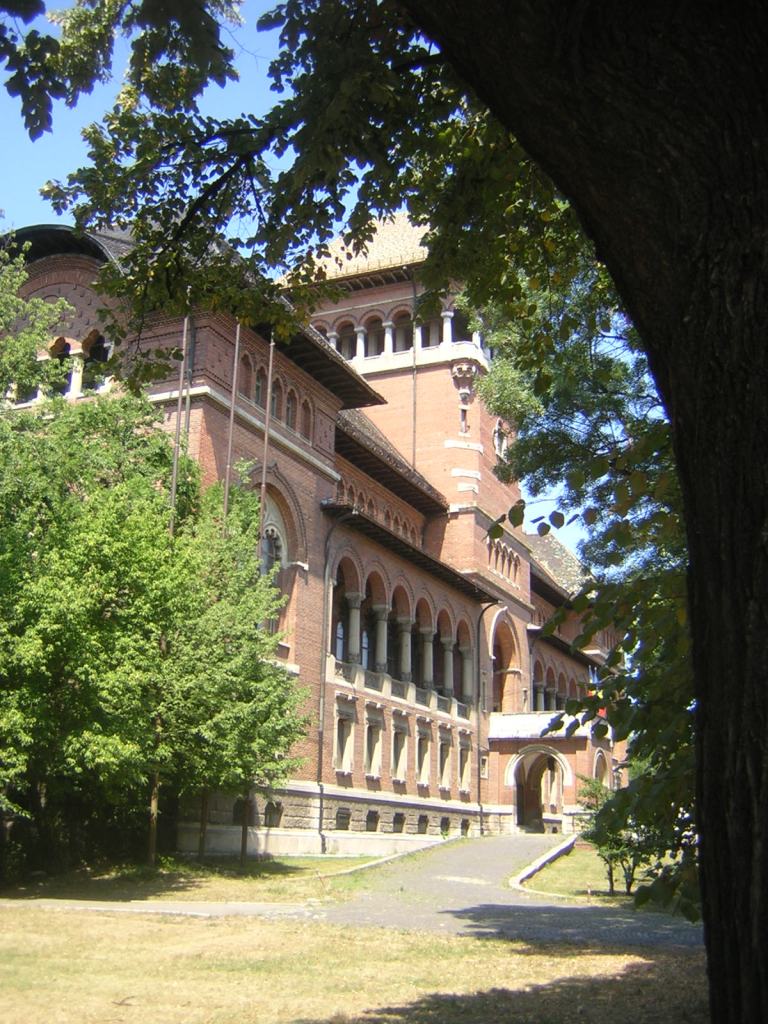
Just before we got to Piata Victoria (Victory Square) we stopped at the gracious brick building that houses the Museum of the Romanian Peasant, which has a huge collection of traditional costumes, textiles, ceramics and other items. 11 years ago, in 1996, it was the European Museum of the Year.
Piata Victoria
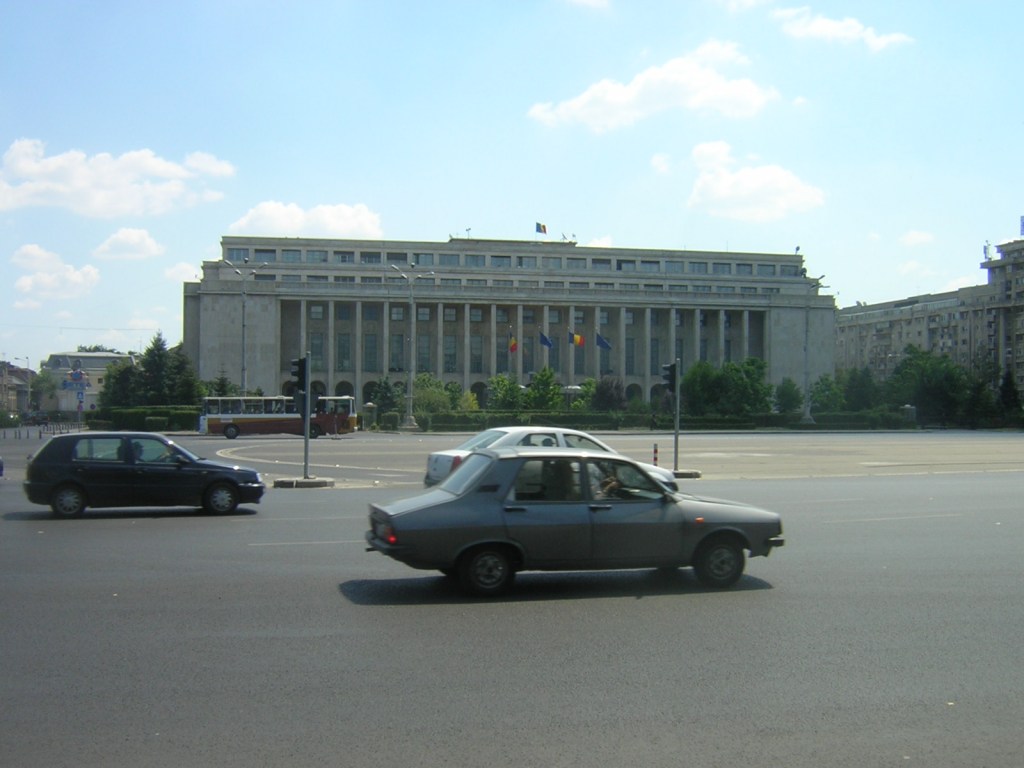
Piata Victoria marks the start of the Calea Victoria and is also the site of the Romanian government building, Victoria Palace, built in the 1930s-40s.
Piata Revolutiei
Piața Revolutiei (or Revolution Square), south down Calea Victoriei, is the former Palace Squae that was renamed after the revolution that overthrew the communist regime in December 1989.
The former Central Committee of the Romanian Communist Party — the building from which the communist leader Nicolae Ceaușescu and his wife fled by helicopter in December 1989 — is on one side of the square.
It’s also home to the Romanian Athenaeum, the Athénée Palace Hotel and the Memorial of Rebirth that was built to commemorate the victims of the 1989 revolution.
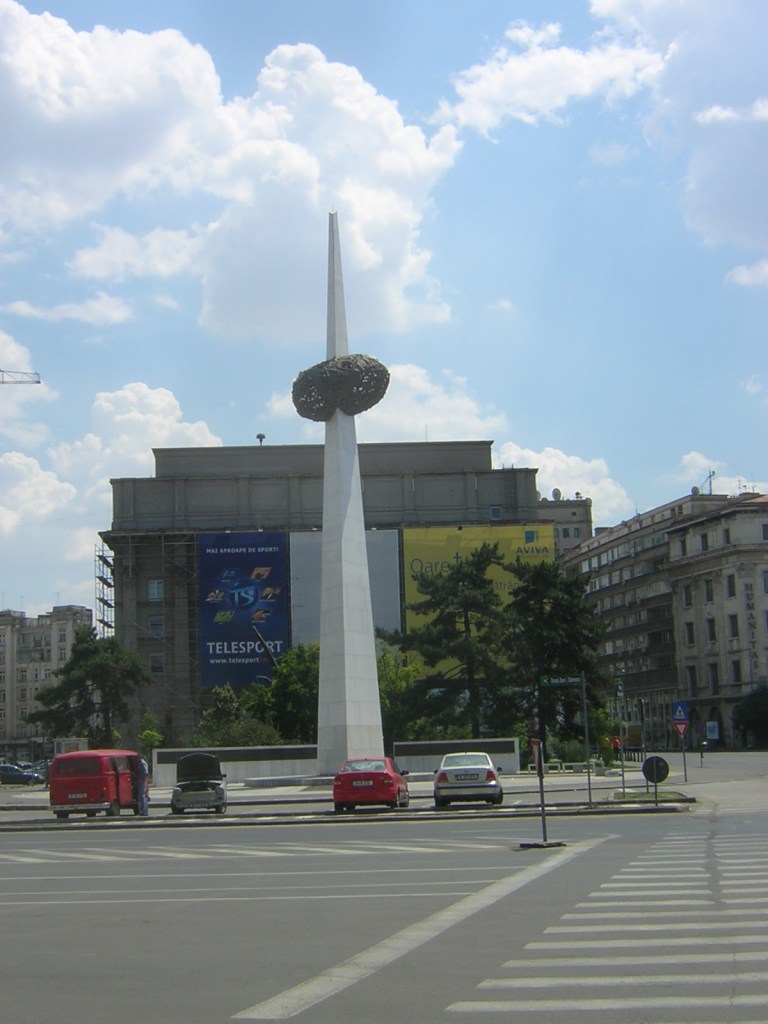
Kretzulescu church
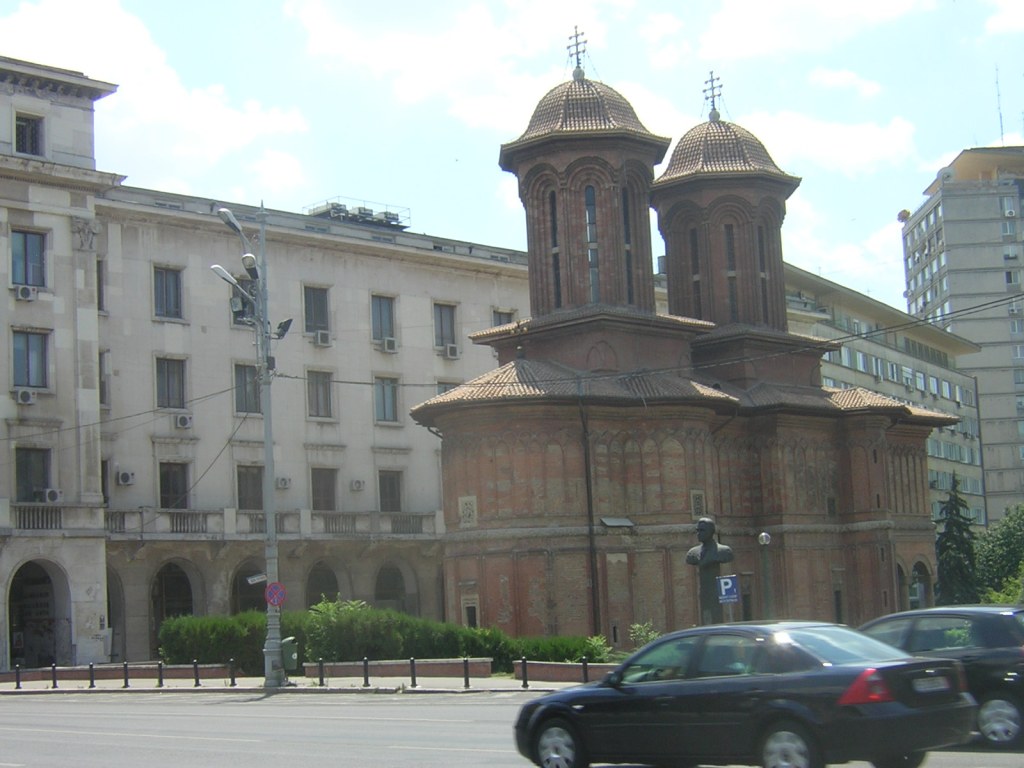
Immediately after Piata Revolutiei is the Kretzulescu church, a red brick orthodox church that dates back to the 1720s.
Bulevardul Uniri
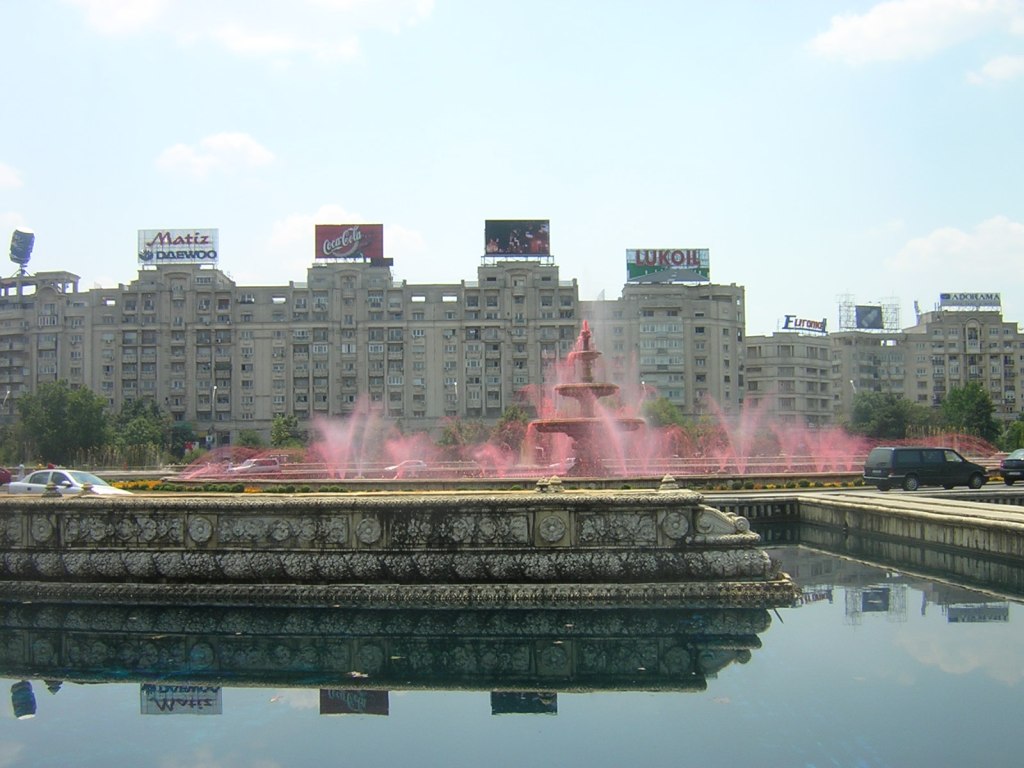
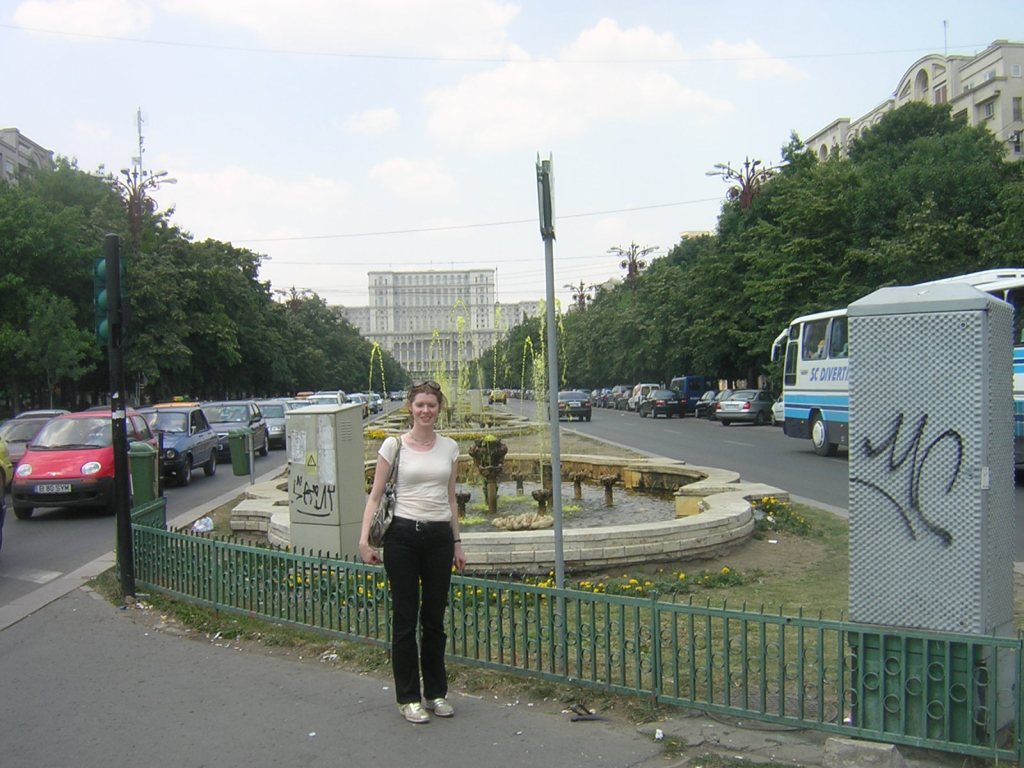
The southern part of the Calea Victoria skirts around the old town, ending at the Dambovita river. From there, we continued south to Bulevardul Uniri, which runs from the huge Uniri Square to the Palace of the Parliament. The fountains in that area have been coloured with different dyes; we found the yellow ones particularly disconcerting.
Palace of the Parliament
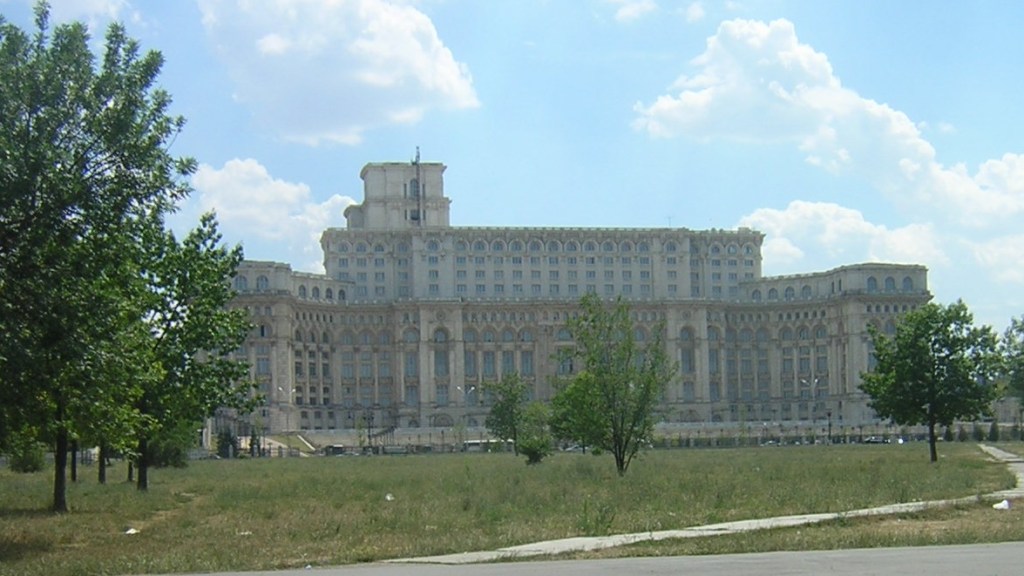
The huge grey stone Palace of the Parliament loomed ahead of us as we walked towards it along Bulevardul Uniri. Then it was another long walk across the dry grass of the park surrounding it and along concrete walkways with metal reinforcing exposed.
The huge structure is the second-largest administrative building in the world (after the Pentagon) and the heaviest building in the world at 4.1bn tonnes. It was built on the orders of Ceausescu, starting in 1948, though it wasn’t completely finished until 1997 — eight years after his death.
It’s now the seat of the Romanian parliament but we visited as part of a tour party, led by a young blond man, who spoke in a monotone even for the most exciting details. An example: “There was a monastery here it was said anyone who touches it will die a horrible death within five years the Ceaucescus started in 1985 and died in 1989 was it a coincidence I’ll leave you to decide.”
At the end he intoned, “thank you, you have been a wonderful tour group”
Tour of the Balkans
Bucharest was the first stop in our five-country tour of the Balkans. Read about the rest of the trip here:
Late 20s angst and a tour of the Balkans
Delving into the recent past in Belgrade
 Steppe in Style
Leave a comment