Sunday is beautiful – a bright sun in a clear blue sky, a light breeze ruffling the leaves, and the mountains gleaming white in the distance. It’s just the day for a trip to Kara-Balta, a former uranium processing city that was closed to the world during the Soviet era.
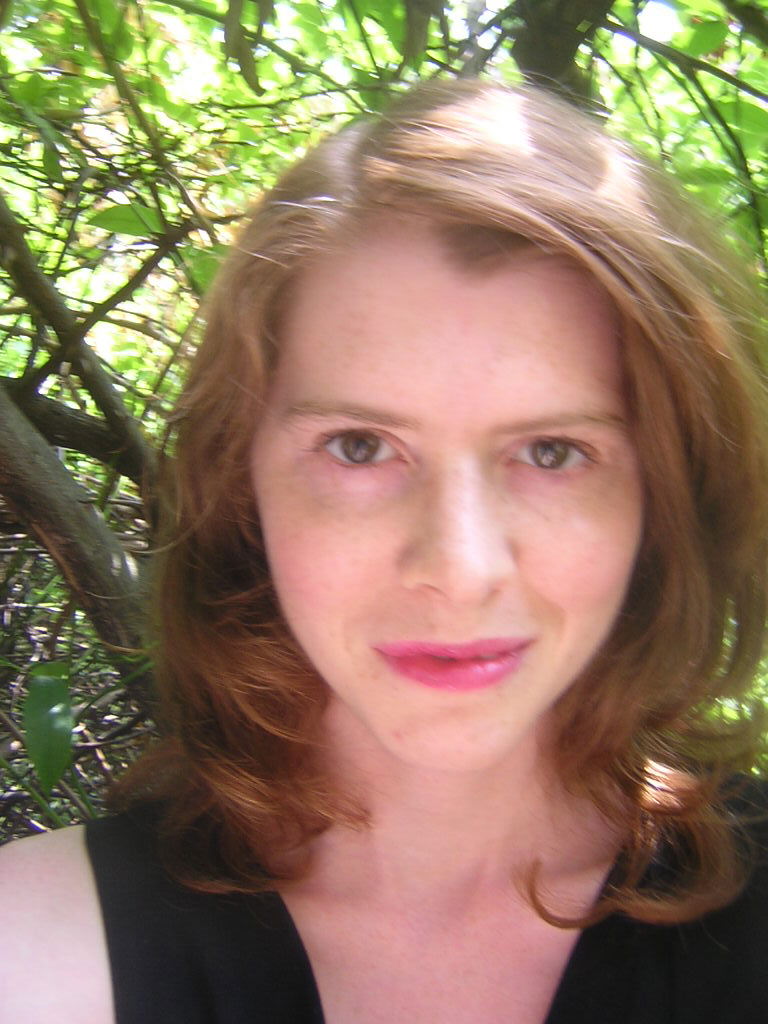
In honour of the occasion, I put on the new spring outfit I brought back from London – a black flared skirt with a pattern of shoes and handbags, a fitted denim jacket, flat blue shoes and lilac plastic hoop earrings.
I’ve been feeling lonely and homesick again, but with my new outfit on and a trip to a new city ahead, I’m cheerful again.
At the West Bus Station (long distance), my American colleague and I are the last people to board the tiny and ancient minibus. The other passengers are pleased to see us; there’s no fixed timetable, the minibuses wait until they’re full before setting off.
The driver and his assistant always cram in as many people as possible to make an extra 100 som or so for the journey, which costs 30 som [about 40p] per person.
Beer for real men
I’m squeezed into a corner of the back seat next to two young men in the Central Asian uniform of cropped hair, dark trousers and black leather jackets. They’re both swigging from bottles of Arpa, the Kyrgyz beer that ‘real men’ drink, and two more bottles are already rolling about on the uneven floor between the seats. The young man next to me is incredibly beautiful, with softly curling brown hair around sensuously cut features in a smooth bronze face.
I’ve certainly got a better seat than my colleague, who’s facing backwards on a tiny wooden stool in the aisle. Sitting with his knees almost level with his ears, he’s only being kept from flying through the windscreen whenever we bounce over the uneven road by two stout Kyrgyz matrons who have him pinned between their bulk.
My seatmate turns a pair of hazel eyes fringed with thick dark lashes onto me and I immediately forget the stench of petrol and the claustrophobia, even though it remains at the back of my mind that sitting up here at the back I’d be the last out if there was a crash and the bus caught fire.
He is a market trader, originally from the Russian region of Tatarstan, and is now working the triangle between Bishkek, Almaty and Tokmok, moving goods from one city to the next and selling them where he can get the highest price.
He’s soon asking the usual questions about my family, and what I’m doing in Bishkek.
Personal questions from a gorgeous stranger
“How much dengi?” he asks, rubbing his thumb and forefinger together. Dengi is a Russian slang word for cash. It comes from the Turkish, and tenge, a similar word, is the unit of currency in Kazakhstan. “Money, money.”
“I don’t want to say,” I tell him primly.
“Ah! English people are very heatery!” he exclaims with some admiration. I make a note to ask my colleague what that means later.
“And how old are you? Are you married?”
“No.” Then I wonder if he’s deliberately rubbing his thigh against mine or if that’s just the swaying motion of the minibus. “I am engaged. I am here with my boyfriend. That’s him over there.”
I point at my colleague, whose head is nodding uncomfortably up and down as he sits bolt upright between the Kyrgyz ladies. Such a pity he’s chosen to pair maroon tracksuit bottoms with a tweed jacket. My handsome seatmate studies him with interest.
“He is American?”
“Yes.”
“He’s older than you. How old is he? Are you going to marry him soon?”
“Er… maybe!” I tell him brightly.
“When is his birthday?”
My imaginary boyfriend
The Kyrgyz ladies are listening closely. I think they want to hear what a strange foreigner has to say, but I also feel protected. I know that they’re looking out for me because I’m a young woman, possibly their daughters’ age, who’s being chatted up by a man. I know that if my seatmate oversteps the mark they will intervene.
“Where did you meet? Did you come to Bishkek together, or did you meet here?” he asks, offering me a sip from his bottle of Arpa. I refuse, mainly because I don’t like sharing bottles with people I don’t know. It isn’t hygienic. But I can also feel that I’ve done the right thing. I sense that the Kyrgyz ladies don’t approve of him and his friend drinking beer during the journey (though they aren’t going to say anything), and they think better of me for turning it down.
“We worked together.” I start embroidering details of my putative relationship with my colleague for him. His friend, ignored, drops beer bottles on the floor and annoys the woman in front by tapping out a rhythm on the back of her seat.
I’m in the middle of describing our first date together when I notice that we’re driving into what looked from a distance to be a forest, but is actually a town swamped with oak trees.
“This is Kara Balta,” says my seatmate.
Empty roads
The road into town is empty except for a single horse-drawn cart. The bus station is a grassy field with two elderly minibuses parked in it. As we get out of the marshrutka there’s a rattling noise form the main road and an ancient red and white bus about the size of a caravan appears in the distance. It’s now turned humid and a thick haze has enveloped the sun. All around us the air is still and torpid.
I drag my colleague off before my new friend can start asking him about his marriage plans, and we walk aimlessly down the empty street, past the slowly moving bus and a deserted post office with a crumbling socialist mosaic covering its entire front wall.
The glazed tiles are now so faded it’s only just possible to make out the outline of the workers. Behind the treetops we can see grey blocks of flats, the same colour as the sky.
Kara-Balta seems to be on the same kind of grid plan as Bishkek, but the buildings are on a smaller scale – the post office is smaller, the blocks of flats are only three stories tall, the buses are tiny.
The secret company town
It’s very hard to find out much about the towns outside Bishkek. (Possibly, I wonder now, because there isn’t a lot to find out.) All I know is that the city once used to be divided into two parts: an open and a closed town. The closed town was a company town that housed the scientists and workers at the Kara-Balta uranium mine, where they would live and work and socialise, and their children would go to school with the children of other nuclear scientists.
During Soviet times Kara-Balta was well known throughout the Soviet Union as a processing centre for gold and uranium. The Kara-Balta Mining Combine was among the leading uranium processors in the Soviet Union.
My editor used to go on shopping trips to Kara-Balta, which got all the new fashions and household goods from Moscow.
Maybe it was a hive of activity in those days, but now it’s very subdued. Across the road from the post office there’s a few ladies with wooden tables or crates of vegetables. They’re quieter than the traders in Osh Bazaar and wearing darker, duller clothes. Even the apples, potatoes and garlic heads are small and shrivelled.
A group of overweight teenage girls are loitering at the corner. One is in ripped jeans, and the other in a floor length fake leather skirt. It’s not a great look, but I think they’ve gone for the most rebellious clothes they can find here. They’re sending out teenage vibes that say adolescence is bad enough, but growing up in Kara-Balta really is the pits, and I’m inclined to agree with them.
Russian exodus
My colleague and I strike off to the left, walking along a road through the woods, passing no one except a tramp asleep face down on a bench, snoring thunderously. There’s an empty bottle of vodka by the bench. I know that the population fell by one eighth during the 1990s, mostly ethnic Russians emigrating to Russia – but where are the other seven-eighths? It feels like a ghost town.
There are more signs of life when we come across a few apartment buildings, with freshly washed white sheets hanging outside, and Kyrgyz women going about their chores, while men squat on the pavement smoking and spitting out the husks from sunflower seeds. We can even hear Fabrika playing at a café.
We decide we must be getting closer to the action, and are rewarded when we walk over a level crossing to find a deserted square with a gold statue of Lenin in a small park. My colleague and I photograph each other in front of the statue and solemnly inspect the park, and what was once a racetrack but now is just an oval of broken concrete covered in weeds.
Time to go
“Shall we go back to that café then?” We feel we’ve done our touristic duty.
We order two beers, and some chips and marinated mushrooms, looking forward to a relaxing meal and a chat.
Unfortunately the barman switches on an industrial size karaoke system and starts bellowing the words to a popular Ivanitsyn International song.
After a few minutes my colleague and I exchange glances, and he nods towards the door. It’s far too loud to hear each other speak. We count out some banknotes, abandon our beers and escape down the road. The haze is deepening into cloud, and a few spots of rain fall on us.
“Shall we get the bus back to Bishkek?” we say simultaneously.
 Steppe in Style
Leave a comment