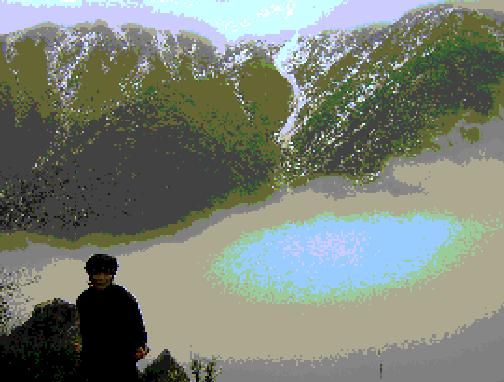
We have a day off for International Women’s Day, 8 March, and I’ve arranged to go to Twelve Chimneys — twelve mountains clustered round a gorge in the Ala-Too, not far from Bishkek — with my new American colleague and a friend I met when we were both stuck at Istanbul airport in January.
I meet them outside Osh Bazaar, where we’ve arranged to buy provisions for our trip to the mountains. It’s been sunny with temperatures in the high twenties all week, but International Women’s Day dawns less brightly. My colleague is standing by himself near the row of lipyoshka stalls looking chilly. The temperature must have dropped ten degrees over night, and the sky is overcast. The vendors are huddled close to their piles of loaves as if trying to absorb some residual warmth left by their baking ovens.
“Shall we run away before our friend gets here and have a nice lunch instead of going to Twelve Chimneys?” I suggest, but a minute later he arrives and rallies us into going.
“Come on, you guys! You promised to go to the mountains!”
Before we have a chance to argue, he’s cast an expert eye over the line of cars waiting by the bazaar and selected one that looks old enough to be cheap, but not so decrepit it collapses halfway up a mountain.
The fog descends
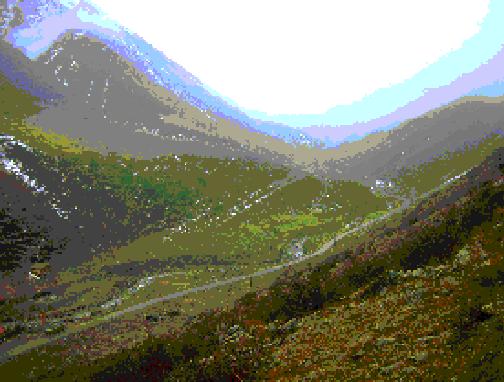
It’s getting steadily colder and a thick fog is starting to descend from the mountains. It’s not uncommon for the weather to change dramatically here, where the flat steppe that stretches all the way up through Siberia to the Arctic meets the Himalayan chain of mountains.
We feel rather than see the road ascending gradually, through the industrial outskirts of Bishkek, then brand new dachas, some of them half finished, others where we can see new Mercedes and SUVs through gaps in the high electric fences. Some even have mini watchtowers.
“This is where the parliament members build their houses,” says my friend.
The higher we climb, the colder it gets, and just outside town we’re surrounded by swirling mist.
“Mosque,” says the taxi driver, pointing at an amorphous grey cube on one side of the road. The mist shifts briefly to reveal a breeze-block building topped with an aluminium dome.
“Dam. Reservoir.” He points at the other side of the road, where the land falls sharply away into nothingness.
Soon we can see nothing at all except for thick white mist and the winding road ahead, peppered with boulders.
Low visibility
The driver pulls into a lay-by and looks expectantly at us. We can see for about a metre outside the windows. Apparently this is Twelve Chimneys.
“Here already!” my friend says brightly. “Off we go then!”
The driver gives us a stare that says ‘you crazy Anglo-Saxons’, cranks back his seat so he’s almost horizontal and lights up a cigarette.
My friend strikes up the slope, not giving me or my colleague the chance to argue. We follow him more gingerly, breathing in the crisp, damp air, and stumbling over rocks and grass slippery with condensation and rabbit poo.
I catch my friend’s eye and we both grin widely. I know it’s not very sensible to go stumbling about a mountain in the fog, but the clean air and strange conditions are exhilarating. Once the initial excitement of arriving in Central Asia had worn off, living in a small city like Bishkek became a bit samey and any change is exciting. Behind us, my colleague is slipping uncomfortably about in his trainers.
“Look!” he gasps.
A glimpse of beauty
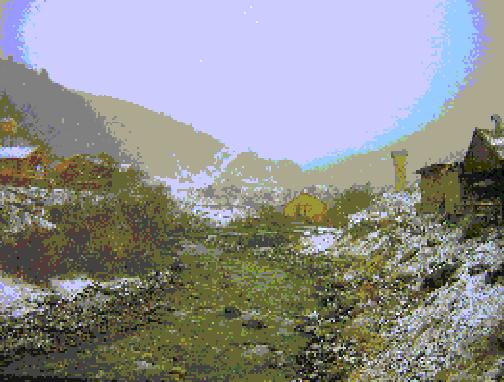
We turn around and take in the beauty of Twelve Chimneys. In the few moments we’ve spent climbing on our hands and knees over a patch of scree, the clouds have lifted and a mountain coloured deep green and purple with grass and lichen is looming out of the mist opposite us. The valley is so narrow it seems almost close enough to touch.
Our cameras click in unison. Then the mist falls again, and the mountain is gone as quickly as it appeared. My colleague persuades us to go back down to the valley at the centre of Twelve Chimneys before we get lost, and we head for the log cabin restaurant next to the stream.
“Wow!” exclaims my colleague. The wooden interior is full of fur rugs and tables covered in white cloths and sparkling glassware. It’s being warmed by roaring log fires.
“Prazhnikam,” says the waiter, laying a menu in front of me. He’s congratulating me on International Women’s Day. In fact, as the tables fill up, we can see they’re all taken by well to do Bishkekis taking their wives, mothers or girlfriends out for a celebratory lunch. It’s not cheap here (outside by the river is a row of cabins you can rent for $100 a night each), but the food is great and there’s plenty of it. I’m munching my way through a heap of new potatoes, vegetables and cheese while the guys have sizzling kebabs on heaps of rice. We’re so busy eating that it’s a shock to look up and see a blizzard raging outside the window.
 Steppe in Style
Leave a comment