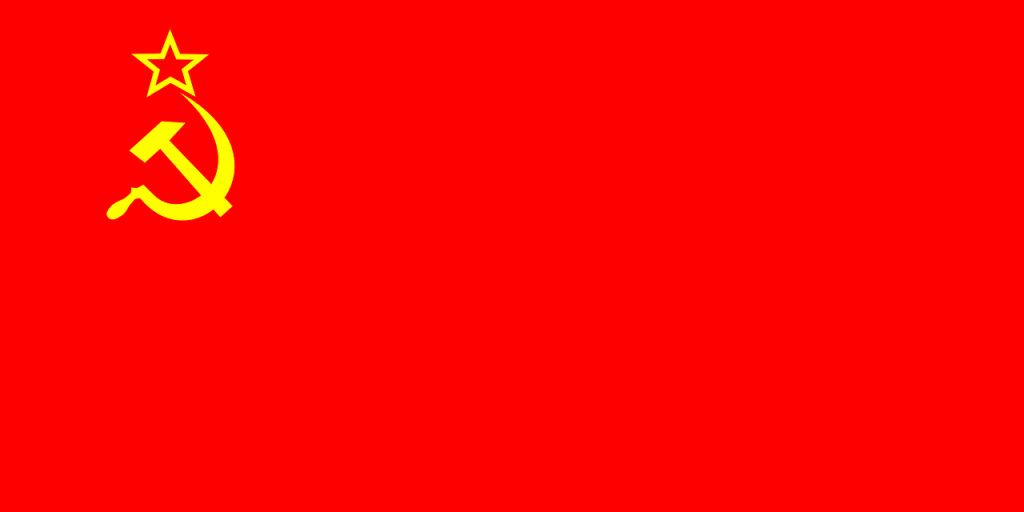
Bishkek and other towns in northern Kyrgyztan have a large Russian population, and many of the people I know — colleagues at the newspaper and my landlady — are Russians whose families stayed on in independent Kyrgyzstan after the collapse of the Soviet Union. Those old enough to remember are nostalgic about the Soviet days, and look to Moscow for leadership.
One day in late October I drop round to see my landlady, and find her wildly excited about the recent visit of Russian President Vladimir Putin to Bishkek, where he has just opened the Kant airbase.
My editor was there, and she described being told to kneel on the tarmac so Putin could see the planes better, giving the impression of the entire press corps prostrating themselves in front of the president.
“I went back to work on Monday. I was in the hospital with the other doctors and my colleague pointed to the television. I could not believe it! Putin! He was here in Kyrgyzstan! And I was asking my colleagues, why has Putin come to Kyrgyzstan?” exclaims my landlady.
In a celebratory mood, she picks up her almost empty bottle of red wine and pours some into a glass for me.
No more wine
“Georgia,” she says, looking at the label and shaking her head. “Soviet Republic of Kirghizia was best champagne in whole Soviet Union, better than Georgia, better than Moldova! What is this – ” she holds up her hand making a tiny circle between thumb and forefinger “ – this little thing to make wine?”
“A grape?”
“Yes! Creps! Creps growing all over Chui Valley, best creps in the Soviet Union. Creps at Osh Bazaar.” She mimes bunches of grapes hanging from the kitchen ceiling. “Then Gorbachev is coming, and he saying no more drink, and he closing everything. Now Georgia and Moldova making champagne, but no more Kirghizia.
“Thank you, Gorbachev!” she ends bitterly.
Those who stayed
My landlady is the daughter of a high-up Soviet-era official. She owns two flats on Erkindik Prospect which is, people have told me, the best address in Bishkek. Those high Soviet officials, the nomenklatura, who managed to hold onto some power and money in the new regime — and that’s most of them — either live on this elegant tree-lined boulevard or have built themselves sprawling dachas in the suburbs.
However, the poverty of post-Soviet Kyrgyzstan has still affected her. She’s a doctor, but only brings home a salary of about $10 a month.
When the Soviet Union disintegrated, the markets for most of Kyrgyzstan’s produce disappeared overnight. The idea, batted about in the mid-90s by optimistic government ministers and international donors, that Kyrgyzstan would become ‘the Switzerland of Central Asia’, died when the Russian economy crashed in 1998, and the country is only just emerging from a long recession.
Unlike its luckier neighbours, Kyrgyzstan has very little oil or gas, and there simply isn’t a lot of money about. You can see it in the cracked pavements, the broken down cars, the beggars in the underpass outside TSUM.
Breaking away
As of this month, Kyrgyzstan has the distinction of being the only country with both a Russian and a US airbase.
The relationship with the past is complex. When it comes to the visible signs, shortly after I arrived I saw the big Lenin statue — probably the most important monument to the Soviet era — being removed from Ata-Too square.
Some of the street names have also been changed, but others keep their Soviet names. People say to each other “Lets meet at Mossoviet”, the name for the intersection between Moscow Street and Soviet Street.
“The centre of Bishkek,” one of my colleagues told me. “The two most important things in the Soviet Union.” I wasn’t sure if she was joking or not.
Different views of history
I’m sometimes shocked by the casual racism of Russians against Kyrgyz, like when my landlady told me: “Kyrgyz women are so hard. All they think about is money.”
Then there was the debate I had with my colleague when I mentioned Russia’s conquest of Uzbekistan.
“Russia did not conquer Uzbekistan,” she said earnestly. “The Uzbeks asked us to come and give them our protection. I hope you will not say this – it makes me feel very upset.”
But despite the Russian nationalism on display, the Russians in Bishkek take just as much pride in Kyrgyzstan’s greatest natural treasure — Lake Issyk-Kul — as the Kygyz.
Known as the ‘pearl of the Tien-Shan’, Issyk-Kul is the world’s second largest Alpine lake after Titicaca in South America. It was one of the Soviet Union’s foremost holiday destinations, drawing visitors from as far afield as Moscow and St Petersburg.
One of the editorial assistants told me that although she is Russian, when she sees Issyk-Kul she feels like she is Kyrgyz.
 Steppe in Style
Leave a comment