The smell in Almaty airport is hard to define – a mix of sweat and cigarettes, fried cabbage and floor polish. Outside, the night is wet and warm. Despite accounts of Central Asia being one of the world’s driest places, rain has fallen and is now evaporating into a thick soupy atmosphere. I’m here on my way to take up an internship. Having flown out from London, my next task is to take the bus from Almaty to Bishkek, the capital of Kyrgyzstan.
The KLM passengers have formed three queues in the dingy customs hall, snaking around heavy marble pillars. My queue is moving the slowest and as the other passengers empty out I begin to get anxious about missing the free KLM bus from Almaty to Bishkek, the capital of neighbouring Kyrgyzstan where I am due to start a six-month internship at a local English language newspaper. With a sinking feeling in my stomach I remind myself that I need to get a transit visa for Kazakhstan. I had such a lot to do in London the week before I left that I never got round to getting one. Suddenly spending my last afternoon trying on jackets in Dickens & Jones instead of going to the Kazakhstani embassy doesn’t seem such a wise move.
Spotting another kiosk marked ‘Consulate’, I drag my hand-luggage over and pass $55 through the grille. While I fret, the consulate officials sip tea and dab idly at my passport with a gluestick, their attention focussed on the flickering television, the last of the KLM passengers going from Almaty to Bishkek file out of the hall. By the time I pass through customs everyone off the plane has disappeared and there is no sign of the bus to Bishkek.
This is something of a blow. Flying to Almaty then taking KLM’s free bus across the border from Almaty to Bishkek was so much cheaper than flying direct to Bishkek it seemed like the sensible thing to do. In that last frantic week in London, every day I was spending more than most Kyrgyz earned in a year – the average monthly wage is around $35 – so even though I had money in my account I was pleased to be able to save on the flight. But now I’m potentially stranded in Kazakhstan, a country where I know absolutely no one, it’s beginning to look like a false economy. With a feeling close to desperation I push my overflowing trolley through the airport trying to find someone – anyone – who might be connected with KLM and can get me from Almaty to Bishkek.
Almaty airport is small. In minutes I’m through customs, through a tiny waiting area with lines of people on hard wooden chairs, and suddenly outside in the night. My overloaded trolley ricochets out of control through the doors into a crowd of taxi drivers, dark men with wide Mongol faces and stocky bodies in black leather jackets.
“Taxi! You want taxi!” There is a flash of gold teeth as they yell and surround me. Hands are grabbing at my trolley from all directions. I wrestle the trolley away from them, and manage to drag it back up the slope into the airport, slamming the doors behind me.
The waiting passengers look up at me in mild surprise. For the first time I register their faces, which are every shade and shape from Slavic bottle blonde to Han Chinese. They stare back at me with equal interest. It’s high summer and Almaty airport is kind of short on tearful redheads in fur coats wailing “Fuck!” into stone-dead Nokias.
Since there appears to be no hope of reaching KLM either in person or by phone to help me get from Almaty to Bishkek, I approach the information kiosk, where the girl behind the desk, whose dyed red fringe is an odd contrast to her Asiatic features, seems to be the only person in the hall who isn’t interested in speaking to me.
“We are closing!” she snaps in Russian, slamming the grille down on my fingertips.
Almaty is 3,500 miles from London. It used to take people a year to travel here from Europe. Even if I get on a plane right now and go straight back it’ll take me 11 hours to get home. I’m meant to be staying in Central Asia for six months; I’ve only been here for 20 minutes and already everything has gone wrong. How on earth to I get from Almaty to Bishkek?
Meanwhile, men are still plucking at my coat hissing, “Taxi! Where you want go?”
My Lonely Planet warned against these guys, and even back home I rarely take taxis – in London there are an average of 18 assaults and 4.5 rapes by illegal minicab drivers every month. The man nearest to me, claiming he knows where the KLM office is, reminds me of someone. I realise it is evil Uncle Harry from Eastenders.
I don’t want to go anywhere with the strange and scary taxi drivers, but short of staying in Almaty airport for the rest of my life, I can’t think of any other options to get from Almaty to Bishkek. So I put my useless mobile into my pocket and let Uncle Harry push the trolley containing all my worldly goods into a dark alley between two aircraft hangars.
My breath is coming in gasps into my dry mouth. I’m convinced I am walking into a trap. Five steps, ten steps… As I force my feet forwards I can almost feel the blow striking me to the ground and my bags and trolley being wrenched from me.
Much to my surprise, we round the corner and come upon the KLM office. So far so good. Unfortunately, though, it’s locked up, so we set off into the road to look for the bus stop. Almaty by night is a terrifying place. There are trees everywhere and no lights, so I can’t see if we’re walking past houses or a park or the open countryside. As I had expected, the bus from Almaty to Bishkek is nowhere to be seen.
By this time I have picked up quite a train of people, all making different suggestions, most of which I think involve me paying them money, as they follow me and Uncle Harry back to the KLM office.
When the staff return from dispatching their more organised passengers towards Bishkek, they express concern that I have been left behind and select one of my followers to chase the bus. I am to pay him $70 if we catch it up but $100 if the taxi ends up taking me all the way to Bishkek, for which KLM might, or might not, reimburse at a later date.
“Is it safe to go with this man from Almaty to Bishkek?” I whisper to the KLM man, a young Russian, as we go down some steps into the carpark.
“Are you a Christian?” he asks.
“Er… kind of.”
“If you are a Christian you will be all right,” he tells me helpfully, and leaves. I am now alone with a strange Kazakh man in a car with a broken windscreen. We set off into the night.
We are driving through an empty city where all I can see is trees and neon-lit petrol stations emerging from the pitch darkness.
Kazakhstan’s moneyed elite are supposed to be enjoying an orgy of conspicuous consumption with the proceeds from their country’s estimated 30 billion barrels of oil. So far the petrol stations are the only evidence I can see of this – there is certainly none in this beat up car, or the potholed roads, or the hard, careworn faces at the airport.
My driver mimes that he has come out without any petrol. He has also come without any money, so we drive from one outlet to the next trying to find someone who will take dollars, my dollars. Every time we arrive at a deserted petrol station he gets out to bang on the door and rouse the shopkeeper, leaving the car door casually ajar and the keys in the ignition. They always refuse the dollars, and he comes back to find me crouched whimpering with terror behind the front seats, and all the doors locked from the inside.
When we have run out of petrol stations, my driver pulls off next to some men loitering by a broken down car. This time he mimes that I should lock the doors for my own safety, which is even more alarming. He walks over to the men, speaks to them briefly, then runs off into some bushes and doesn’t come back for a long time.
I am beyond panic now. I feel like I have lost my last link to the safe western world. Earlier I was feeling sorry for myself, thinking how sad it was that I was only 25 and had nothing left to lose. The media career and yuppie London lifestyle I’d been aiming for since university had all gone. Now I realise I still have a lot to lose. My life to start with. Not to mention my passport, dollars, travellers cheques and credit cards, mobile phone, laptop digital camera, red patent Ferrogamo trainers and several thousand pounds worth of clothing. I wonder whether it was really necessary to bring all this stuff to Central Asia.
Eventually the driver returns with a handful of tenge, Kazakh banknotes. By this time I have decided that if he was planning to murder me he probably wouldn’t bother to buy petrol, so I am pleased to see him. But a minute later he opens up a whole new set of fears by whipping out some matches and lighting up a cigarette as the pump attendant sloshes petrol into the car.
As my eyes become more used to the dark I can see trees silhouetted against the cloudy sky and fenced compounds that might house factories. Then we are out of the city and driving through a tunnel of trees that abruptly gives way to open steppe. Much of the road from Almaty to Bishkek is a dead straight line, interrupted by steep winding trails through the hills. At one point we turn off onto a side road.
“Is this the road to Bishkek?” I shriek. “Where are you taking me?”
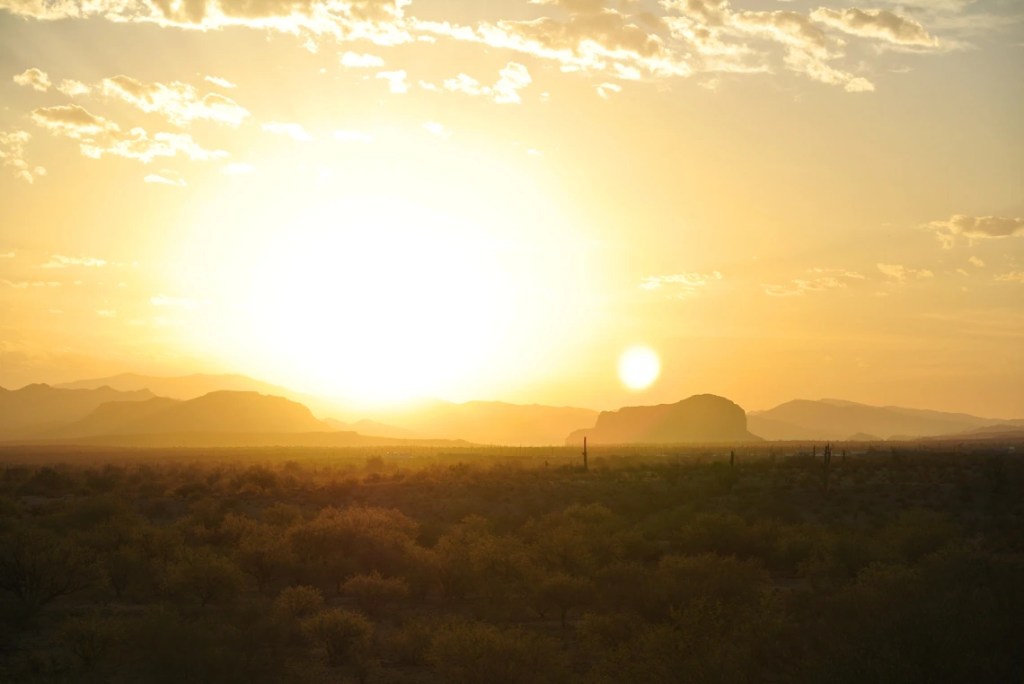
“I am a family man,” the driver says huffily, and points to a roadblock. We are being diverted. I apologise as profusely as my few words of Russian will allow and slump back into my seat. As it starts to get light I can see we are on a high, flat plateau, with mountains in the distance on either side. A convoy of brand new silver Mercedes overtakes us, flashing past with the sunrise reflected in their tinted windows.
We closely avoid collisions with rusty cars, buses and grey-painted army trucks. Although the road is wide and usually empty, only the centre is properly tarmaced. Everyone drives along that narrow strip, swerving out the way of oncoming vehicles at the very last minute. We pass several wrecked cars along the roadside. Next to one accident, the dead are covered with a green and white blanket. Their car has been smashed so violently that its front end is crushed to a point.
Already some of the roadside kiosks are open. We stop several times so that the taxi driver can look for a kiosk that will sell cigarettes (for him) and still mineral water (for me). The first place we stop is a row of wooden shacks painted blue. A rickety table outside each one holds a few bottles of Fanta, beer and mineral waters with Cyrillic labels. The bottles are grubby, their labels faded and peeling. A group of people are sitting at a table loaded with bottles of vodka and packs of cigarettes. I wonder if they have been up all night or are starting early.
If I had to live in a little blue shack on the Kazakh steppe, selling Russian cigarettes and dirty bottles of Fanta for a living, and getting my drinking water from a rusty standpipe, I think I would turn to vodka pretty quick.
I abruptly realise the answer to a question that has been puzzling me for some time; why do more people not go to Central Asia?
Obviously, it is because Central Asia is Not Very Nice.
Every time we stop, the driver asks “friend driver” or “friend policeman” if they have seen any sign of the KLM bus, but nobody has. People are starting to wake up. Kazakh men with weathered brown skin and high cheekbones are filling buckets and plastic bottles from standpipes by the road. I’m thirsty – I forgot to put the lid back on my bottle of Evian and it leaked into my hand luggage – but not that thirsty. The water supply could easily be carrying plague or cholera, heavy metals or radiation. Only this week, three people in western Kazakhstan have caught bubonic plague from eating an infected camel.
I know it’s an adventure to be here, but to me it feels more like a nightmare. It’s not until I’m sitting in a roadside café drinking milky tea with my Kazakh taxi driver that I start to feel excited for the first time. I ignore the little beige lumps floating in the tea and look across at the rocky hills opposite the terrace, with a light covering of scrubby brown grass. The sky is pale and clear, and a light breeze lifts my hair. It’s cool against the back of my neck. I study a group of men eating pirochkee, deep-fried doughy envelopes filled with meat. Their features are of the Kazakh steppes, but their clothes are East European – grey synthetic trousers and bulky jumpers.
The taxi driver is pressing food and drink onto me. With surprise I realise he probably isn’t more than ten years older than I am, although I will perhaps outlive him by thirty years. Life expectancy for men in Kazakhstan is less than 58 years.
I feel well disposed towards him until we get to the Kyrgyz frontier, about ten miles from Bishkek, where he tells me that it would be against the law for him to drive his taxi into Kyrgyzstan. His plan is for me to pay him the full $100 we had agreed at the start of the journey, and he will then find “friend driver” to take me to the Times of Central Asia on Chui Prospect in Bishkek.
“I’m afraid it’s completely out of the question,” I tell him. After buying my transit visa the $100 is all the cash I have left. I imagine being left stranded at the Kyrgyzstan-Kazakhstan border without even enough money for a phone call, and my eyes start to fill again.
Alarmed at the prospect of more emotion, he goes off to search for “friend driver” while I huddle in the car using my faux-fur coat for a pillow. It’s busy here by the border. The road is flanked by rows of dusty cars and groups of men are smoking and haggling with each other on the pavement. Behind the painted one-story houses, I can see snowy peaks in the distance.
The driver returns with a Kyrgyz man who leads us to a car so decrepit it makes ours look positively luxurious in comparison. As we set off down the road to the border I feel its thin metal floor vibrate through the soles of my walking boots. I’m perched high on the back seat, my head nudging the roof, from where I will fly straight through the windscreen if we stop suddenly. Judging by the thick web of cracks on the window, their epicentre above the front passenger seat, I wouldn’t be the first. They, like everything else, are ingrained with greyish dust.
At the border the guards take my passport and ask if I will be returning to Kazakhstan.
“Not if I can possibly help it,” I tell them fervently.
The road from the border is busy, and again lined with pretty wooden bungalows set in tangled gardens. People are selling trays of vegetables and great heaps of green and white striped watermelons. Then the cottages are replaced by densely growing trees, through which I glimpse concrete apartment blocks on the equally straight roads intersecting this one. We cross a river tumbling over jagged boulders and drive under colourful advertising banners strung from the trees on either side. I’m just beginning to think that we have perhaps reached the suburbs of Bishkek when my original driver turns round to say: “This is Chui Prospect.”
Against all my expectations we have arrived.
More posts about Bishkek
First impressions of Bishkek, Kyrgyzstan
In search of Bishkek’s Soviet past
Dordoi, Central Asia’s largest bazaar
I witnessed Bishkek’s main Lenin statue being torn down
Another journey from Almaty to Bishkek
OVERLAND TO TAJIKISTAN 1: Almaty to Bishkek (bribery and seduction)
 Steppe in Style
Leave a comment